Advanced On-Ear Wireless Headphones Redefine Portable Audio with Enhanced ANC and Smart Features
Explore the latest in on-ear wireless headphones, featuring advanced Active Noise Cancelling, adaptive audio, spatial sound, and robust battery life for an immersive listening experience.

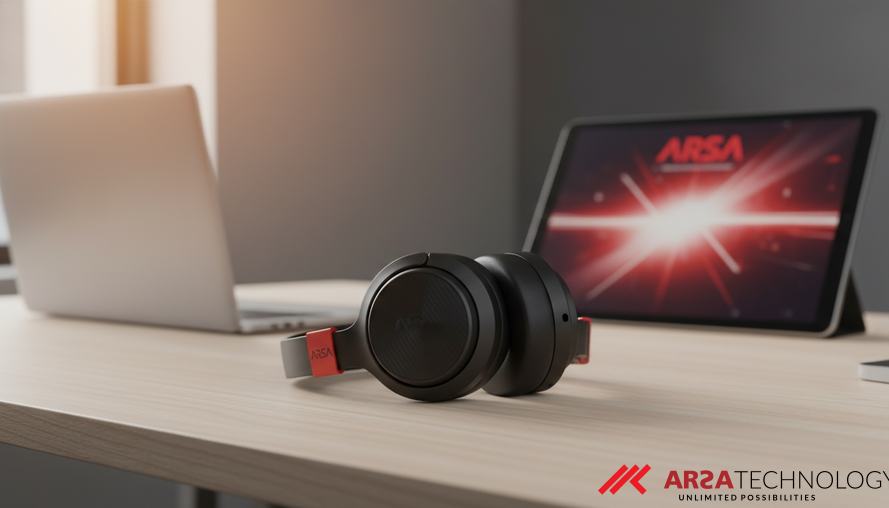
The landscape of personal audio continues its rapid evolution, with manufacturers consistently pushing boundaries in sound quality, comfort, and intelligent features. A notable recent release highlights this trend, bringing advanced Active Noise Cancelling (ANC) capabilities back to the more compact on-ear wireless headphone segment. This move underscores a broader industry shift towards integrating sophisticated audio processing and user-centric design into devices that blend seamlessly into daily life.
The reintroduction of high-performance ANC in a smaller form factor addresses a critical user need: powerful noise reduction without the bulk often associated with over-ear models. This development is significant for professionals, travelers, and anyone seeking an immersive audio experience in dynamic environments. The integration of improved physical design, such as larger, softer memory foam earpads, contributes not only to enhanced comfort but also to more effective passive noise isolation, forming a synergistic relationship with the active noise cancellation technology. This commitment to both hardware and software innovation sets a new benchmark for portable audio solutions.
Re-establishing On-Ear ANC Excellence
For years, the gold standard for Active Noise Cancelling (ANC) has largely resided with over-ear headphone designs, primarily due to their superior physical seal around the ear. However, advancements in acoustic engineering and digital signal processing are now enabling smaller, on-ear headphones to deliver compelling noise-cancelling performance. A prominent audio brand, for instance, has just released its latest on-ear wireless headphones, the Milton A.N.C., making ANC a core feature in its more compact and lightweight offerings once again. This strategic move, detailed in a report by Andrew Liszewski for The Verge on May 19, 2026, signals a renewed focus on convenience without sacrificing audio quality or noise reduction capabilities. You can find the original article at Marshall brings ANC back to its smaller on-ear wireless headphones.
These new headphones are positioned at a competitive price point, reflecting the premium features they pack. While their predecessor, the Marshall Major V, offered exceptional battery life at over 100 hours without ANC, the Milton A.N.C. still deliver an impressive 80 hours with ANC off, a figure that drops to over 50 hours when the noise-cancelling feature is engaged. This extensive battery performance ensures users can enjoy long listening sessions, travel, or uninterrupted work without constant recharging, a crucial factor for modern mobile lifestyles. The headphones also feature a practical design with foldable ear cups, making them incredibly easy to store and transport, further enhancing their appeal for on-the-go users.
Enhancing the Listening Experience with Adaptive Intelligence
Beyond mere noise cancellation, modern premium headphones are integrating "smart" features that adapt to the user's environment and preferences. A key innovation in the Milton A.N.C. is its adaptive loudness functionality. Instead of requiring manual volume adjustments or sound profile tweaks in noisy surroundings, the headphones intelligently alter the "audio playback tonality." This ensures that quieter nuances in music or podcasts remain discernible, preventing them from being drowned out by ambient noise. This adaptive processing showcases a subtle yet powerful application of embedded intelligence, similar to how AI Video Analytics solutions leverage real-time data processing to interpret complex visual information and provide actionable insights in dynamic environments.
The headphones also incorporate a transparency mode, utilizing six built-in microphones to amplify surrounding sounds. This allows users to remain aware of their environment—whether listening for announcements, engaging in conversations, or navigating urban spaces—without needing to remove their headphones. Such intelligent microphone arrays and sound processing are indicative of the sophisticated sensor data analysis that underpins many advanced IoT systems. For instance, in enterprise settings, similar sensor networks and processing capabilities are central to solutions like the ARSA AI Box Series, which processes real-time data at the edge for applications ranging from industrial safety to smart retail.
Connectivity, Longevity, and Ecosystem Integration
Connectivity is paramount for modern wireless audio devices. The new Marshall headphones embrace future-proof technology with Bluetooth 6.0, supporting advanced codecs like LE Audio, SBC, AAC, LC3, and LDAC. LE Audio, in particular, promises improved power efficiency and higher audio quality, extending the device's utility and performance. This commitment to cutting-edge wireless standards ensures a seamless and high-fidelity listening experience across a wide range of devices.
In an era increasingly focused on sustainability and reducing electronic waste, the inclusion of a replaceable battery is a significant step forward for the Milton A.N.C. This design choice extends the product's lifespan, allowing users to easily swap out a degraded battery rather than replacing the entire unit. This approach aligns with broader industry movements towards more environmentally conscious product design and echoes the importance of modularity and maintainability in enterprise-grade IoT deployments across various industries. Furthermore, the ability to track the headphones using established item tracking networks like Apple's and Google's adds a layer of convenience and security, integrating the device into existing smart ecosystems and mitigating the risk of loss.
The Broader Implications of Smart Audio Technology
The advancements seen in these new on-ear headphones are not isolated to the consumer audio market. The underlying technologies—such as sophisticated signal processing, adaptive algorithms, and robust wireless connectivity—have direct parallels and applications in industrial and enterprise settings. For example, similar noise-reduction principles could be applied to specialized headsets for workers in loud manufacturing environments, enhancing communication and safety. The efficiency of edge processing for features like adaptive loudness points towards the benefits of localized data processing in applications where low latency and data privacy are critical, a principle championed by ARSA Technology's on-premise AI solutions.
The commitment to comfort, extended battery life, and integration with broader digital ecosystems also reflects growing expectations for all technology, whether consumer or enterprise. As AI and IoT solutions become more ubiquitous, the demand for devices that are not only powerful but also intuitive, durable, and environmentally responsible will continue to grow. These advancements collectively signal a future where audio technology transcends simple listening, becoming an intelligent, integrated component of our digital and physical lives.
The evolution of on-ear ANC headphones, as exemplified by this new release, showcases how innovation in compact form factors can deliver powerful, adaptive, and user-friendly audio experiences. As consumers and enterprises alike seek more integrated and intelligent solutions, the focus on features like adaptive audio, robust connectivity, and device longevity will only intensify.
To explore how advanced AI and IoT solutions can transform your operations with practical, proven, and profitable deployments, we invite you to contact ARSA for a free consultation.