Advancing 3D Reconstruction: How Persistent Homology Solves Complex Topological Challenges
Explore how persistent homology and collaborative inverse rendering overcome ambiguities in 3D reconstruction, creating highly accurate digital models for AR/VR, manufacturing, and design.

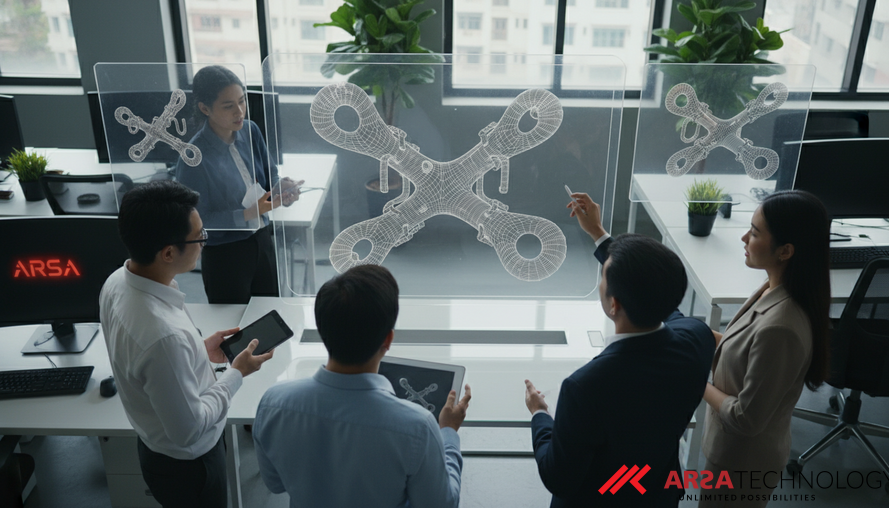
Unlocking Complex 3D Realities: The Challenge of Digital Reconstruction
The ability to reconstruct accurate three-dimensional (3D) objects from two-dimensional (2D) images is a cornerstone for numerous advanced applications today. From immersive Virtual Reality (VR) and Augmented Reality (AR) experiences to Computer-Aided Design (CAD), advanced 3D printing, and sophisticated scientific simulations, the demand for precise digital models is ever-growing. However, this process is inherently complex. Deriving a complete 3D shape from a set of 2D photographs is an "ill-posed problem," meaning there isn't always enough information to definitively resolve ambiguities in an object's geometry, its appearance, or crucially, its topology—the fundamental properties of its shape that remain unchanged under continuous deformations, like the number of holes it has.
For industries pushing the boundaries of digital transformation, this challenge becomes particularly pronounced when dealing with "high-genus" surfaces. These are objects characterized by intricate topological structures, such as multiple holes, tunnels, or handles—think of a pretzel compared to a simple sphere. While reconstructing simple, low-genus shapes (like a smooth sphere) from multi-view images is often manageable, accurately capturing and preserving the complex connections and voids of high-genus objects presents a significant hurdle, frequently leading to digital models that misrepresent the original structure.
Beyond Basic Shapes: Why Traditional 3D Reconstruction Falls Short
Many existing 3D reconstruction methods, while achieving impressive results for simpler objects, often struggle when faced with the complexity of high-genus structures. These traditional approaches typically rely on "inverse rendering," where a 3D mesh (a digital representation of the object's surface) is iteratively optimized so that its rendered appearance closely matches a series of input images captured from multiple viewpoints. Common gradient-based optimization techniques, often seen in applications transforming CCTV systems into intelligent monitoring platforms, have advanced significantly, but they still face fundamental limitations.
A major pitfall arises from the inherent ambiguity in camera placement, especially when dealing with complex geometries. Uniform camera setups, which assume simple, sphere-like objects, fail to adequately capture the critical features of high-genus shapes. Regions containing tunnels or holes often produce "vanishing or exploding gradients" during optimization, leading to conflicting information from different viewpoints. This can cause severe occlusions and, ultimately, result in what is known as "topological fragmentation" – where tunnels collapse or disappear, and handles vanish, leaving a reconstructed model that is topologically incorrect and therefore unsuited for precise applications.
The Power of Persistent Homology: A New Era for Topological Accuracy
To overcome these critical limitations, a groundbreaking approach integrates "Persistent Homology (PH)" into the 3D reconstruction process. Persistent Homology is a sophisticated mathematical tool derived from algebraic topology that provides a principled, data-driven way to identify and track topological features—like holes, tunnels, and voids—within a dataset across different scales. In simpler terms, it's a technique that allows a computer to mathematically "understand" and retain the essence of an object's shape, regardless of its size or minor geometric distortions.
By leveraging PH, the new strategy introduces "topological priors." These priors act as intelligent guides, informing the reconstruction algorithm about the essential high-genus structures that must be preserved. Instead of merely trying to match pixel data, the system now has an inherent understanding that certain "tunnel loops" or "handle loops" are fundamental to the object's identity. This topological guidance becomes particularly crucial for guiding camera placements, directing them towards areas prone to occlusion or gradient issues, ensuring that even the most subtle topological features are captured and maintained throughout the digital modeling process.
Collaborative Inverse Rendering: A Smarter Approach to 3D Modeling
The proposed "collaborative inverse rendering" strategy marks a significant leap forward. It marries the visual fidelity provided by multi-view images (known as "photometric consistency") with the robust topological insights from persistent homology. This collaboration means the system isn't just trying to make the 3D model look right; it's also ensuring the model is fundamentally structured correctly. The technique employs gradient-based optimization within a mesh-based inverse rendering framework, a precise and explainable method that specifically highlights the vital role of these topological priors. This approach allows for direct manipulation and refinement of the 3D mesh, unlike some "black box" neural network methods.
The practical implication of this collaboration is profound. It enables the recovery of complex high-genus geometries with unprecedented accuracy, effectively circumventing catastrophic failures common in traditional methods, such as tunnels collapsing or critical high-genus structures being lost entirely. For instance, when constructing highly detailed digital twins for industrial assets, like complex machinery with internal conduits or ventilation systems, ensuring the topological integrity of these "holes" is paramount. Such precision is foundational for applications like Industrial IoT & Heavy Equipment Monitoring, where the digital twin must precisely mirror the physical object for predictive maintenance or remote diagnostics.
Real-World Impact: Enhancing Design, Simulation, and Digital Twins
The ability to reconstruct high-genus 3D surfaces with persistent homology priors offers tangible benefits across a multitude of industries. In manufacturing and industrial design, accurate digital models mean designs can be validated more reliably, prototypes can be 3D printed with higher fidelity, and complex assemblies can be simulated with greater realism. This translates directly to reduced design cycles, fewer errors in production, and substantial cost savings.
For fields like VR/AR, the enhanced topological accuracy means more believable and functional virtual environments. Imagine detailed architectural models for urban planning or intricate components for medical training where every tunnel and connection must be perfectly replicated. Furthermore, in scientific research and visualization, accurately representing complex biological structures or geological formations becomes essential for groundbreaking discoveries. Solutions built on these principles can transform existing surveillance infrastructure into advanced analytical tools, much like ARSA's AI Video Analytics, which can process visual data for complex monitoring tasks, providing insights into object structure and behavior. Initial experiments demonstrate superior performance, achieving lower Chamfer Distance (indicating better geometric accuracy) and higher Volume IoU (reflecting better overlap with the ground truth volume) compared to previous state-of-the-art mesh-based methods. This robust approach ensures not just visual similarity, but fundamental structural correctness, laying the groundwork for more advanced, reliable digital models.
ARSA Technology's Role in Advancing AI-Powered Visual Solutions
ARSA Technology is at the forefront of leveraging advanced AI and computer vision to deliver impactful solutions for enterprises across various sectors. While the research on persistent homology for 3D reconstruction is an academic advancement, ARSA's commitment to cutting-edge visual intelligence aligns perfectly with its principles. By transforming existing infrastructure, such as standard CCTV cameras, into intelligent analytical systems, ARSA provides real-time insights that drive efficiency, safety, and new revenue streams.
Our specialized AI Box Series, for instance, offers plug-and-play AI analytics, enabling the on-site processing of complex visual data without heavy cloud dependency. This edge computing power can be instrumental in applications requiring immediate, privacy-compliant visual analysis—from monitoring safety compliance on a factory floor to understanding crowd dynamics in retail spaces. For industries requiring highly realistic digital environments and sophisticated simulations, ARSA also offers VR-Based Training for Industry, building immersive experiences that demand topologically sound 3D assets for optimal effectiveness. These solutions exemplify how advanced AI and topological understanding, even if developed elsewhere, can be integrated into practical, high-converting business applications.
Ready to explore how advanced AI and computer vision can transform your business operations and digital strategy? We invite you to explore ARSA's comprehensive suite of solutions and services. Discover how precision, efficiency, and intelligence can drive your next phase of growth.
To learn more about tailored AI and IoT solutions for your enterprise, please contact ARSA for a free consultation.