Advancing Affect Recognition: A Deep Dive into PPG-Based Emotion Detection with AI
Explore the latest deep learning architectures—CNN, Transformer, and Mamba—for PPG-based affect recognition from wearables. Understand their performance, practical implications, and optimal deployment for real-world emotional intelligence.

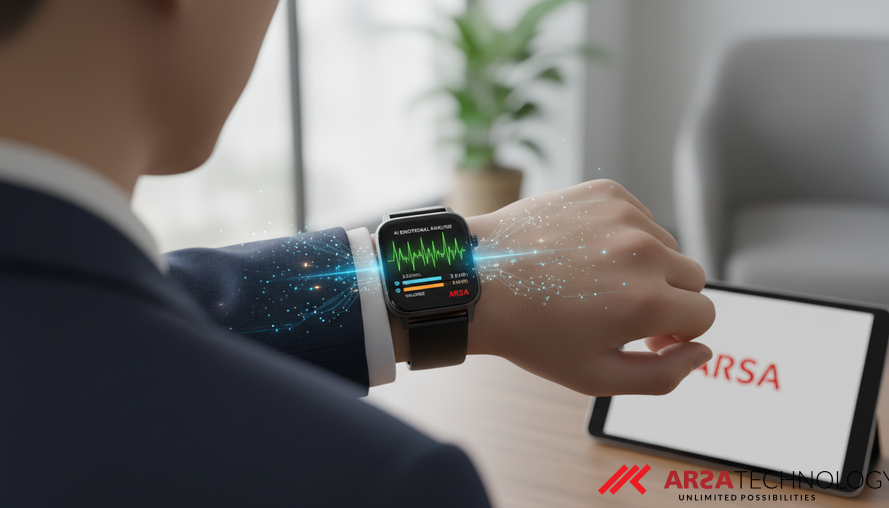
Introduction: The Unseen Language of Wearables
Wearable technology has revolutionized how we track physical activity and vital signs, but its potential extends far beyond simple metrics. Affective computing, the study and development of systems that can recognize, interpret, process, and simulate human affects, is rapidly leveraging these devices to understand emotional states. Photoplethysmography (PPG) signals, easily captured by smartwatches and other low-cost wearables, are emerging as a key data source for this field. However, developing robust AI models for PPG-based emotion detection is challenging due to inherent signal noise and the limited size of available datasets.
Recent advancements in deep learning have introduced sophisticated long-range sequence models, such as Transformers, and innovative state-space models like Mamba. These architectures have demonstrated exceptional performance in fields ranging from natural language processing to general time-series analysis. Yet, their true advantage over established methods like Convolutional Neural Networks (CNNs) and Long Short-Term Memory (LSTMs) for the specific, nuanced task of PPG-based affect recognition, particularly with noisy, small datasets, has remained an open question. This article explores a comprehensive, measurement-driven comparison of these deep learning architectures, offering crucial insights for the future of wearable affective monitoring.
Decoding Emotions: The Role of Photoplethysmography (PPG)
Physiological measurements like PPG and electrocardiograms (ECG) offer objective and reliable indicators of emotional states, less susceptible to social masking than facial expressions or voice tones. PPG, in particular, stands out due to its practical advantages: it's non-invasive, cost-effective, and can be acquired unobtrusively via compact devices. Modern smartwatches, for instance, universally include PPG sensors, primarily for heart rate monitoring, but this capability opens doors to broader applications, including continuous emotional monitoring outside clinical settings.
However, the very nature of wrist-based PPG presents a significant hurdle: its high sensitivity to motion artifacts. Wrist movement is constant, introducing noise that can severely degrade signal quality. Furthermore, the limited availability of diverse, large-scale datasets, coupled with individual variability in affective responses, makes it difficult for AI models to generalize effectively. This environment makes it critical to understand which deep learning architectures are truly capable of extracting meaningful emotional insights amidst these real-world constraints.
Deep Learning's Toolkit for Time-Series Analysis
Deep learning has provided a powerful suite of tools for analyzing complex data, with different architectures excelling in various domains. For time-series data like physiological signals, Convolutional Neural Networks (CNNs) have long been a workhorse. CNNs are adept at identifying local patterns and features within data sequences, making them effective for tasks like feature learning and classification in PPG analysis. Hybrid models, such as CNN-LSTMs, combine the pattern recognition strengths of CNNs with the sequential data processing capabilities of LSTMs (Long Short-Term Memory networks), which are designed to capture temporal dependencies over longer periods.
More recently, two architectural paradigms have gained significant traction: Transformers and Mamba. Transformers, originally developed for natural language processing, utilize "self-attention" mechanisms to weigh the importance of different parts of an input sequence, effectively capturing global dependencies regardless of their position. Mamba, a newer class of state-space models, offers an alternative for efficient long-sequence modeling, balancing computational efficiency with the ability to model extensive temporal contexts. While these newer models have achieved state-of-the-art results in many fields, their practical benefits for PPG-based affect recognition, where data is often noisy and limited, required direct investigation.
The Comparative Study: CNNs vs. Modern Long-Range Models
A recent study (Source: Karim Alghoul et al., University of Ottawa) undertook a comprehensive, measurement-driven comparison of four deep learning architectures for PPG-based affect recognition: a pure CNN, a CNN-LSTM hybrid, a Transformer, and a Mamba model. The goal was to classify arousal, valence, and relaxation states using PPG signals collected from the wrist, specifically utilizing the WARM-VR dataset. To ensure a fair comparison, all models underwent identical preprocessing, segmentation, and training pipelines under a subject-independent 5-fold cross-validation protocol, reflecting real-world deployment challenges where models must generalize to unseen individuals.
The research aimed to provide practical guidance for model selection in wearable affective computing. This includes understanding whether the computational complexity of newer, long-range models truly translates into superior performance for real-world wearable data, or if simpler, more efficient architectures remain more advantageous. The insights gleaned from such a comparison are critical for enterprises considering the integration of emotional intelligence into their products and services.
Key Findings: Performance and Practical Implications
The study's results revealed intriguing insights into model performance for PPG-based affect recognition. While Transformer and Mamba models achieved performance comparable to that of the CNN baseline, they did not consistently outperform it across all classification tasks. Notably, CNNs emerged as the most effective overall, delivering the highest accuracy with the smallest model size. This finding underscores the continued relevance of well-optimized CNN architectures, especially in scenarios with noisy and comparatively small datasets.
However, the Transformer models showed a better balance of F1 scores for Arousal and Relaxation states, suggesting they might offer advantages in applications where a more nuanced and balanced detection of these specific emotional dimensions is critical. This indicates that while new architectures promise greater capabilities, their real-world utility is heavily dependent on the specific data characteristics and application requirements. For developers and enterprises, this means a careful evaluation of trade-offs between model complexity, computational resources, and specific performance goals is essential.
Strategic Model Selection for Wearable AI
The implications of this research are significant for organizations developing wearable AI solutions. For many practical applications, especially those requiring deployment on edge devices with limited computational resources, the efficiency and accuracy of CNNs might still make them the preferred choice. Their smaller model size translates to lower memory requirements and faster inference times, crucial for real-time monitoring and extending battery life in wearables.
However, for more complex affective states or in environments where subtle distinctions in arousal or relaxation are paramount, the balanced F1 scores of Transformers suggest their potential utility, provided the computational overhead can be managed. Mamba models, with their promise of efficient long-sequence modeling, also remain a strong contender for future optimization, particularly as dataset sizes grow and computational hardware advances. The key is to select a model that aligns not only with accuracy targets but also with deployment realities like privacy-by-design principles, processing at the edge, and scalability.
ARSA Technology leverages deep expertise in AI and IoT to deliver practical, high-impact solutions across various industries. Our approach prioritizes real-world deployment and measurable outcomes, recognizing the importance of selecting the right AI architecture for each unique challenge. For instance, our AI Video Analytics systems process real-time streams to extract operational intelligence, demonstrating robust performance even in challenging environments. Similarly, the AI Box Series provides pre-configured edge AI systems that address the need for on-premise processing, low latency, and data privacy, much like the considerations in deploying PPG-based affect recognition. In the healthcare sector, our Self-Check Health Kiosk incorporates AI and IoT for autonomous vital sign screening, showcasing our ability to deploy AI solutions that are accurate, efficient, and user-friendly.
Understanding the strengths and weaknesses of different AI architectures is fundamental to building effective, deployable systems. For enterprises looking to integrate advanced AI into their operations, a consultative approach that considers both cutting-edge research and practical deployment realities is indispensable.
Source: Alghoul, K., Al Osman, H., & El Saddik, A. (2024). PPG-Based Affect Recognition with Long-Range Deep Models: A Measurement-Driven Comparison of CNN, Transformer, and Mamba Architectures. arXiv preprint arXiv:2604.26078.
Ready to explore how advanced AI can transform your operations with precise, real-time insights? Our team specializes in engineering intelligent solutions tailored to your unique challenges. We invite you to explore our comprehensive solutions and contact ARSA for a personalized consultation.