Advancing AI: How RegGAN Enhances Facial Expression Synthesis for Real-World Diversity
Discover RegGAN, a groundbreaking AI model that significantly improves the generalization of facial expression synthesis across diverse, out-of-distribution images, from portraits to avatars. Learn its unique regression and refinement approach for photorealistic results and robust real-world applica

The Grand Challenge of Realistic AI Facial Expression Synthesis
Generating realistic facial expressions on digital images is a complex and fascinating area of artificial intelligence known as Facial Expression Synthesis (FES). This technology holds immense potential for various applications, from enhancing virtual reality and creating dynamic digital avatars to improving human-computer interaction and generating diverse content. While advancements in Generative Adversarial Networks (GANs) and more recently diffusion models have pushed the boundaries of image generation, a persistent hurdle remains: the ability of these models to generalize effectively when faced with images that significantly differ from their training data. This "out-of-distribution" (OOD) problem often leads to a noticeable degradation in performance, where synthesized expressions can appear unnatural, distort the subject's identity, or lose fine facial details.
To truly excel, a FES system must simultaneously achieve three critical objectives: precisely replicate the target expression, flawlessly preserve the original identity of the subject, and maintain all intricate facial details. Many existing methods often compromise on one or more of these requirements, particularly when operating outside their familiar training datasets. For enterprises, this limitation means that bespoke AI solutions developed for specific internal data might fail when applied to broader, real-world scenarios or publicly sourced images. Addressing this gap is crucial for unlocking the full potential of AI in dynamic operational environments.
Introducing RegGAN: A Hybrid Approach for Enhanced Generalization
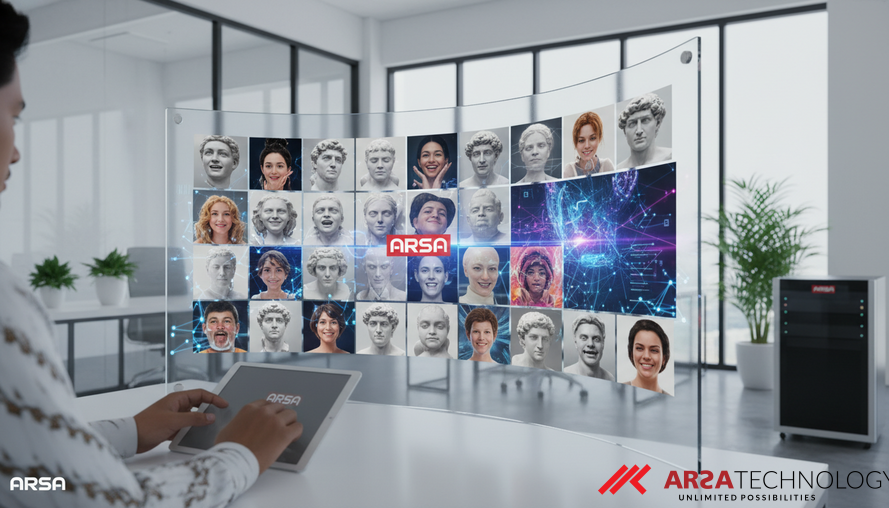
A new model, Regression GAN (RegGAN), emerges as an innovative solution designed to tackle the generalization challenge in facial expression synthesis. RegGAN combines the strengths of regression-based learning with adversarial refinement, creating a robust framework capable of synthesizing photorealistic facial expressions even on highly challenging, out-of-distribution images. This includes diverse inputs like celebrity photos, artistic portraits, historical statues, and even digital avatar renderings, as evidenced in the research paper "Improving Generative Adversarial Network Generalization for Facial Expression Synthesis" (https://arxiv.org/abs/2603.15648).
RegGAN's architecture comprises two primary components, each playing a vital role in its superior performance. First is a specialized regression layer that initially generates a coarse, yet accurate, intermediate representation of the desired expression. Following this, a refinement network, trained adversarially, steps in to elevate the realism and meticulously preserve the subject's identity and facial nuances. This sequential, two-stage training strategy empowers RegGAN to achieve a level of adaptability that surpasses many conventional GAN-based systems, offering a promising path for more versatile AI image generation.
Demystifying RegGAN's Core Technology
RegGAN's innovation lies in its clever integration and design of its two core components. The first component is a Regression Layer with Local Receptive Fields, which forms the initial blueprint of the synthesized expression. Traditional regression methods for image generation often struggle with scalability as image sizes increase, leading to an explosion in parameters and computational complexity. RegGAN circumvents this by employing a sparsified ridge regression layer that operates on local image patches. This localized approach allows the network to efficiently learn specific expression details by minimizing reconstruction errors through a ridge regression loss, producing an effective intermediate representation without overwhelming computational resources. This is particularly beneficial for edge AI systems where computational efficiency is paramount.
Building upon this coarse output, the second key component is the Refinement Network with Multi-Scale Spatial Attention. This network, structured as an encoder-decoder, takes the intermediate representation from the regression layer and transforms it into a highly realistic and detailed final image. Unlike simpler residual blocks, the refinement network incorporates three types of spatial attention blocks across multiple scales. These attention mechanisms enable the network to better focus on both global facial structures and subtle, intricate facial features, ensuring that fine details are preserved while expressions are enhanced. The refinement network is trained adversarially, meaning it learns to generate images that are indistinguishable from real photos, significantly boosting the photorealism of the synthesized expressions.
Real-World Impact: Superior Performance Across Diverse Faces
The true test of any AI model lies in its performance with real-world data, especially images it hasn't explicitly encountered during training. RegGAN was rigorously evaluated on the CFEE dataset (a standard for facial expression studies) and, crucially, on a challenging collection of out-of-distribution images including celebrity photographs, classic portraits, statues, and even avatar renderings. This diverse testing demonstrates RegGAN's exceptional ability to imbue human-like expressions into virtually any face-like input.
To quantify its performance, researchers employed four widely accepted metrics:
- Expression Classification Score (ECS): Measures the accuracy of the synthesized expression.
- Face Similarity Score (FSS): Assesses how well the subject's identity is preserved.
- QualiCLIP: Evaluates the perceptual realism of the generated images.
- Fréchet Inception Distance (FID): A comprehensive metric that gauges both image quality and the diversity of generated outputs.
The results are compelling: RegGAN outperformed six state-of-the-art models in ECS, FID, and QualiCLIP, and secured a strong second place in FSS. Furthermore, human evaluations indicated that RegGAN surpassed the best competing model by a significant margin—25% in expression quality, 26% in identity preservation, and 30% in overall realism. These findings underscore RegGAN's potential to revolutionize digital content creation, virtual communication, and advanced AI Video Analytics where adapting to varied inputs is essential.
Why Generalization Matters for Enterprise AI
For businesses, the ability of an AI model to generalize beyond its training data is not just an academic achievement; it's a critical factor in successful, scalable deployment. In practical enterprise scenarios, data is rarely perfectly uniform. A manufacturing plant might have surveillance footage from various camera models in different lighting conditions, or a retail chain might collect customer images from diverse demographics and settings. An AI model like RegGAN, with its robust generalization capabilities, ensures consistent performance even when faced with these real-world variances.
This adaptability translates directly into tangible business benefits:
- Reduced Development Costs: Less need for extensive data collection and retraining when deploying AI in new environments or with new image sources.
- Faster Deployment: Plug-and-play readiness with diverse inputs means quicker integration into existing workflows.
- Enhanced Reliability: AI systems maintain high accuracy and performance across a broader spectrum of operational conditions, minimizing errors and manual interventions.
- Broader Application: The technology can be leveraged across various industries, from security and surveillance to marketing and digital entertainment, without significant re-engineering for each unique context.
ARSA Technology, with expertise in deploying AI and IoT solutions since experienced since 2018, understands the importance of robust, real-world AI applications. Solutions like customized AI video analytics platforms can benefit immensely from such advanced generalization capabilities, ensuring that our clients receive practical, proven, and profitable AI deployments that adapt to their unique challenges.
Conclusion
RegGAN represents a significant leap forward in the field of facial expression synthesis. By ingeniously combining localized regression with an adversarial refinement network and employing a strategic sequential training approach, it effectively addresses the long-standing generalization challenge in GANs. The demonstrated ability of RegGAN to generate highly accurate, identity-preserving, and photorealistic facial expressions on a wide array of out-of-distribution images paves the way for more versatile and reliable AI-powered applications across numerous industries. This innovation ensures that AI systems are not just powerful, but also practical and adaptable to the dynamic demands of the real world.
To explore how advanced AI solutions can transform your operations and to learn more about our enterprise-grade AI and IoT capabilities, we invite you to contact ARSA for a free consultation.