Advancing Autonomous Landing: LARD 2.0 Transforms AI Training for Aviation Safety
Explore LARD 2.0, a groundbreaking dataset and benchmarking framework enhancing AI for autonomous landing systems. Learn how diverse data, refined ODDs, and new metrics improve safety and reliability in aviation.

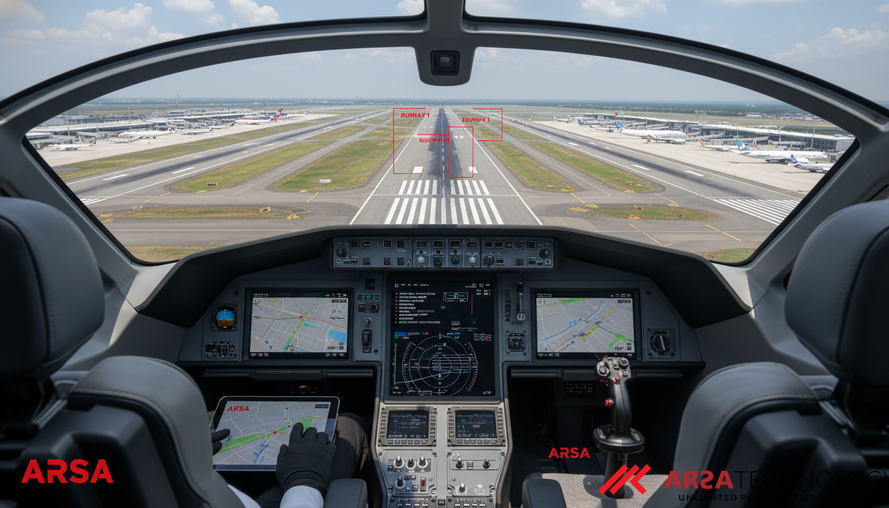
Autonomous systems are rapidly reshaping various industries, with their application in aerospace, particularly for aircraft landing, holding significant promise. However, the development of robust, reliable AI for such safety-critical operations hinges on the quality and diversity of training data. A recent academic paper introduces LARD 2.0, an enhanced dataset and benchmarking framework designed to overcome existing limitations and accelerate the development of autonomous landing systems. This initiative represents a crucial step towards making AI-powered autonomous flight a widespread reality.
The Critical Role of Data in Autonomous Aviation
The ambition of autonomous flight relies heavily on machine learning (ML) vision-based algorithms, which process visual information to make critical decisions. A primary hurdle in developing these algorithms, especially for autonomous landing, is the scarcity of sufficient and truly representative real-world aerial images. Collecting real-world flight data for every conceivable scenario is prohibitively expensive, time-consuming, and often dangerous. Consequently, previous research efforts have largely depended on synthetic datasets, such as the initial LARD dataset derived from Google Earth imagery, or BARS from X-Plane simulations (Bougacha et al., 2026).
While synthetic data has proven invaluable, it often suffers from a lack of diversity and realism, leading to AI models that may not perform optimally in unpredictable real-world conditions. For instance, the original LARD dataset, despite its contributions to runway detection during approach and landing, had limitations in its image sampling and only focused on single-runway airports. This underscores the need for more varied and sophisticated synthetic data to truly train and validate navigation systems for complex airport environments. Solutions like ARSA’s AI Video Analytics systems demonstrate how real-time processing of visual data can transform operational insights across diverse sectors, including smart cities and public safety, highlighting the demand for high-accuracy vision AI.
Refining the Operational Design Domain for Real-World Accuracy
A key innovation in the LARD project is the definition of a rigorous Operational Design Domain (ODD). The ODD describes the specific set of constraints and conditions under which an autonomous system is designed to operate safely and effectively. For autonomous landing, this includes factors such as aircraft position and attitude (pitch, roll, yaw), the geometry of the landing approach, and environmental conditions like time of day and weather. The initial LARD V1 ODD provided a useful framework, supporting early AI certification efforts (Bougacha et al., 2026).
However, LARD 2.0 significantly refines this domain to address several practical shortcomings. The approach cone—the defined airspace for landing—has been tightened and segmented, with more realistic ranges for aircraft yaw and roll angles depending on the distance from the landing threshold point. Crucially, LARD V1's focus solely on single-runway airports was a major limitation, given that over 80% of commercial air traffic uses airports with multiple runways. LARD 2.0 expands its coverage to hundreds of major commercial multi-runway airports worldwide, necessitating a rigorous approach for runway labeling and a clear definition of ODD for this more complex scenario. This refinement ensures that AI models trained on LARD 2.0 are assessed under conditions that genuinely reflect real-world operational challenges, improving their reliability and potential for various industries requiring precise object detection.
Boosting Dataset Diversity with Multi-Source Synthesis
To tackle the inherent lack of diversity in relying on a single data source, LARD 2.0 introduces a pioneering multi-source approach. Recognizing that simulated data alone is insufficient, the project advocates for integrating images from a wider array of virtual environments. LARD 2.0 leverages a calibrated scenario generator to produce consistent images across multiple virtual globes like Google Earth, Bing Maps, and ArcGIS, as well as popular flight simulators such as X-Plane and Flight Simulator (Bougacha et al., 2026).
This expansion to diverse sources is critical. Each simulator or virtual globe offers unique visual characteristics, lighting, textures, and object representations. By training AI models on data from such varied environments, their ability to generalize to unseen real-world conditions dramatically improves. The resulting LARD 2.0 dataset includes imagery from 260 major single- and multi-runway airports, complete with precise per-runway annotations and labels indicating whether an image falls within the nominal ODD or an "Extended ODD" with tolerance margins. This comprehensive approach creates a significantly more robust foundation for training AI models. Enterprises can leverage advanced data processing capabilities, much like how ARSA's AI Box Series can process video streams at the edge, offering real-time insights for various applications.
Benchmarking AI Models for Autonomous Landing
Beyond data generation, LARD 2.0 establishes a robust framework for benchmarking ML models specifically for autonomous landing systems. Previous efforts often lacked standardized metrics and openly available models, making it difficult to compare performance accurately across different approaches. While basic object detection tasks (like identifying a single runway) have been explored, the more complex scenario of detecting multiple runways simultaneously in a dynamic environment remained largely unaddressed (Bougacha et al., 2026).
LARD 2.0 introduces an enhanced detection metric, `e-mAP`, which explicitly accounts for runways detected within both the nominal ODD and the Extended ODD. This metric provides a more nuanced evaluation of model performance in real-world operational boundaries. The project benchmarks modern object detectors on the LARD 2.0 dataset, offering open-source models as a baseline for future research. This includes quantifying the impact of simulator diversity through single-source, leave-one-out, and full multi-source training configurations. Such rigorous benchmarking is essential for demonstrating the practical efficiency and reliability of AI models in critical applications, paving the way for transparent validation and certification.
ARSA Technology's Perspective on Vision AI for Critical Operations
The challenges addressed by LARD 2.0 resonate strongly with the principles guiding ARSA Technology's approach to AI and IoT solutions. Just as autonomous landing systems demand accuracy, scalability, privacy, and operational reliability, ARSA engineers solutions for environments where these factors are non-negotiable. Whether it's enabling AI for public safety, defense, or smart city traffic management, the ability to process visual data accurately and reliably is paramount.
ARSA provides enterprise AI video analytics software and edge AI systems designed for governments and enterprises that need practical, proven, and profitable AI deployments. The emphasis on on-premise deployment, hardware agnosticism, and full data ownership aligns perfectly with the requirements of safety-critical and regulated industries. Through custom AI solutions, ARSA helps organizations transform raw sensor data and unstructured information into real-time operational intelligence, much like LARD 2.0 transforms aerial imagery into insights for autonomous flight.
Conclusion
LARD 2.0 marks a significant advancement in the pursuit of fully autonomous landing systems. By addressing the critical limitations of dataset diversity, refining operational design domains, and establishing a robust benchmarking framework, it provides an invaluable resource for researchers and developers. This enhanced dataset ensures that AI models are trained and evaluated under more realistic and complex conditions, boosting their reliability for high-stakes aerospace applications. The emphasis on clear ODD definitions and comprehensive benchmarking also paves the way for easier AI model certification, accelerating the journey towards safer, more efficient autonomous aviation.
To explore how advanced AI vision systems can enhance your critical operations and achieve measurable outcomes, we invite you to contact ARSA for a free consultation.
**Source:** Bougacha, Y., Delhomme, G., Ducoffe, M., Fuchs, A., Ginestet, J.-B., Girard, J., Kraïem, S., Mamalet, F., Mussot, V., Pagetti, C., & Sammour, T. (2026). LARD 2.0: Enhanced Dataset and Benchmarking for Autonomous Landing Systems. European Congress of Embedded Real Time Systems.