Advancing Fluid Dynamics: How AI and Neuro-ODEs Revolutionize Simulation for Industry
Explore PIVONet, an AI model transforming fluid simulation by combining Neuro-ODEs and Continuous Normalizing Flows for efficient, real-time analysis of turbulent flows. Discover its impact on industrial design, safety, and operational efficiency.

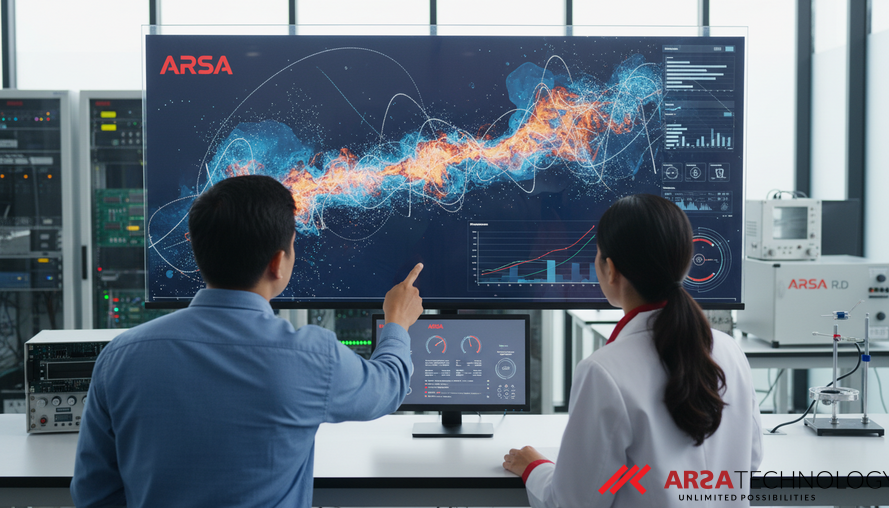
Revolutionizing Fluid Simulation with AI: An Overview of PIVONet
In the world of industrial design, engineering, and environmental management, understanding fluid dynamics is critical. From optimizing aircraft wings to predicting pollution dispersion or ensuring efficient liquid transport in manufacturing, accurate fluid simulation is paramount. Traditionally, these simulations relied on Computational Fluid Dynamics (CFD) methods, which, while highly precise, are often too slow and computationally expensive for real-time applications or extensive scenario analysis. This is where advanced AI models like PIVONet are stepping in to offer a transformative alternative. PIVONet, which stands for Physically-Informed Variational ODE Neural Network, is a groundbreaking framework that marries the power of neural networks with the mathematical elegance of ordinary differential equations (ODEs) to simulate fluid motion more efficiently and realistically.
The core innovation of PIVONet lies in its ability to integrate Neural Ordinary Differential Equations (Neuro-ODEs) with Continuous Normalizing Flows (CNFs). Imagine a neural network that doesn't just predict an output at one step but learns the continuous evolution of a system over time, much like a differential equation. That's a Neuro-ODE. When combined with Continuous Normalizing Flows, which are techniques to transform simple probability distributions into complex ones via a continuous, learned process, PIVONet can effectively model the intricate, often chaotic dance of particles within fluids. This dual approach allows the system to first learn a highly efficient "surrogate simulator" offline, mimicking a specific fluid system without needing to calculate every complex interaction. Then, by incorporating a variational model, it can even capture the inherent randomness and turbulence – known as stochasticity – observed in real-world fluid flows, offering a more complete and accurate picture.
Addressing the Challenges of Complex Fluid Dynamics
Fluid motion is inherently complex, driven by deterministic flow fields and unpredictable elements like thermal effects or turbulence. Traditional simulation methods, while delivering high fidelity, demand immense computational power and time. This makes them impractical for applications requiring rapid predictions, such as iterative design optimization or large-scale parameter studies in diverse industries. PIVONet directly tackles this challenge by offering a computationally tractable alternative that maintains fidelity in crucial aspects of fluid behavior.
The model is particularly adept at handling "advection-diffusion" physics. Advection describes the movement of particles purely due to the bulk motion of the fluid, like a leaf floating down a river. Diffusion, on the other hand, refers to the random spreading of particles from areas of high concentration to low concentration, similar to how a drop of ink disperses in water. PIVONet models this using a simplified yet powerful mathematical framework known as the overdamped Langevin equation. This equation allows the system to differentiate between the predictable, flow-driven paths and the stochastic, random fluctuations of particles, offering a nuanced simulation even in non-laminar (turbulent) regimes. This ability to accurately represent turbulence and flow separation—where fluid streams split—is a significant leap forward, providing engineers with a more reliable predictive tool than ever before. For businesses seeking smarter operational insights, ARSA’s AI Video Analytics can be customized to leverage similar visual intelligence for real-time monitoring and anomaly detection.
How PIVONet Captures Fluid Behaviors
At its heart, PIVONet's strength comes from its two main components: Continuous Normalizing Flows (CNFs) and a Variational Stochastic Differential Equation (VSDE) integration. CNFs are essential for "trajectory modeling." Imagine you want to understand how a simple set of dots, starting in a neat cluster, transforms into the complex, swirling patterns of smoke. CNFs learn a continuous transformation, like a fluid flow itself, that maps the simple initial distribution to the observed complex distribution of particle trajectories. This bidirectional capability is a major advantage: it can generate new, realistic trajectories from a simple input and compute the likelihood of observed trajectories, crucial for robust training and understanding uncertainties.
The Variational Stochastic Differential Equation (VSDE) acts as an augmentation layer to the CNF. Once the CNF has learned the fundamental, underlying physics from the training data, the VSDE introduces an element of controlled randomness. It models the output as a "variational distribution" and optimizes a "pathwise Evidence Lower Bound (ELBO)." In simpler terms, this allows the model to explore multiple plausible trajectories for the same initial conditions, mimicking the inherent variability found in turbulent flows. This means PIVONet can not only predict a trajectory but also the range of possible trajectories a fluid particle might take, complete with their associated probabilities. This probabilistic forecasting capability is invaluable for risk assessment and robust decision-making across various industries.
The Architecture Behind the Intelligence
The PIVONet architecture is designed for efficiency and adaptability. It begins with a "Trajectory Encoder" that takes observed fluid trajectories and compresses them into a concise "posterior context vector." This vector effectively summarizes the key characteristics of the observed motion. This context then feeds into a "Posterior Drift Network," often an MLP (Multi-Layer Perceptron) with specialized time embeddings, which learns to output a "control vector" and "diffusion corrections." These outputs fine-tune the fluid simulation.
The integration process then combines the static, physics-informed dynamics learned by the CNF backbone with these newly learned controls and the inherent Brownian diffusion. This creates a more flexible model that can absorb specific deviations in real-world data without corrupting the fundamental physics it initially learned. For real-time processing and immediate insights, an ARSA AI Box could serve as an edge computing solution to run such models locally, providing instant analysis where it's needed most, without heavy cloud dependency. The use of advanced activation functions like Gaussian Error Linear Units (GELU) in the neural networks ensures smooth, gradual changes in the control signals, leading to stable and realistic fluid behavior simulation.
Business Impact and Future Potential
The implications of technologies like PIVONet for businesses are substantial. By providing a computationally efficient and highly accurate method for simulating complex fluid behaviors, industries can:
- Accelerate Research and Development: Engineers can run thousands of simulations in the time it would take for dozens using traditional methods, drastically reducing design cycles for everything from aerospace components to chemical reactors.
- Enhance Predictive Maintenance: In sectors involving fluid transport or machinery interacting with fluids (e.g., pipelines, pumps), predicting wear and tear or potential blockages becomes more accurate and proactive, supported by advanced systems like ARSA’s Industrial IoT & Heavy Equipment Monitoring.
- Improve Safety and Risk Management: Simulating emergency scenarios, such as hazardous material spills or smoke propagation in buildings, with higher fidelity and probabilistic outcomes, allows for better preparedness and safer operational protocols.
- Optimize Operational Efficiency: From microfluidic devices to large-scale urban planning for air or water flow, accurate fluid models can inform decisions that lead to significant cost savings and improved performance.
- Unlock New Revenue Streams: The ability to offer "digital twin" simulations that truly reflect real-world stochasticity can create new service offerings for industries that rely on precise environmental or mechanical predictions.
While PIVONet currently excels in specific flow conditions and serves as a powerful foundation, its potential for broader generalization, especially when conditioned on diverse environmental or operational covariates, is immense. This research paves the way for a new generation of AI-powered simulation tools that could fundamentally change how industries design, operate, and innovate.
Ready to explore how advanced AI and IoT solutions can transform your business operations? Discover ARSA Technology's range of smart systems and services. To discuss your specific industry challenges and learn more about our tailored solutions, contact ARSA for a free consultation.