Advancing Gait Analysis: How AI's Knowledge Distillation Powers Portable Ground Reaction Force Estimation
Explore Selective Correlation Based Knowledge Distillation (SCKD), an AI innovation enabling accurate, real-time Ground Reaction Force (GRF) estimation from wearable sensors for healthcare, sports, and rehabilitation.

The Critical Role of Gait Analysis and the Wearable Challenge
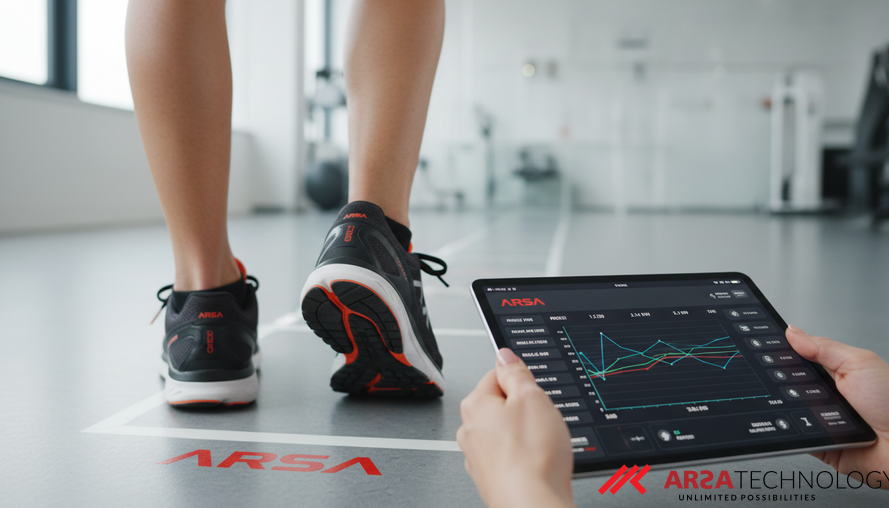
Understanding how the human body interacts with the ground during movement is fundamental across various fields, from healthcare and rehabilitation to sports performance and clinical diagnosis. Ground Reaction Force (GRF) stands out as a crucial metric, offering deep insights into an individual's gait. Traditionally, measuring GRF has relied on expensive, sophisticated equipment like instrumented treadmills fitted with force plates. While highly accurate, these systems are largely confined to specialized laboratory settings, making them impractical for continuous, real-time monitoring in everyday life or dynamic outdoor environments.
The advent of wearable insole sensors promised a revolution in gait analysis by offering a portable and accessible alternative. These discreet sensors, placed directly within a shoe, can collect valuable data about foot pressure and movement. However, this portability comes with inherent challenges. Insole sensor data is often susceptible to noise, external interference, and signal drift, which can compromise measurement accuracy. While deep learning models offer a powerful way to process this complex, noisy data and extract meaningful insights, their computational demands often exceed the capabilities of compact, battery-powered wearable devices, limiting their application for real-time analysis.
Unpacking Ground Reaction Force (GRF) and Insole Sensors
Ground Reaction Force (GRF) is simply the force exerted by the ground on the body in response to the force the body exerts on the ground during movement. It's a critical biomechanical parameter because it directly reflects the dynamic interaction between a person and their environment. Analyzing GRF can reveal imbalances, inefficiencies, and potential issues in gait, making it invaluable for diagnosing movement disorders, guiding rehabilitation therapies, preventing injuries in athletes, and even controlling advanced prosthetics or exoskeletons.
Insole sensors typically embed multiple pressure sensors across the footbed to capture the distribution of pressure during different phases of walking or running. This raw data, a complex time-series signal, needs sophisticated processing to translate into accurate GRF estimations. Despite their convenience, insole sensors face hurdles such as signal instability, variability due to different shoe sizes, and inconsistent performance, particularly during the initiation and termination of the stance phase. These limitations necessitate advanced data processing techniques to refine the raw sensor inputs into reliable, actionable intelligence.
The Power of Knowledge Distillation for Edge AI
The pursuit of high accuracy in deep learning models often leads to increasingly complex, "deep" neural networks with a vast number of trainable parameters. While these large models can achieve impressive performance, they demand significant computational power and memory storage, making them unsuitable for deployment on resource-constrained devices like wearables or edge computing platforms. This creates a dilemma: how can we leverage the superior performance of large AI models without their heavy computational footprint?
Knowledge Distillation (KD) emerges as an elegant solution to this problem. In KD, a large, high-performing model (referred to as the "teacher") is used to train a smaller, more efficient model (the "student"). The teacher model, having already learned complex patterns, transfers its "knowledge" to the student, enabling the smaller model to achieve performance comparable to the teacher, but with far fewer computational resources. This approach is particularly effective for real-time applications in wearable sensor analysis, where rapid processing and low power consumption are paramount. ARSA Technology, for instance, offers robust edge AI solutions like the ARSA AI Box Series, specifically designed for rapid deployment and on-site processing, which can benefit from such optimized AI models.
Selective Correlation Based Knowledge Distillation (SCKD): A Novel Approach
To push the boundaries of efficiency and accuracy in GRF estimation, researchers have introduced Selective Correlation Based Knowledge Distillation (SCKD), a novel framework for creating highly effective, lightweight AI models. Unlike conventional knowledge distillation methods that might attempt to transfer all high-dimensional features from a teacher model, SCKD intelligently selects a smaller, more interpretable subset of features from intermediate layers. This selection process is crucial because high-dimensional data can be computationally intensive and may not always capture the most relevant relationships between individual data elements.
SCKD’s innovation lies in its focus on temporal characteristics, a vital consideration for analyzing time-series data like gait patterns. By ensuring that selected features maintain their temporal extent, the method preserves the crucial sequence and timing information inherent in human movement. This selective approach not only reduces computational complexity but also enhances the interpretability of the correlation maps used for knowledge transfer. Furthermore, to ensure the student model thoroughly mimics the teacher's performance, SCKD incorporates a distribution matching algorithm. This algorithm aligns the probabilistic distributions of both inter- and intra-temporal relationships within a mini-batch of data, providing strong supervision for the student model to learn not just individual data points, but also their intricate temporal trends. This sophisticated process ultimately yields a compact student model that significantly outperforms equally-sized models trained with other distillation methods, as demonstrated by the research from which this information is drawn (Source: Selective Correlation Based Knowledge Distillation for Ground Reaction Force Estimation).
Real-World Impact: Enhancing Gait Analysis Across Industries
The implications of lightweight, accurate GRF estimation models are far-reaching. In healthcare, these models can facilitate early diagnosis and continuous monitoring of movement disorders such as Parkinson's disease or hemiplegia, enabling personalized treatment plans and tracking recovery progress more effectively. For rehabilitation, patients can receive real-time feedback on their gait, helping them to correct movement patterns and accelerate recovery. This also extends to guiding the control of advanced robotic exoskeletons and prosthetics, making them more responsive to user intent.
In sports, athletes can gain detailed biomechanical insights into their performance, helping coaches identify inefficiencies, prevent injuries, and optimize training regimens. Beyond these direct applications, the ability to deploy complex AI models on simple, portable wearable devices opens doors for broader applications in public safety, smart city planning, and personalized wellness tracking. Imagine smart insoles that can detect early signs of fatigue or instability, alerting elderly individuals or workers in hazardous environments to potential risks. Technologies that convert raw sensor data into actionable insights, such as ARSA's general AI Video Analytics capabilities, represent a crucial step towards smarter, safer environments. ARSA also contributes to health monitoring with products like the Self-Check Health Kiosk, showcasing how AI and IoT can make health screening more accessible and efficient.
ARSA's Approach to Practical AI Deployment
ARSA Technology is at the forefront of delivering production-ready AI and IoT solutions that move beyond experimental concepts into measurable, real-world impact. With expertise garnered since its founding in 2018, ARSA has been experienced since 2018 in designing, building, and deploying AI systems across diverse sectors including retail, manufacturing, healthcare, and smart cities. Our core philosophy centers on creating systems engineered for accuracy, scalability, privacy, and operational reliability, acknowledging that AI must perform robustly under real industrial constraints.
Our commitment to practical deployment extends to optimizing AI for edge devices and varied infrastructures. We understand the critical need for solutions that minimize latency and maintain data privacy, particularly in sensitive applications like human movement analysis. By leveraging advanced AI methodologies and developing flexible deployment models, ARSA empowers enterprises and public institutions to transform complex operational challenges into competitive advantages through intelligent technology.
Conclusion: The Future of Portable Gait Analysis
The development of Selective Correlation Based Knowledge Distillation marks a significant leap forward in making sophisticated gait analysis accessible beyond laboratory walls. By enabling lightweight AI models to accurately estimate Ground Reaction Force from wearable insole sensors, SCKD addresses critical limitations in portability, resource efficiency, and data accuracy. This innovation paves the way for a future where continuous, real-time human movement analysis becomes an integral part of proactive healthcare, advanced athletic training, and responsive assistive technologies.
As the demand for intelligent, edge-compatible AI solutions grows, frameworks like SCKD will be vital in unlocking unprecedented insights from everyday data. To explore how advanced AI and IoT solutions can transform your operations and to request a free consultation tailored to your specific needs, we invite you to contact ARSA.
Source: Eun Som Jeon, Jisoo Lee, Huisu Lim, Omik M. Save, Hyunglae Lee, Pavan Turaga. (2026). Selective Correlation Based Knowledge Distillation for Ground Reaction Force Estimation. arXiv preprint arXiv:2605.00888.