Advancing Prenatal Care: Automated Quality Assessment for AI-Powered Obstetric Ultrasound
Discover how automated quality assessment for blind sweep obstetric ultrasound enhances AI diagnostic reliability, crucial for scalable prenatal care in low-resource settings. Learn about the impact of sweep quality on AI accuracy and the power of intelligent feedback systems.

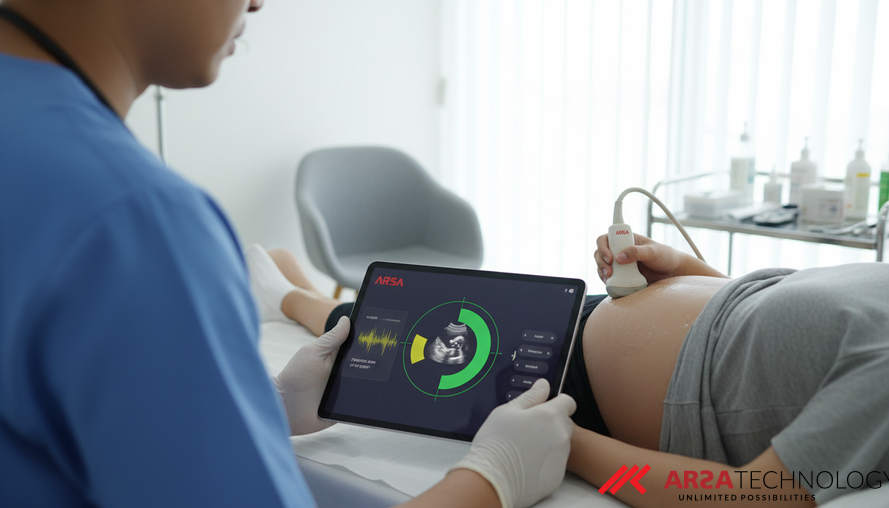
The Critical Role of Prenatal Ultrasound in Global Health
Prenatal ultrasound stands as a cornerstone of modern healthcare, offering vital insights into gestational age, fetal development, presentation, and placental position. This non-invasive diagnostic tool provides information essential for reliable clinical decision-making throughout pregnancy. However, access to high-quality prenatal ultrasound services remains a significant challenge in many low-resource regions worldwide. These areas often face severe shortages of trained sonographers and radiologists, coupled with limited access to advanced imaging equipment. This scarcity restricts both the availability and the consistency of prenatal ultrasound care, leading to potential delays or inaccuracies in diagnosis.
Addressing this gap, the emergence of low-cost, portable handheld ultrasound devices has presented a transformative opportunity. To make these devices accessible and effective for non-expert operators, simplified acquisition strategies like "blind sweeps" have been developed. These protocols standardize the scanning process, reducing the complexity of image acquisition while ensuring comprehensive anatomical coverage. Early initiatives, such as the Imaging the World (ITW) six-sweep protocol, leveraged teleradiology, allowing minimally trained personnel to capture standardized sweep videos for review by remote experts (DeStigter et al., 2011). Building on this foundation, more recent advancements integrate blind-sweep protocols with Artificial Intelligence (AI) interpretation, enabling automated extraction of clinically relevant information, as highlighted in a recent paper by Bhandari et al. (2026).
Blind Sweep Ultrasound and the Power of AI
Blind Sweep Obstetric Ultrasound (BSOU) represents a pivotal step towards democratizing prenatal imaging. By providing a structured method for acquiring ultrasound videos, BSOU allows operators with minimal training to contribute to critical healthcare services. Deep-learning-based AI models have further augmented this capability, taking BSOU videos as input to perform tasks such as Gestational Age (GA) estimation, fetal presentation classification, and placenta location analysis (Pokaprakarn et al., 2022; Gomes et al., 2022; Gleed et al., 2023a; Gleed et al., 2023b; Wiśniewski et al., 2025; Patel et al., 2024). These AI systems hold immense promise for enhancing diagnostic capabilities and expanding the reach of prenatal care, particularly in areas where specialized medical expertise is scarce.
Despite the potential, a crucial question arises regarding the sensitivity of these AI models to variations in the quality of the acquired BSOU sweeps. In real-world scenarios, particularly where operators may have limited experience, deviations from the intended acquisition protocol are plausible. These deviations can include subtle issues like reversed or inconsistent sweep directions, incomplete anatomical coverage, incorrect probe orientation, or operator-induced motion. The challenge lies in understanding how frequently these issues occur and, more importantly, how strongly they affect the accuracy and reliability of downstream AI predictions. While BSOU protocols aim for simplicity, the robustness of current AI systems to real-world acquisition variability remains an active area of research. This underscores the need for systematic studies into how protocol deviations impact AI performance and for the development of automated mechanisms to detect such quality issues.
Ensuring Diagnostic Reliability: The Imperative for Quality Assessment
The reliability of any AI-powered diagnostic system hinges on the quality of its input data. For BSOU, poor-quality acquisitions can lead to missed diagnoses, unreliable biomarkers, and degraded model performance, potentially compromising patient care. This is especially true as medical imaging expands into settings with limited expertise and increased workflow pressures. Automated quality assessment (QA) becomes an indispensable tool, ensuring that only diagnostically usable data is interpreted or processed by AI systems.
The recent research by Bhandari et al. (2026) delves into this critical challenge by systematically evaluating BSOU quality and its impact on three key AI tasks: sweep-tag classification, fetal presentation classification, and placenta-location classification. The study rigorously simulates various plausible acquisition deviations, including reversed sweep direction, probe inversion, and incomplete sweeps. This simulation quantifies the robustness of existing AI models to these common errors, providing invaluable insights into their real-world performance limitations. By understanding these sensitivities, healthcare providers can better anticipate and mitigate risks associated with BSOU deployment.
Automated Quality Assessment: A New Frontier in Medical AI
The core innovation presented in the research is the development of automated quality-assessment models specifically designed to detect perturbations in BSOU sweeps. These AI models are trained to identify deviations from standard acquisition protocols, such as incomplete sweeps or reversed sequence order. The ability to automatically flag sweeps exhibiting these quality issues is a game-changer for medical imaging workflows. By approximating a real-world deployment scenario, the researchers designed experiments that simulate a "feedback loop," where detected low-quality sweeps are assumed to be "re-acquired correctly" by the operator. This mimics the crucial real-time feedback that operators would receive, allowing for immediate correction.
The findings from this simulation are compelling: incorporating such automated detection mechanisms significantly improves the robustness of downstream AI tasks, even under simulated acquisition variability. This demonstrates that automated quality assessment can play a central role in building reliable and scalable AI-assisted prenatal ultrasound workflows. Such proactive quality control not only enhances diagnostic accuracy but also empowers minimally trained operators to achieve consistent, high-quality acquisitions. ARSA Technology, with its extensive experience in AI Video Analytics, understands the importance of converting raw visual data into actionable intelligence, a principle directly applicable to ensuring the integrity of medical imaging.
From Retrospection to Proactive Intervention: The Evolution of QA
Quality assessment has long been a crucial component across various medical imaging modalities. Traditionally, many QA approaches focused on retrospective detection of non-diagnostic or corrupted images. For example, deep learning systems have been developed in MRI to detect motion-corrupted slices or non-diagnostic scans, allowing problematic data to be excluded before further analysis (Weaver et al., 2023; Samani et al., 2020). Similarly, retrospective review is common in ultrasound, although structured manual review can be slow and resource-intensive, underscoring the need for automated solutions in operator-dependent modalities (Yaqub et al., 2019).
A more advanced class of QA approaches provides feedback during image acquisition. In chest radiography, immediate AI-driven guidance has been shown to improve patient positioning and reduce avoidable exposure (Poggenborg et al., 2021). Similar strategies in mammography use automated systems to emulate expert positioning decisions, reducing repeat exams and supporting technologists in achieving consistent, high-quality acquisitions (Gupta et al., 2021). The research on BSOU quality assessment aligns with this proactive paradigm, emphasizing that QA can actively enhance acquisition reliability by providing real-time feedback to the operator. This shift from identifying errors after the fact to preventing them during the process is fundamental for scalable and reliable AI deployments in healthcare. As a company experienced since 2018, ARSA Technology is adept at deploying robust and practical AI systems that meet demanding operational realities across various industries, including healthcare. Solutions like the AI Box Series exemplify this by offering plug-and-play edge AI for rapid deployment and on-site processing.
The Future of Scalable AI in Prenatal Care
The findings presented by Bhandari et al. (2026) hold significant implications for the future of prenatal care, particularly in low-resource environments. By demonstrating the sensitivity of BSOU-based AI models to acquisition variability and proving the efficacy of automated quality assessment, this research paves the way for more reliable and scalable AI-assisted ultrasound workflows. This approach ensures that the valuable information derived from ultrasound scans is accurate, even when performed by operators with minimal specialized training. The ability to detect and correct acquisition errors in real-time transforms passive data collection into an active, intelligent diagnostic process.
Ultimately, this innovation contributes to building a healthcare ecosystem where technology empowers professionals, reduces diagnostic inaccuracies, and expands access to critical medical services globally. It aligns perfectly with the broader vision of leveraging AI and IoT solutions to reduce costs, increase security, and create new revenue streams through improved operational efficiency and better patient outcomes.
Transform your operational challenges into intelligent solutions with cutting-edge AI & IoT technology. Explore ARSA's comprehensive range of AI-powered solutions and request a free consultation with our expert team today.
Source: Bhandari, P., Poudel, K., Luitel, N., Acharya, B., Ghimire, A., Wellman, T., Koepsell, K., Regmi, P.R., & Khanal, B. (2026). Automated Quality Assessment of Blind Sweep Obstetric Ultrasound for Improved Diagnosis. Proceedings of Machine Learning Research – 273:1–11, MIDL 2026. Available at: https://arxiv.org/abs/2603.25886.