Advancing Scientific AI: Unlocking Multimodal Uncertainty with Mixture Density Networks
Explore how Mixture Density Networks (MDNs) provide a data-efficient and interpretable approach to capturing multimodal uncertainty in scientific machine learning, moving beyond traditional AI limitations.

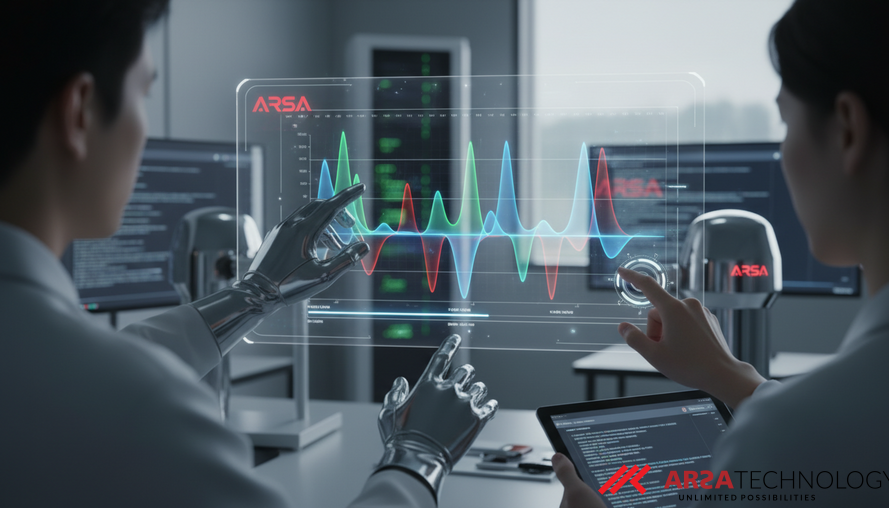
In the rapidly evolving landscape of scientific machine learning (SciML), artificial intelligence is increasingly tasked with solving complex problems where a single, definitive answer simply doesn't exist. Traditional AI models often fall short in these scenarios, particularly when the underlying physics allows for multiple valid outcomes from a given set of inputs. This challenge, known as multimodal conditional uncertainty, demands a new generation of AI tools that can not only predict, but also accurately quantify the spectrum of possibilities.
This article, drawing insights from the paper "Multimodal Scientific Learning Beyond Diffusions and Flows," explores how a sophisticated yet often overlooked approach, Mixture Density Networks (MDNs), offers a powerful and efficient way to handle this complexity. By moving beyond conventional methods, MDNs can unlock deeper insights into chaotic systems, ill-posed inverse problems, and phenomena with multiple stable states, ultimately driving more reliable and interpretable scientific discovery.
The Unseen Challenge of Multimodal Uncertainty
Many real-world scientific and engineering problems don't have a single "right" answer. Imagine trying to determine the specific cause of a structural failure from its observed effects (an "inverse problem"), or predicting the exact trajectory of a weather system. In these cases, a given input might lead to several equally plausible outcomes. This is multimodal uncertainty: the conditional distribution of possible outputs for a single input is not a smooth, single hump, but rather has several distinct peaks, each representing a physically valid state or solution. For example, a chaotic fluid dynamics system might exhibit various stable flow patterns under identical initial conditions, or a medical diagnostic AI might identify multiple possible diseases that explain a set of symptoms.
Traditional AI models, especially those relying on methods like Mean Squared Error (MSE) minimization, typically predict an average outcome. While effective for simple, straightforward predictions, this average can be misleading or even physically impossible when multiple distinct outcomes exist. A prediction that falls squarely between two valid outcomes might represent no actual physical state, rendering the model's output unreliable for critical decision-making. This highlights the crucial need for AI systems that can articulate not just what is most likely, but what are all the plausible possibilities and their respective likelihoods.
Limitations of Current AI Approaches in Science
Responding to the shortcomings of basic prediction models, the AI community has recently gravitated towards highly expressive implicit generative models, such as denoising diffusion probabilistic models (DDPMs) and conditional flow matching (CFM). These advanced techniques have achieved remarkable success in areas like generating realistic images, transforming simple random data into complex realistic data through iterative refinement processes. However, when applied to scientific regression problems—where the goal is often to predict precise physical quantities rather than generate creative content—these models face significant hurdles.
The primary issue is their data hunger and computational intensity. Diffusion and flow-based models often require vast datasets and hundreds of model evaluations for each prediction, making them ill-suited for scientific domains where data is often scarce and real-time analysis is crucial. Furthermore, theoretical analyses indicate these models struggle to accurately capture distributions with well-separated modes, often requiring an exorbitant number of data samples to correctly represent the relative probabilities of disconnected solution branches. In low-data environments, they tend to exhibit poor coverage of possible outcomes and unstable training, failing to fully grasp the intricate multimodal nature of scientific phenomena.
Mixture Density Networks: A Principled Alternative
Amidst these challenges, a previously established yet largely overlooked class of models, Mixture Density Networks (MDNs), is re-emerging as a powerful and practical solution for multimodal uncertainty quantification in SciML. Unlike implicit generative models that indirectly learn distributions, MDNs are explicit parametric density estimators. This means they are specifically designed to represent a combination of simpler probability distributions (like multiple Gaussian "humps"), allowing them to directly model and allocate probability mass across distinct solution branches.
This explicit mixture structure provides a crucial "inductive bias"—an inherent design choice that makes them exceptionally well-suited for low-dimensional, multimodal physics. MDNs can efficiently learn to identify and quantify these separate outcomes even with limited data, a critical advantage in scientific contexts. For instance, in an industrial setting, understanding all possible fault modes for a machine part, rather than just an average failure rate, is paramount. ARSA Technology's AI Box Series, for example, processes complex video analytics at the edge, where data efficiency is critical for delivering real-time insights for scenarios like predictive maintenance. The underlying principles of efficient multimodal distribution modeling could enhance the precision of such systems.
Practical Applications and Business Impact
The capabilities of MDNs extend across a wide array of scientific and industrial applications, offering tangible business benefits by improving prediction accuracy and reducing operational risks.
- Inverse Problems: In fields like materials science or geology, MDNs can help infer hidden properties or conditions from observable data, even when multiple underlying states could produce the same observation. This speeds up discovery and validation processes, reducing the need for costly physical experiments.
- Multistable Systems: For systems that can settle into various stable configurations, such as chemical reactions or mechanical assemblies, MDNs can predict all potential end-states and their probabilities. This is vital for optimizing process control and avoiding undesirable outcomes in manufacturing or industrial automation. Imagine an industrial plant that needs to understand different stable operating points; MDNs can provide these insights. ARSA's AI Video Analytics could leverage similar advanced UQ for critical industrial process monitoring.
- Chaotic Time-Series Prediction: Predicting the future of highly sensitive systems, like financial markets or environmental models, is notoriously difficult. MDNs can capture the diverging pathways of chaotic dynamics, providing a more comprehensive range of possible future scenarios rather than a single, potentially unreliable forecast. This enables better risk assessment and strategic planning.
By offering reliable mode recovery and competitive density estimation with substantially lower data and computational requirements, MDNs translate directly into reduced operational costs, faster deployment cycles, and more confident decision-making for enterprises across various industries.
Enhancing Trust and Interpretability in Scientific AI
One of the significant advantages of MDNs, particularly in scientific contexts, is their inherent interpretability. Unlike many "black-box" generative models, MDNs explicitly represent the conditional distribution as a mixture of components. Each component can often be linked directly to a distinct physical phenomenon, a stable state, or a solution branch. This transparency allows domain experts to gain valuable insights, cross-reference model outputs with theoretical understanding, and build trust in the AI's predictions.
This interpretability facilitates connections to concepts like phase diagrams, stability boundaries, and regime classification, which are crucial for scientific discovery and engineering design. Being able to understand why an AI predicts multiple outcomes, and what each outcome represents physically, empowers scientists and engineers to make more informed decisions and accelerates the development of new technologies. Businesses can also benefit from this clarity, enabling better compliance and risk management by understanding the various possible operational states or failure points. For bespoke solutions that integrate deep learning with existing enterprise systems, ARSA AI API offerings emphasize clarity and ease of integration, aligning with the need for transparent, actionable intelligence.
This work, as presented in "Multimodal Scientific Learning Beyond Diffusions and Flows," demonstrates that Mixture Density Networks provide a robust and efficient path forward for integrating advanced uncertainty quantification into scientific machine learning, offering enhanced performance, reduced resource demands, and critical interpretability.
To explore how advanced AI and IoT solutions can transform your operations with precise insights and quantifiable outcomes, we invite you to explore ARSA Technology's offerings and contact ARSA for a free consultation.
Source: Guilhoto, L. F., Kaushal, A., & Perdikaris, P. (2026). Multimodal Scientific Learning Beyond Diffusions and Flows. arXiv preprint arXiv:2602.00960.