Advancing Security: The Role of AI Backbone Networks in Masked Face Recognition
Explore how AI backbone networks, from CNNs to Vision Transformers, enhance masked face recognition for critical applications like civil aviation security and access control.

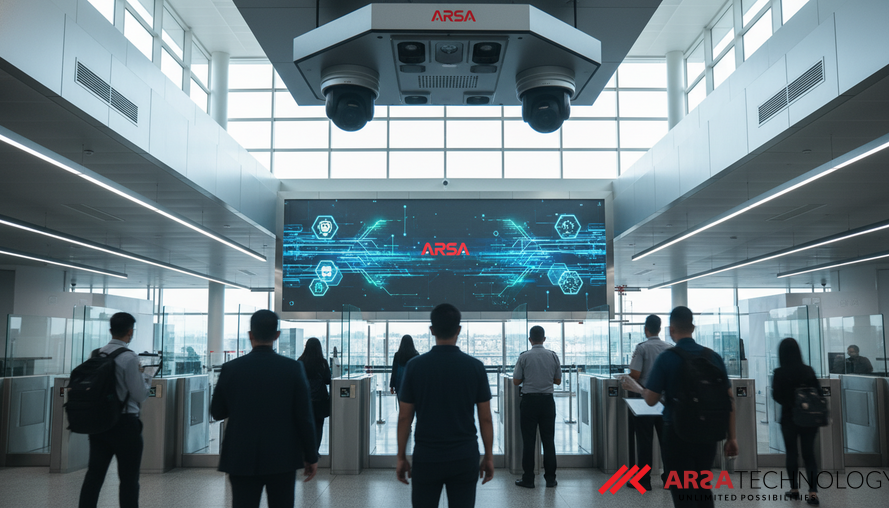
In the post-pandemic era, the widespread use of face masks has introduced unprecedented challenges for traditional facial recognition systems, particularly in high-stakes environments such as civil aviation security checkpoints. These systems are crucial for maintaining efficient operations and ensuring public safety, but masks can significantly obscure the very features they rely on. A recent academic paper, "Masked Face Recognition under Different Backbones" by Zhang et al. (2025), explores how different core components of AI models, known as backbone networks, impact facial recognition accuracy both with and without masks. This research offers vital insights for deploying robust and reliable AI solutions in evolving security landscapes.
Source: Masked Face Recognition under Different Backbones
The Core of AI Vision: Understanding Backbone Networks
At the heart of any sophisticated AI-powered facial recognition system lies the "backbone network." This is essentially the deep learning model’s primary feature extractor, responsible for identifying and interpreting relevant patterns from visual data. Think of it as the highly trained visual cortex of the AI, diligently processing images to extract distinguishing features of a face, regardless of variations in lighting, angle, or, increasingly, partial occlusion by masks. The efficiency and accuracy of a facial recognition model are heavily dependent on the design and capabilities of this backbone.
In contexts like airports, where rapid and precise identity verification is paramount, the choice of backbone network directly influences the system's ability to minimize queues, enhance security protocols, and improve the overall passenger experience. Traditional face recognition often struggles with the information loss caused by masks, highlighting the critical need for advanced backbone architectures capable of robust feature representation even under occlusion. Solutions that integrate cutting-edge ARSA AI Video Analytics leverage these advanced backbones to transform passive surveillance into active, intelligent monitoring.
The Evolution of Visual Intelligence: From CNNs to Vision Transformers
The field of AI vision has seen remarkable advancements in backbone architectures. Initially, Convolutional Neural Networks (CNNs) dominated, evolving from simpler designs like LeNet-5 to more complex structures such as AlexNet, which introduced innovations like ReLU activation and data augmentation. VGGNet further deepened networks by stacking numerous small convolutional kernels, enhancing their ability to extract hierarchical features. GoogleNet then pushed boundaries by expanding both depth and width while carefully managing computational complexity. While highly effective at capturing local patterns, CNNs inherently have limited local receptive fields, meaning they might struggle with global context.
The emergence of Transformer architectures, originally successful in natural language processing, brought a paradigm shift. Vision Transformers (ViT) were introduced to the vision domain by breaking images into sequences of patches and employing self-attention mechanisms to model long-range dependencies across the entire image. This global context-capturing ability allows ViTs to overcome some limitations of CNNs, particularly in scenarios requiring a broader understanding of an image. Further innovations like Pyramid Vision Transformer (PVT) integrated hierarchical feature-pyramid structures, optimizing multi-scale feature fusion. Hybrid architectures, such as CoAtNet and BoTNet, combine the best of both worlds, integrating convolutional and attention mechanisms to achieve both efficiency and comprehensive feature extraction.
Navigating the Masked Reality: Challenges and Solutions
The pervasive use of face masks in public spaces, particularly in busy travel hubs, has created significant operational and security challenges. Manual access control methods are prone to human error, delays, and security vulnerabilities, while traditional face recognition systems, trained predominantly on unmasked faces, experience a sharp decline in accuracy when confronted with occluded features. This information loss places immense pressure on real-time performance and the robustness of recognition systems.
Airports worldwide are embracing high-tech verification methods to accelerate security checkpoints and enhance passenger experiences. Initiatives like IATA’s One ID aim to enable contactless travel, allowing passengers to move through various airport touchpoints with a single live-face verification. However, for this vision to be fully realized, facial recognition systems must reliably authenticate individuals wearing masks. This demands technologies that can extract discriminative features from partially covered faces with both high accuracy and minimal latency, ensuring smooth operations in dynamic, high-traffic environments.
Key Findings: Performance Benchmarks with and Without Masks
The research by Zhang et al. (2025) provides crucial comparative evaluations of various backbone networks under both standard and masked conditions. Their findings highlight the trade-offs between model size, accuracy, and computational requirements for real-world deployment.
- Performance without Masks: In standard tests (unmasked faces), models from the r100 series demonstrated superior performance, achieving over 98% accuracy at a 0.01% False Acceptance Rate (FAR), alongside high top1/top5 scores in search scenarios. The r50 models ranked second, while the r34_mask_v1 model lagged behind. These results underscore the strong capabilities of deeper convolutional networks when full facial data is available.
- Performance with Masks: The true test came with masked faces. Here, the r100_mask_v2 variant emerged as the leader, achieving an accuracy of 90.07%. Among the r50 models, r50_mask_v3 performed best, though it still trailed the top r100 variant. Significantly, Vision Transformer (ViT) architectures, specifically ViT-Small and ViT-Tiny, showed strong masked performance with notable gains in effectiveness. This suggests that the global attention mechanisms of Transformers are particularly adept at processing partial facial information and finding relevant cues beyond the immediate occluded area.
These findings are critical for enterprises considering AI-powered identity solutions. While larger models generally offer better recognition efficiency, they also demand higher computational specifications from edge devices. Newer, more efficient models, particularly the ViT-Small/Tiny variants, demonstrate that satisfactory predictive results can be achieved with relatively fewer parameters, making them more suitable for deployment on edge devices like the ARSA AI Box Series, where processing occurs locally for maximum privacy and speed.
Practical Implications for Enterprise Deployment
The insights gleaned from this research have profound implications for organizations seeking to implement or enhance facial recognition systems. Choosing the right backbone network is not merely a technical decision; it's a strategic one that impacts security posture, operational efficiency, and overall ROI. For critical infrastructure like airports or secure facilities, a system's ability to perform accurately with masked individuals directly translates to reduced security risks and streamlined operations.
Deployment recommendations often involve balancing high accuracy with computational efficiency and inference speed. While the r100 series backbones showed exceptional unmasked performance, their masked counterparts and the performance of ViT-based models indicate a shift in optimal architecture for post-pandemic scenarios. For businesses, this means:
- Enhanced Security: Deploying models specifically trained and optimized for masked faces ensures that security protocols remain robust even when individuals are wearing masks.
- Operational Efficiency: High accuracy with low latency translates to faster processing times at checkpoints, reducing queues and improving throughput.
- Scalable Solutions: Edge computing devices, powered by efficient backbones, allow for on-premise data processing, enhancing privacy and reducing cloud dependency. This is vital for maintaining data sovereignty and compliance.
- Future-Proofing: Investing in flexible AI architectures that can adapt to changing conditions and new challenges ensures long-term value. For advanced integration into existing systems or custom development, enterprise-grade APIs like the ARSA AI API offer scalable and secure solutions.
By systematically evaluating and selecting optimal backbone architectures, enterprises can significantly boost their face recognition systems' ability to extract discriminative features from partially covered faces, ensuring both high accuracy and the low latency required in dynamic environments. This level of technical depth and practical application is characteristic of solutions offered by providers with extensive experience since 2018 in developing and deploying advanced AI and IoT systems.
The post-pandemic landscape necessitates a fresh look at biometric security. The comprehensive evaluation of backbone networks for masked face recognition provides crucial guidance for decision-makers in civil aviation and other sensitive sectors. By understanding the performance characteristics and deployment implications of different AI models, organizations can implement intelligent solutions that are not only effective but also adaptable to evolving operational realities.
To explore how ARSA Technology can help your enterprise implement advanced, privacy-compliant AI and IoT solutions for enhanced security and operational efficiency, we invite you to schedule a free consultation with our expert team.