Advancing Simulations: How AI Learns Physics with Mesh-Free Differential Operators
Explore NeMDO, a breakthrough in AI-powered simulation using Graph Neural Networks to learn mesh-free differential operators for accurate, efficient, and versatile modeling of complex physical systems.

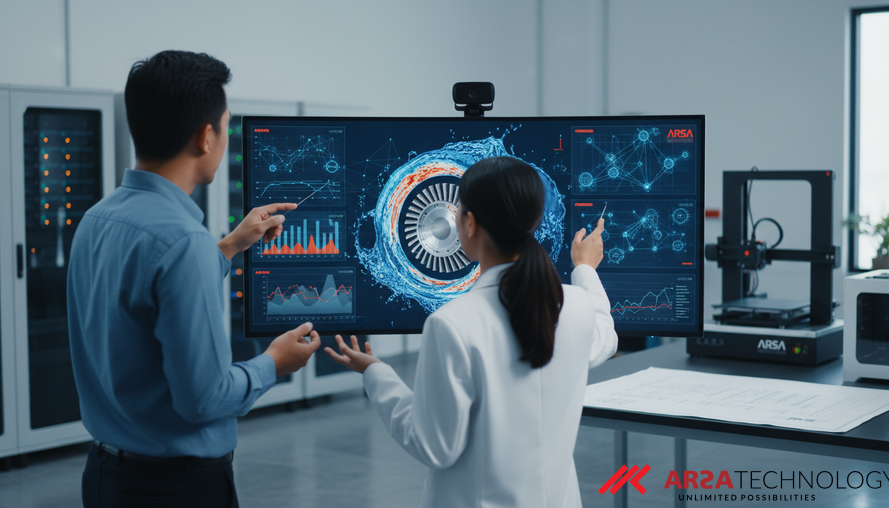
In the vast landscape of science and engineering, understanding and predicting physical phenomena is paramount. From the intricate flow of liquids to the complex behavior of materials under stress, these dynamics are often governed by partial differential equations (PDEs). While these equations describe the world with precision, finding analytical solutions for real-world scenarios is exceptionally rare. This is where numerical methods come into play, providing approximations that allow engineers and scientists to simulate and analyze these complex systems.
Historically, mesh-based numerical methods, such as Finite Difference, Finite Element, and Finite Volume Methods, have been the cornerstone of simulation. These methods subdivide a physical space into a rigid grid or mesh, enabling precise calculations. However, their reliance on a predefined mesh introduces significant challenges, particularly with complex geometries or when the system's shape changes over time. Generating and adapting these meshes can be incredibly time-consuming, sometimes exceeding the simulation itself, and their accuracy can falter near interfaces or irregular boundaries.
The Power of Mesh-Free Numerical Methods
To overcome the limitations of mesh-based approaches, mesh-free numerical methods emerged as a flexible alternative. Unlike their mesh-dependent counterparts, these methods do not require a topological grid. Instead, they discretize a domain using a collection of "collocation points" or "particles," relying solely on the local connectivity and relative positions between these points. This inherent flexibility allows points to be placed precisely where needed, effortlessly conforming to complex and evolving geometries without the overhead of mesh generation or adaptation.
One of the most widely recognized mesh-free methods is Smoothed Particle Hydrodynamics (SPH), developed in the 1970s. SPH approximates differential operators—mathematical tools that describe rates of change, like velocity or acceleration, at specific points—by interpolating properties over neighboring particles using "radial kernels." While SPH is computationally efficient and has found broad applications from astrophysics to fluid dynamics, it often sacrifices accuracy, particularly in turbulent flows, due to its formal zeroth-order consistency. This means it struggles to accurately reproduce even simple linear or quadratic functions, leading to less precise simulations.
The Trade-Off: Accuracy vs. Computational Cost
The limitations of basic SPH led to the development of more sophisticated mesh-free methods. These "consistency-corrected" approaches enforce what is known as "polynomial consistency." In simple terms, this ensures that the numerical method can precisely reproduce simple polynomial functions within a local neighborhood, leading to higher accuracy in the overall simulation. However, achieving this consistency often involves solving complex local linear systems for each particle at every time step, especially in a Lagrangian framework where particles move. This significantly increases computational overhead, presenting a persistent trade-off: highly efficient but less accurate SPH kernels versus more accurate but computationally demanding consistent methods.
This dilemma has long challenged engineers and researchers. For mission-critical applications in diverse fields, balancing the need for high-fidelity simulations with the practical constraints of computational resources is crucial. For instance, in real-time safety monitoring or industrial process optimization, quick, accurate insights are essential, often requiring efficient edge computing capabilities that traditional, heavy-duty simulation methods struggle to provide.
Introducing Neural Mesh-Free Differential Operators (NeMDO)
A recent breakthrough, outlined in the academic paper "Learning Mesh-Free Discrete Differential Operators with Self-Supervised Graph Neural Networks" by Lucas Gerken Starepravo et al. (Source: arXiv:2603.24641), introduces a novel framework called Neural Mesh-Free Differential Operator (NeMDO). This innovative approach leverages self-supervised Graph Neural Networks (GNNs) to learn discrete mesh-free differential operators directly from irregular particle configurations. GNNs are a type of artificial intelligence designed to process data structured as graphs, making them inherently suitable for analyzing the local connectivity and geometric relationships between particles in mesh-free simulations.
Unlike conventional methods that pre-program operator weights or solve linear systems, NeMDO trains a GNN to learn these weights by adhering to "polynomial moment constraints." These constraints are mathematically derived from Taylor expansions, ensuring the operators possess a clear, rigorous mathematical foundation while remaining robust to irregular geometries. The result is a set of learned operators that depend only on the local geometry of the particle "stencil" (a small group of neighboring points around a central point), are resolution-agnostic (meaning they work well regardless of particle density), and can be reused across different particle configurations and governing equations. This versatility is a significant leap forward, making high-fidelity simulations more accessible and adaptable.
How NeMDO Works: Bridging AI and Physics
The core innovation of NeMDO lies in its ability to teach a neural network the fundamental physics principles required for accurate simulation. Instead of explicitly programming complex equations for each interaction, the GNN observes the local arrangement of particles and learns to assign appropriate weights to the differential operators. These weights are critical for calculating how properties like velocity, pressure, or temperature change across the simulation domain.
The "self-supervised" aspect means the network learns by comparing its generated operators to ideal polynomial consistency conditions derived from Taylor expansions. This training process allows NeMDO to develop robust operators that accurately capture physical behavior, even in challenging scenarios with disordered particle distributions. Once trained, these operators can be applied instantly, eliminating the need to solve computationally expensive local linear systems at every time step, which is a common bottleneck for other advanced mesh-free methods. The outputs are not just theoretical; they are practical, real-time insights that can drive operational intelligence. For enterprises seeking to integrate such advanced analytical capabilities, solutions like ARSA's AI Box Series offer pre-configured edge AI systems that could potentially host such learned operators for rapid, on-site deployment, transforming CCTV streams or sensor data into actionable insights without cloud dependency.
Practical Implications and Performance
The introduction of NeMDO presents compelling advantages for various industries:
- Enhanced Accuracy: NeMDO demonstrates improved accuracy compared to traditional SPH, especially in resolving complex fluid dynamics problems as shown by solving the weakly compressible Navier-Stokes equations. This translates to more reliable predictive models for engineers.
- Optimal Cost-Accuracy Trade-off: For scenarios requiring moderate accuracy, NeMDO offers a favorable balance between computational cost and accuracy when compared to more complex, high-order consistent mesh-free methods. This makes sophisticated simulations more economically viable for a wider range of applications.
- Resolution-Agnostic and Generalizable: The learned operators are not tied to a specific resolution or particle arrangement. This allows them to be reused across diverse simulation setups, reducing development time and computational training cycles. Imagine applying a single learned operator to analyze fluid flow in different pipe configurations or stress distribution across various structural designs.
- Reduced Computational Overhead: By learning the operator weights once and applying them repeatedly, NeMDO significantly reduces the computational burden associated with re-calculating weights at every time step in dynamic (Lagrangian) simulations. This makes real-time simulation and analysis more feasible.
This framework opens doors for more dynamic and flexible simulation environments, particularly where complex geometries and evolving systems are prevalent. Industries such as aerospace, automotive, manufacturing, and even smart city infrastructure can benefit from more precise and efficient modeling of complex phenomena like turbulent airflows, material deformation, or crowd dynamics.
The Future of Simulation: Generality and Robustness
NeMDO represents a significant step towards developing a new generation of mesh-free numerical methods that harness the power of artificial intelligence. Its ability to learn general, robust, and mathematically sound discrete differential operators directly from local geometry has far-reaching implications. This approach moves beyond problem-specific closures, providing a flexible framework where the accuracy and computational cost can be systematically controlled.
The fact that these operators are local, generalizable across heterogeneous node configurations, and independent of specific governing equations ensures their applicability across a broad spectrum of physical problems. This versatility highlights the potential for AI to not just optimize existing simulation techniques but to fundamentally reshape how we approach complex computational physics. With platforms like ARSA’s AI Video Analytics, similar AI-driven intelligence can be deployed to interpret real-world video feeds, translating raw data into actionable insights, mirroring NeMDO’s transformation of raw particle data into physical understanding. This signifies a broader trend in engineering intelligence, where AI is used to distill complex information into actionable outcomes.
ARSA Technology has been experienced since 2018 in developing and deploying AI and IoT solutions that bridge advanced research with operational realities. From bespoke AI model development to integration into existing enterprise systems, ARSA focuses on delivering practical, production-ready systems that generate measurable impact across various industries.
To learn more about how advanced AI and IoT solutions can transform your operations and to explore how NeMDO-like principles might apply to your unique challenges, we invite you to contact ARSA for a free consultation.
Source:
Lucas Gerken Starepravo, Georgios Fourtakas, Steven Lind, Ajay B. Harish, Tianning Tang, and Jack R. C. King. (2026). Learning Mesh-Free Discrete Differential Operators with Self-Supervised Graph Neural Networks. arXiv:2603.24641.