AI Agents in the Enterprise: A Reality Check on Knowledge Work Automation
A new Mercor benchmark, APEX-Agents, reveals that leading AI models still struggle with complex, multi-domain knowledge work tasks faced by professionals in law and finance. Discover the challenges and future potential for AI in the enterprise.

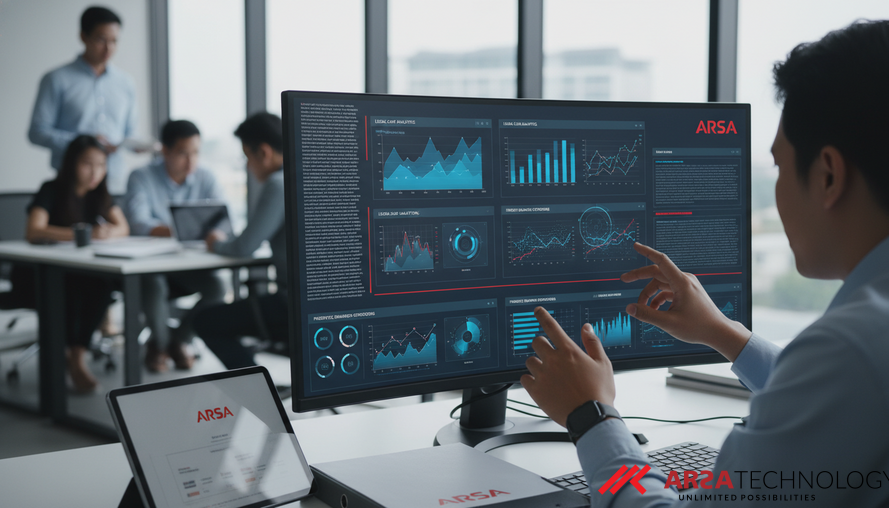
The promise of artificial intelligence transforming white-collar professions has been a prevalent topic, particularly since Microsoft CEO Satya Nadella's 2022 prediction about AI replacing knowledge work. This category encompasses high-value roles such as lawyers, investment bankers, accountants, and IT specialists. Despite the remarkable advancements in large language models (LLMs) and foundation models, the anticipated seismic shift in these fields has largely yet to materialize. The discrepancy between AI's increasing capabilities in research and agentic planning, and its limited impact on daily professional tasks, has presented a significant puzzle in the AI landscape.
Recent groundbreaking research from Mercor, a prominent provider of training data, offers crucial insights into this phenomenon. Their study introduces APEX-Agents, a novel benchmark designed to evaluate how cutting-edge AI models perform on actual white-collar tasks derived from real-world scenarios in consulting, investment banking, and law. The findings from this rigorous benchmark have raised considerable doubts about the immediate readiness of AI agents for comprehensive knowledge work, with every leading AI laboratory receiving what amounts to a failing grade.
The Reality of AI in Knowledge Work
The APEX-Agents benchmark revealed that even the most advanced AI models consistently faltered when presented with queries from genuine professionals. The average accuracy rate barely exceeded a quarter of the questions, with models frequently returning incorrect or entirely absent answers. This stark performance gap highlights a critical limitation in current AI capabilities when faced with the nuanced demands of professional environments. The primary hurdle, as identified by Mercor CEO Brendan Foody, lies in the models' inability to effectively track and synthesize information across multiple, disparate domains—a skill absolutely integral to human knowledge workers.
Unlike simplified academic tests, the APEX-Agents benchmark was meticulously constructed to mirror real-world professional environments. Foody emphasized that the benchmark replicated the fragmented nature of information access in professional services, where individuals constantly navigate and integrate data from various tools like Slack, Google Drive, and numerous other platforms. For many agentic AI models, performing this kind of multi-domain reasoning with consistent accuracy remains a significant challenge. This contrasts sharply with the seamless, intuitive way human professionals synthesize information from diverse sources to formulate comprehensive solutions.
Designing a Real-World Benchmark: APEX-Agents
The development of the APEX-Agents benchmark involved actual professionals from Mercor's expert marketplace. These experts not only crafted the intricate queries but also established the precise criteria for successful responses, ensuring the tasks were truly representative of high-stakes knowledge work. A public review of these questions on Hugging Face underscores the profound complexity involved, showcasing how tasks can escalate quickly beyond simple information retrieval. This rigorous methodology sets APEX-Agents apart as a more realistic and demanding evaluation tool.
While other benchmarks, such as OpenAI's GDPval, have attempted to quantify professional AI skills, APEX-Agents distinguishes itself through its specific focus. GDPval assesses general knowledge across a broad spectrum of professions, whereas APEX-Agents drills down into the ability of AI systems to perform sustained, in-depth tasks within a narrow set of high-value professions like law and investment banking. This difference makes the APEX-Agents test inherently more challenging for AI models and, critically, more indicative of whether these complex jobs can truly be automated. Companies seeking to leverage AI for operational efficiency should look for solutions designed with similar real-world complexities in mind, such as those offered by ARSA's AI Video Analytics, which transforms existing infrastructure into intelligent monitoring systems.
Navigating Complexities: A Legal Use Case
Consider a scenario from the "Law" section of the APEX-Agents benchmark: "During the first 48 minutes of the EU production outage, Northstar’s engineering team exported one or two bundled sets of EU production event logs containing personal data to the U.S. analytics vendor… Under Northstar’s own policies, it can reasonably treat the one or two log exports as consistent with Article 49?" The correct answer is "yes," but arriving at this conclusion demands a sophisticated understanding and cross-referencing of the company’s internal policies with the intricacies of relevant EU privacy regulations.
Such a question would challenge even highly experienced human legal professionals, as it requires a deep assessment of legal frameworks, internal compliance, and situational context. The researchers' intent was to simulate the kind of detailed, high-stakes analysis performed by lawyers, highlighting the profound implications if an LLM could consistently provide accurate answers. Achieving this level of reliability could indeed lead to the automation of many legal tasks currently handled by human experts. The challenge here is not just factual recall but the ability to reason, interpret, and apply complex, often ambiguous, rules across diverse information sets—a cornerstone of advanced knowledge work.
Bridging the Gap: The Path Forward for Enterprise AI
Despite the initial low scores, where Gemini 3 Flash led with 24% one-shot accuracy, followed by GPT-5.2 at 23%, and Opus 4.5, Gemini 3 Pro, and GPT-5 around 18%, the AI field has a history of rapidly overcoming challenging benchmarks. Brendan Foody remains optimistic, noting the significant year-over-year improvement—from models getting 5-10% right last year to nearly a quarter today. This exponential progress suggests that what appears to be an "intern-level" performance today could quickly evolve. This rapid development underscores the importance of choosing AI solutions that are adaptable and scalable. For instance, ARSA's modular AI Box Series can be deployed and configured to specific enterprise needs, enabling continuous improvement and integration of advanced capabilities.
The APEX-Agents test, now publicly available, serves as an open challenge for AI labs globally. It pushes developers to focus on building models capable of deep, multi-domain reasoning crucial for high-value knowledge work. For enterprises considering AI integration, this benchmark is a vital reminder to prioritize solutions that are not only accurate but also robust enough to handle the complex, interconnected data environments of modern businesses. Working with an experienced partner like ARSA Technology, which specializes in applied innovation and real-world deployment, can help businesses navigate these complexities effectively.
The findings from APEX-Agents clarify why widespread automation of white-collar work has been slower than some predictions suggested. While AI excels at specific tasks, the nuanced, multi-domain reasoning inherent in human knowledge work presents a more formidable barrier. However, the rapid pace of AI development indicates that these barriers are continuously being chipped away, paving the way for increasingly capable AI agents in the workplace of the future.
Source: TechCrunch article, "Are AI agents ready for the workplace? A new benchmark raises doubts" by Russell Brandom.
To explore how ARSA Technology's cutting-edge AI and IoT solutions can address your specific operational challenges and drive digital transformation, contact ARSA today for a free consultation.