AI and Autonomous Vehicles: Revolutionizing Urban Infrastructure Maintenance
Explore how AI-powered autonomous vehicles are transforming city infrastructure maintenance by detecting and sharing pothole data, enhancing urban safety and efficiency.

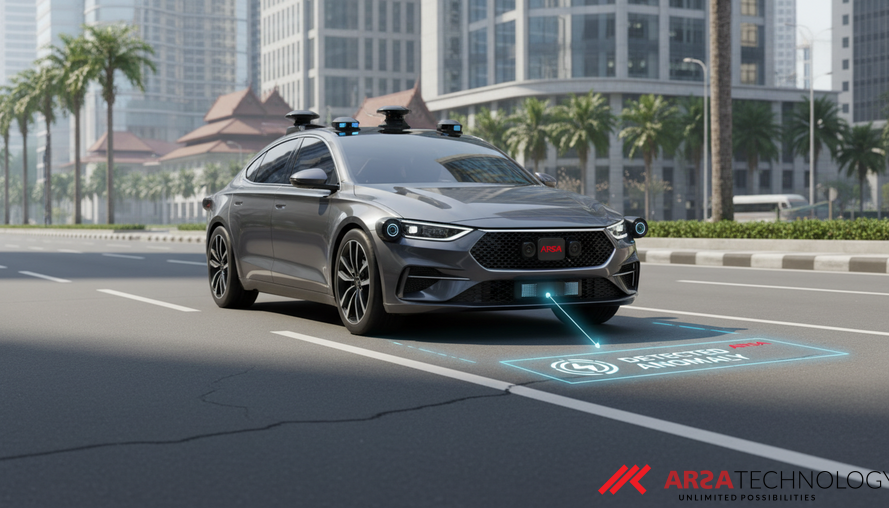
Revolutionizing Urban Infrastructure: Autonomous Vehicles and Pothole Detection
The ongoing challenge of maintaining urban infrastructure, particularly addressing pervasive issues like potholes, has long been a drain on municipal resources and a persistent safety hazard. However, a new frontier in smart city management is emerging, driven by the data-gathering capabilities of autonomous vehicles. These high-tech cars, equipped with sophisticated Artificial Intelligence and Internet of Things (IoT) sensors, are not just navigating our streets; they are actively mapping and reporting their condition, offering cities an unprecedented tool for proactive maintenance.
A notable initiative, as reported by Andrew J. Hawkins in The Verge on April 9, 2026, highlights how Waymo, a leading autonomous vehicle company, is stepping up to assist cities in this battle. Recognizing the invaluable data their robotaxis collect, Waymo has launched a pilot program to share pothole information with select municipalities. This collaborative effort aims to make urban thoroughfares safer for all drivers, whether human or autonomous, by providing actionable intelligence for timely road repairs.
How AI-Powered Perception Systems Detect Road Imperfections
At the heart of this innovation lies the advanced perception hardware integrated into autonomous vehicles. Waymo's robotaxis, for instance, utilize an array of cameras, radar systems, and accelerometers, along with the vehicle's internal physical feedback mechanisms, to meticulously log every road irregularity they encounter. These sensors continuously monitor the road surface, detecting subtle changes in tilt and movement as the vehicle traverses bumps and dips. The objective is to identify anomalies that indicate potential damage or structural weaknesses.
Initially, the primary goal for this robust sensor suite was to ensure the vehicle's own safety and the comfort of its passengers, prompting the autonomous system to slow down or adjust its path to avoid damage. However, the sheer volume and precision of this automatically collected data soon revealed its broader potential. It became clear that this information, processed and refined through rigorous quality control, could serve as a vital resource for city planning and infrastructure departments, moving beyond just internal vehicle operation to widespread public benefit.
Enhancing City Operations with Real-Time Data
The integration of autonomous vehicle data into city management platforms represents a significant leap from traditional, often inefficient, methods of identifying road damage. Historically, cities have largely relied on resident complaints submitted through non-emergency 311 services, or periodic, resource-intensive manual inspections. These methods are reactive, slow, and often inconsistent, leading to delayed repairs and escalating maintenance costs.
Under the new pilot program, the rich dataset on road conditions is made accessible to city departments of transportation through platforms like Google’s Waze for Cities. This platform provides real-time, aggregated data that officials can use to prioritize and dispatch repair crews more effectively. Furthermore, the system allows for crowd-sourced validation from Waze users, bolstering the accuracy of reported locations and reducing false positives. Waymo's early results in locations like the San Francisco Bay Area, Los Angeles, Phoenix, Austin, and Atlanta demonstrate the tangible impact, with approximately 500 potholes already identified in one city alone. This model could also expand to cover other street conditions and safety concerns, showcasing the versatility of AI-driven urban monitoring. For organizations looking to implement similar smart city infrastructure monitoring, ARSA Technology offers solutions such as AI Video Analytics that can detect traffic anomalies and infrastructure issues, complementing this data with rich insights.
Beyond Potholes: Strategic Partnerships for Smart Cities
This type of initiative extends beyond immediate infrastructure repair; it serves a crucial strategic purpose for autonomous vehicle companies. By demonstrating a tangible commitment to urban improvement and public safety, these companies can foster positive relationships with city governments and communities. This is particularly important in regions where the introduction of autonomous vehicles has faced skepticism or opposition, such as in Boston, New York, and Washington, DC, often due to concerns over job displacement among human drivers.
By providing evidence that their technology can contribute to a safer and more efficient urban environment—not just for their own vehicles but for the entire populace—companies like Waymo can bolster their case to policymakers. The core argument that autonomous vehicles are safer than human-driven ones in reducing traffic injuries and fatalities is strengthened when coupled with demonstrated benefits in infrastructure quality. ARSA Technology, an AI & IoT solutions provider experienced since 2018, also collaborates with enterprises and public institutions across various industries, offering solutions that enhance safety and operational efficiency, including smart city applications.
The Broader Impact of AI and IoT on Urban Management
The integration of AI and IoT through autonomous vehicle data represents a fundamental shift in urban management, moving towards a proactive, data-driven approach. This paradigm allows cities to implement predictive maintenance strategies, optimize resource allocation, and ultimately enhance the overall resilience and livability of their urban environments. Imagine a future where critical infrastructure, from roads to bridges and public utilities, is continuously monitored and assessed, enabling interventions before minor issues escalate into costly and dangerous problems.
This vision aligns perfectly with the capabilities offered by comprehensive AI and IoT platforms. Beyond pothole detection, the same underlying technologies can be applied to traffic flow optimization, environmental monitoring, public safety, and smart parking systems. For example, ARSA's AI BOX - Traffic Monitor leverages edge AI to provide real-time vehicle counting, classification, and congestion analysis, offering immediate operational intelligence that can support traffic management and urban planning efforts. Such solutions prioritize privacy-by-design and practical deployment realities, ensuring that these advanced technologies deliver measurable business outcomes, including improved ROI, reduced risks, and enhanced operational productivity.
Strategic technology transformation requires partners who understand both operational realities and the art of the possible. ARSA Technology is dedicated to engineering systems that work at scale and under real industrial constraints.
To explore how AI and IoT can transform your operational challenges into intelligent solutions for your city or enterprise, we invite you to contact ARSA for a free consultation.
Source: Waymo is offering to help cities fix their potholes by Andrew J. Hawkins, The Verge.