AI Automation Redefines Digital Control: The Rise of Model Context Protocol (MCP) in Enterprise Workflows
Explore how Model Context Protocol (MCP) allows AI to automate digital control boards like Stream Deck, enhancing enterprise efficiency and transforming operational workflows.

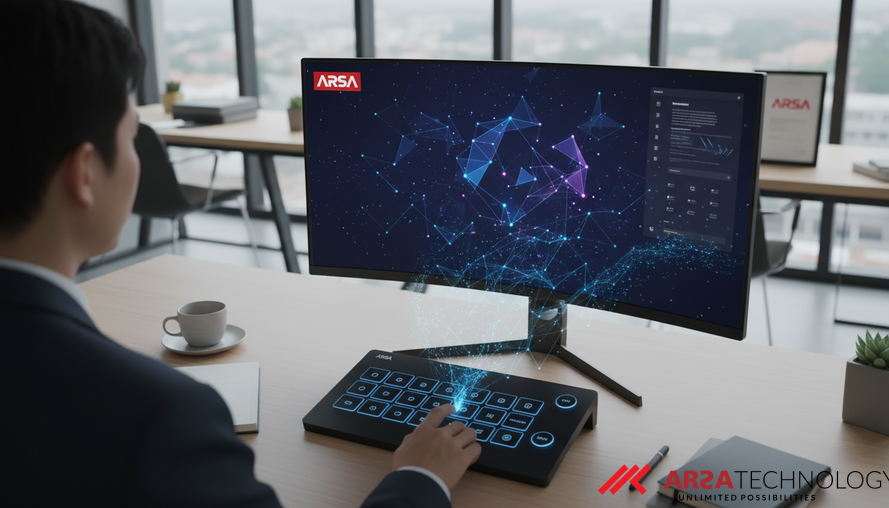
AI can push your Stream Deck buttons for you
By Jess Weatherbed, Apr 1, 2026, 12:38 PM UTC (Source: The Verge)
The Evolution of Digital Control: AI Takes the Helm
In the rapidly evolving landscape of artificial intelligence, the vision of AI assistants performing complex tasks on our behalf is becoming a tangible reality. A significant step in this direction is the recent integration of AI automation with digital control interfaces, as exemplified by Elgato’s Stream Deck 7.4 software update. This update introduces Model Context Protocol (MCP) support, enabling popular AI assistants such as Claude, ChatGPT, and Nvidia G-Assist to interpret commands and activate predefined actions, offering a hands-free approach to managing digital workflows. This development signifies a broader trend where AI transitions from purely analytical roles to becoming an active participant in operational control.
For enterprises across various sectors, the potential implications are vast. Imagine complex sequences of operations, traditionally requiring multiple manual inputs or intricate macro setups, now being orchestrated seamlessly by an AI. This evolution promises not just convenience but a fundamental shift in how digital operations are executed, paving the way for unprecedented levels of efficiency, precision, and accessibility. As organizations increasingly seek to optimize their digital ecosystems, the capability for AI to directly interact with and control operational tools opens new avenues for innovation and productivity.
Model Context Protocol (MCP): The Universal Translator for AI
At the core of this transformative capability lies the Model Context Protocol (MCP). Described by proponents as the "universal USB cable" for artificial intelligence, MCP serves as a standardized bridge, allowing diverse AI assistants to directly connect and interact with third-party applications. This protocol provides a common language and framework for AI tools to understand the functions and context of actions available within various software environments, much like how a physical USB cable enables communication between a computer and a peripheral device.
This standardization is critical for the widespread adoption of AI automation. By establishing a unified method for AI to discover and activate application-specific functions, MCP simplifies integration complexities. Companies like Microsoft, Anthropic, Figma, and Canva are already embracing MCP, underscoring its potential to unlock a new era of interoperability where AI agents can fluidly navigate and manipulate different software, turning passive digital tools into dynamic, AI-responsive components of an integrated workflow. For businesses, this means greater flexibility in deploying AI solutions that can span multiple platforms and applications.
Transforming Digital Control Boards into Intelligent Assistants
With MCP support, devices like the Stream Deck, traditionally controlled through physical button presses or digital taps, are elevated into intelligent, AI-responsive interfaces. The essence of this transformation lies in empowering AI assistants to understand and execute macro commands assigned to these control boards. Each MCP action within the Stream Deck environment includes a descriptive field, which AI assistants utilize to comprehend the action's purpose and the appropriate circumstances for its activation. This metadata is crucial, allowing AI to make contextually relevant decisions.
This hands-free operation holds immense value for professionals in creative industries, live production, data analysis, and even general office automation. Instead of memorizing keybinds or reaching for physical buttons, users can issue voice or text commands, delegating routine or complex sequences to their AI partner. This not only streamlines operations but also enhances accessibility for users who might benefit from alternative control methods, driving efficiency and reducing cognitive load in fast-paced or multi-tasking environments.
Implementing AI-Powered Workflow Management
Integrating AI assistants with digital control devices via MCP involves a structured setup process to ensure secure and effective communication. Users typically begin by updating their digital control board application to the latest version that supports MCP. Within the application's preferences, there's an option to enable MCP Actions, which often creates a dedicated profile where specific actions are designated for AI access. This controlled environment ensures that only intentionally exposed functions are accessible to external AI tools.
Beyond the application settings, the full integration often requires additional technical components, such as a Node.js tool and a dedicated server bridge (e.g., Elgato MCP Server bridge) to facilitate the connection between the AI tools and the control application on the computer. While this might appear as a finicky process for those unfamiliar with such integrations, comprehensive step-by-step guides are usually provided by the developers to simplify the installation. This robust setup underscores the commitment to secure and reliable communication pathways for AI-driven automation. Companies like ARSA Technology, experienced since 2018 in developing robust AI solutions, emphasize secure deployment and reliable integration for enterprise clients.
Business Implications: Driving Enterprise Efficiency and Innovation
The ability of AI to automate digital control interfaces carries profound business implications, offering avenues for significant enhancements in operational efficiency and strategic innovation.
- Optimized Workflows: For enterprises, this means automating complex, multi-application workflows that traditionally required significant manual oversight. From initiating data processing pipelines to managing communication platforms, AI can trigger sequences with speed and consistency, reducing human error and freeing up personnel for higher-value tasks.
- Enhanced Productivity: Across various industries, employees can leverage AI to manage their digital environments more effectively. For example, in a call center, an AI could automatically pull up customer information, launch relevant applications, and log call details based on spoken prompts, significantly cutting down on handle times. Similarly, in manufacturing, AI could trigger diagnostic sequences on IoT devices based on sensor data, improving predictive maintenance.
- Scalability and Consistency: AI-driven automation ensures that workflows are executed with consistent quality and can be scaled easily without a proportional increase in human resources. This is particularly valuable for large organizations with distributed teams or high-volume operations.
- Accessibility and User Experience: Beyond efficiency, AI-powered control can greatly improve accessibility, allowing users with diverse needs to interact with complex software more naturally. Voice commands can replace intricate mouse movements or keyboard shortcuts, democratizing access to powerful tools.
ARSA Technology excels in providing custom AI solutions that integrate deeply with existing enterprise systems. Our ARSA AI APIs provide the modularity needed for such integrations, enabling businesses to deploy intelligent automation precisely where it yields the most impact. Furthermore, our AI Box Series offers edge AI solutions that can act as local processing hubs, ensuring low latency and data sovereignty for real-time actions, much like how a local server bridge connects an AI assistant to a control panel.
The Future of Human-AI Collaboration
The integration of AI with digital control boards through protocols like MCP marks a pivotal moment in human-AI collaboration. It signifies a move towards AI not just as an analytical tool, but as an active agent within our digital workspaces, capable of understanding intent and executing actions. This hands-free automation promises to reshape our interaction with technology, making our digital environments more intuitive, efficient, and responsive. As AI continues to evolve, its capacity to interface directly with and control our tools will undoubtedly unlock new potentials for productivity and innovation across all sectors.
To explore how advanced AI and IoT solutions can transform your enterprise operations and unlock new efficiencies, we invite you to contact ARSA for a free consultation.