AI Data Centers and the Global Grid: Navigating the Compute–Energy Nexus
Explore how the explosive growth of AI data centers creates significant power system stress globally. Discover the AI–energy coupling framework, regional grid vulnerabilities, and strategies for sustainable AI infrastructure.

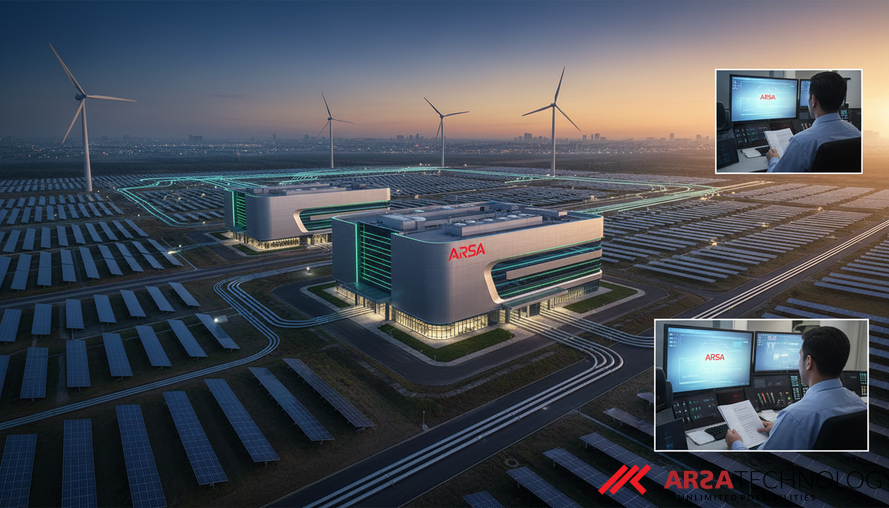
The advent of generative artificial intelligence (AI) has sparked an unprecedented surge in global computational demand, profoundly impacting electricity systems worldwide. While AI promises transformative innovations, its rapid expansion, particularly through large-scale data centers, is now presenting a critical challenge to power grids. This article explores the growing "compute–energy nexus"—the intricate link between digital infrastructure and electricity supply—and highlights the urgent need for strategic planning to ensure sustainable AI growth.
The Accelerating Energy Footprint of AI
The demand for AI is driving record investment in high-performance data centers. These facilities are the new industrial backbone of the digital economy, and consequently, a burgeoning source of electricity consumption. Projections indicate a dramatic increase in global data center electricity use, potentially more than doubling from approximately 415 TWh in 2024 to around 945 TWh by 2030, with the United States and China accounting for a substantial portion of this growth.
A key factor in this escalating demand is the shift to GPU-based computation, essential for training and running complex AI models. These specialized AI facilities can consume up to six times more power per rack than conventional data centers, leading to higher cooling requirements and peak electrical loads. This intensive demand places considerable pressure on local grids, especially as these facilities often cluster in regions offering abundant renewable resources, competitive electricity prices, and favorable climates. The combined electricity consumption of the six leading AI firms alone is forecasted to jump from approximately 118 TWh in 2024 to a staggering 239 TWh to 295 TWh by 2030, a figure equivalent to roughly 1% of total global power demand.
Unveiling the "Compute–Energy Nexus"
Understanding and managing this surge requires a new analytical approach. Traditional energy forecasting models often assume a stable relationship between computing intensity and electricity use, assumptions that no longer hold true for generative AI workloads. The energy demands of AI scale non-linearly with model size, and deployment patterns, while globally distributed, are highly uneven across regions. This creates a gap in conventional analysis, which often fails to capture how firm-level siting strategies, geographical clustering, and specific grid characteristics collectively shape AI-related electricity demand.
To bridge this gap, a novel AI–energy coupling framework has been developed. This innovative approach integrates insights derived from Large Language Models (LLMs)—advanced AI programs capable of understanding and generating human-like text—with quantitative energy-system modeling. By analyzing corporate reports, policy documents, and media coverage, the LLM component semantically infers crucial information about data center investments, siting decisions, and sustainability commitments. This qualitative intelligence then informs a compute–energy mapping model, which translates AI workload intensity into electrical load. A scenario-based forecasting module projects electricity demand trajectories, while a regional Power Stress Index (PSI) evaluates grid-level pressure by comparing projected data center load against existing generation capacity. This holistic framework provides an evidence-based method for anticipating and managing the electricity challenges posed by AI-driven digitalization.
Global Hotspots and Grid Vulnerabilities
Analysis using this framework reveals a distinct geographical concentration of new AI infrastructure. North America, Western Europe, and the Asia-Pacific collectively host over 90% of the projected global AI compute capacity among leading firms. These regions are attractive due to factors such as extensive renewable energy potential, robust grid and fiber-optic networks, climates suitable for cooling, and stable policy environments.
However, this concentration is not without its challenges. Specific regions are already experiencing significant grid vulnerability, as indicated by high Power Stress Index (PSI) values exceeding 0.25. Areas like Oregon, Virginia, and Ireland face considerable local grid pressure, struggling to absorb new AI loads effectively. In contrast, diversified power systems such as those in Texas and Japan demonstrate greater capacity to integrate these demands, thanks to more varied energy sources and resilient infrastructure. This highlights that AI infrastructure is no longer a marginal digital service but a fundamental component influencing power-system dynamics at a structural level.
Strategic Imperatives for Sustainable AI Growth
The findings underscore the urgent need for anticipatory planning that harmonizes computational growth with renewable energy expansion and enhanced grid resilience. Utilities, regulators, and technology developers must collaborate on strategic solutions. This includes designing proactive capacity-expansion strategies, developing robust renewable energy coordination mechanisms, and implementing intelligent locational planning approaches.
The goal is to ensure that the rapid advancement of digital infrastructure aligns with the development of resilient, equitable, and low-carbon power networks. This could involve exploring decentralized AI processing to alleviate strain on central grids, or leveraging advanced monitoring systems to optimize existing energy use. For instance, ARSA's AI Box Series offers edge AI systems that process data locally, potentially reducing the need for extensive data transfer to centralized data centers and thus lowering overall energy consumption for data transport and centralized processing. Furthermore, implementing solutions like ARSA AI Video Analytics can help optimize energy usage within industrial facilities by monitoring equipment and processes for efficiency.
The integration of advanced AI and IoT solutions, such as those provided by ARSA Technology, can play a pivotal role in enabling industries to manage their energy demands more effectively and contribute to a more sustainable compute–energy nexus. ARSA Technology, experienced since 2018, is committed to engineering AI solutions that work in the real world, prioritizing accuracy, scalability, privacy, and operational reliability.
The full academic paper provides an in-depth analysis of these findings. Source: Chen, D., Zhou, Z., Cai, Y., Qin, J., Katchova, A., & Chen, L. (2026). Concentrated siting of AI data centers drives regional power-system stress under rising global compute demand. arXiv:2604.06198.
To learn more about how ARSA Technology is building the future with practical AI and IoT solutions for global enterprises, or to discuss how your organization can navigate the challenges of AI infrastructure and energy demands, we invite you to explore our solutions and contact ARSA for a free consultation.