AI Executive's Home Targeted: Security Incident Raises Questions for Tech Leaders and Enterprises
A 20-year-old man was arrested after allegedly throwing a Molotov cocktail at OpenAI CEO Sam Altman's home, sparking concerns about executive and corporate security in the rapidly evolving AI landscape.

High-Profile AI CEO's Residence Targeted in Security Incident
In an alarming incident that has sent ripples through the technology sector, a 20-year-old man was recently arrested following an alleged attack on the San Francisco residence of OpenAI CEO Sam Altman. The incident, which reportedly involved a Molotov cocktail thrown at Altman’s Russian Hill home early on a Friday morning, highlights the increasing security challenges faced by prominent figures in the rapidly evolving artificial intelligence industry. Surveillance cameras captured the alleged act shortly before 7 AM ET, according to The San Francisco Standard, which reported the story, as cited by The Verge.
This act of aggression extended beyond the executive’s personal residence. Later the same morning, an individual matching the suspect’s description was seen making threats outside OpenAI’s Mission Bay offices, located at 1455 3rd Street. San Francisco police swiftly responded, arresting the suspect at approximately 9 AM ET outside the company's headquarters. OpenAI confirmed the incident, with spokesperson Jamie Radice stating to The Verge that "Thankfully, no one was hurt. We deeply appreciate how quickly SFPD responded and the support from the city in helping keep our employees safe. The individual is in custody, and we’re assisting law enforcement with their investigation." This sequence of events underscores the persistent and sometimes unpredictable security risks that leading AI organizations and their leadership now face.
Broader Implications for Corporate and Executive Security
The alleged attack on Sam Altman's home and subsequent threats at OpenAI's offices are more than isolated incidents; they are symptomatic of a growing need for enhanced security protocols within the tech industry, particularly for companies at the forefront of transformative technologies like AI. As AI becomes more integrated into daily life and its societal impact grows, so too can public sentiment, ranging from fervent support to intense opposition or ideological extremism. This creates a volatile environment where high-profile individuals and their workplaces become potential targets.
Enterprises and public institutions, especially those dealing with cutting-edge or sensitive technologies, must consider multi-layered security strategies that extend beyond traditional measures. This includes not only physical security but also advanced threat intelligence and predictive analytics to anticipate and mitigate risks. The incident serves as a stark reminder that even private residences of key personnel may require sophisticated protection, mirroring the security levels often reserved for corporate facilities.
Leveraging AI and IoT for Advanced Security
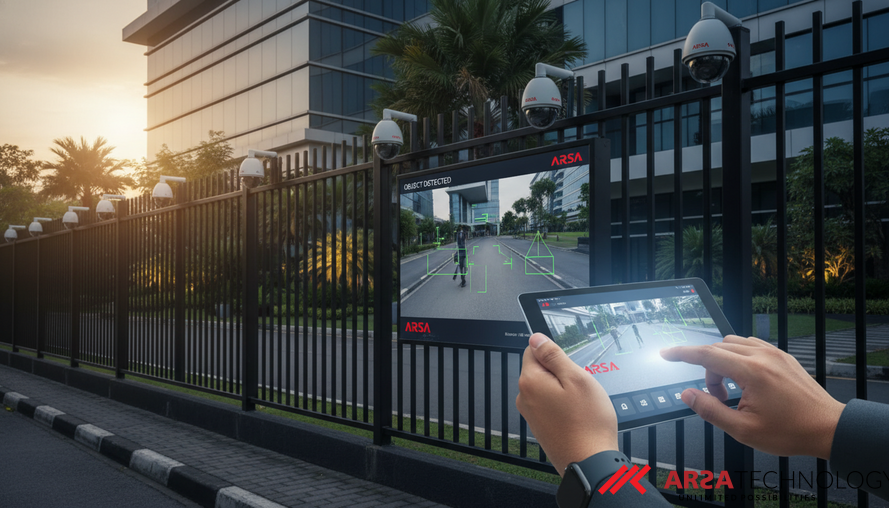
In response to such evolving threats, the integration of advanced AI and IoT solutions has become indispensable for robust security frameworks. Modern security systems go far beyond basic surveillance, employing intelligent technologies to monitor, detect, and respond to potential dangers in real-time. For instance, AI Video Analytics can transform passive CCTV footage into active intelligence, automatically identifying unusual behavior, unauthorized access, or suspicious objects. These systems can detect perimeter breaches, loitering, or even the presence of dangerous items, issuing immediate alerts to security personnel.
Furthermore, edge AI systems offer a powerful solution for distributed security needs, such as monitoring multiple corporate sites or executive residences without relying solely on cloud connectivity. Devices like the ARSA AI Box Series process video streams directly at the source, ensuring low latency and enhanced data privacy by keeping sensitive information within the local network. This on-premise processing capability is crucial for sensitive environments where data sovereignty and immediate response are paramount.
The Role of Intelligent Access Control and Monitoring
Beyond perimeter defense, intelligent access control systems are vital for securing corporate premises. Face recognition technology, for example, offers a secure and efficient method for identity verification at entry points. Solutions such as the ARSA AI API, which includes active and passive liveness detection, can prevent spoofing attacks using photos or videos, ensuring that only authorized individuals gain entry. This level of biometric security is critical for safeguarding intellectual property, sensitive data, and personnel.
Such systems also provide comprehensive monitoring and auditing capabilities, allowing security teams to track movements, investigate incidents retrospectively, and ensure compliance with safety protocols. The ability to quickly identify and verify individuals, coupled with real-time threat detection, significantly reduces response times and enhances overall security posture. This blend of proactive and reactive intelligence transforms security from a reactive cost center into a strategic asset.
Protecting the Future of Innovation
The incident targeting Sam Altman underscores a critical challenge for the AI industry: ensuring the safety and security of its leaders and infrastructure as technology rapidly advances. Companies like OpenAI are at the forefront of innovation, but this position also comes with unique vulnerabilities. Implementing comprehensive security solutions that leverage the very AI and IoT technologies they develop is not merely an option but a necessity.
Investing in intelligent security systems helps protect personnel, assets, and intellectual property, but also maintains an environment conducive to continued innovation. By mitigating physical threats and enhancing digital resilience, organizations can focus on their mission of building the future without undue distraction or risk. As the San Francisco Police Department continues its investigation, with charges still pending as noted in their X post (Source: The Verge), the broader tech community watches closely, acknowledging the urgency of addressing these complex security imperatives.
To explore how ARSA Technology’s advanced AI and IoT solutions can enhance your enterprise or perimeter security, we invite you to reach out for a free consultation.