AI for Sustainable Water: Predicting Wastewater Energy with Explainable Uncertainty
Discover how Interval Type-2 Neuro-Fuzzy Systems (IT2-ANFIS) provide transparent, risk-aware energy predictions for wastewater treatment, crucial for operational efficiency and sustainability.

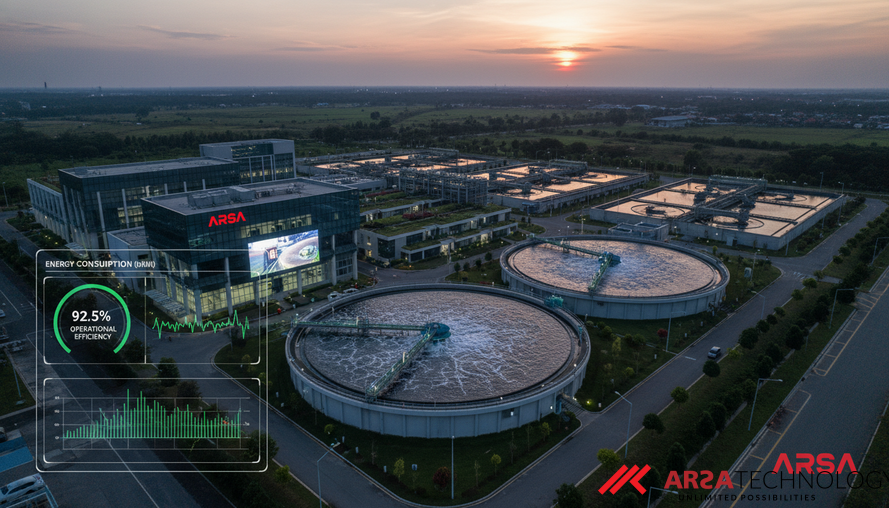
Wastewater treatment plants (WWTPs) are indispensable for public health and environmental protection, yet they are also significant consumers of electricity. Globally, these facilities account for 1–3% of total electricity consumption, a figure that can climb even higher in some regions. This substantial energy demand places WWTPs at the forefront of sustainability initiatives, especially as utilities face increasing pressure to reduce operational costs and adhere to stricter environmental regulations. Accurate energy forecasting is therefore not just a matter of efficiency, but a critical component of achieving carbon neutrality goals and long-term sustainability.
The Challenge of Predictability in Complex Systems
Forecasting energy consumption empowers plant operators to anticipate daily demand fluctuations, optimize equipment schedules, and strategically align high-energy activities with the availability of renewable power. These predictions are vital for both immediate operational adjustments and long-term infrastructure planning. However, WWTPs are inherently complex systems, exhibiting substantial variability. Factors such as influent characteristics (e.g., Biological Oxygen Demand (BOD) and Chemical Oxygen Demand (COD)), diverse operational conditions (e.g., aeration rates and membrane performance), and environmental drivers (e.g., seasonal changes and temperature effects) all contribute to this variability.
Given this complexity, achieving perfectly accurate energy predictions is often impossible due to the sheer scale of variation and the occasional lack of complete information. This reality underscores a critical need: predictive models must not only provide point predictions of energy use but also quantify the associated uncertainty. Before insights from predictive modeling can be reliably translated into critical engineering decisions for water treatment operations, understanding the trustworthiness and certainty of these model results is paramount.
Beyond Black-Box Predictions: The Need for Explainable Uncertainty
Despite significant advancements in artificial intelligence (AI), its widespread adoption in water treatment remains limited, largely due to a lack of trust compared to traditional knowledge-based models. This hesitancy is often attributed to the "black-box" nature of many advanced predictive models, which provide answers without revealing their underlying reasoning. While extensive research has focused on applying probabilistic methods like Bayesian neural networks and Gaussian processes for uncertainty quantification, these models often fall short on explainability. They produce statistical uncertainty estimates that cannot be directly linked to specific process variables or operational rules.
This opacity creates significant barriers to trust and adoption in an industry where understanding causal relationships and being able to explain why a prediction has a certain confidence level is essential for safe and effective application. The challenge lies in developing methods that can quantify prediction uncertainty in an interpretable way, allowing operators and decision-makers to understand the factors contributing to that uncertainty.
Introducing the Interval Type-2 Neuro-Fuzzy Inference System (IT2-ANFIS)
To address these critical challenges, researchers have developed innovative approaches, such as the Interval Type-2 Adaptive Neuro-Fuzzy Inference System (IT2-ANFIS). Unlike traditional black-box probabilistic models, IT2-ANFIS generates interpretable prediction intervals through its transparent, fuzzy rule-based structures. This makes it a "grey-box" model within the Explainable AI community, where its reasoning mechanisms are accessible.
At its core, a fuzzy system models vagueness and imprecision using "fuzzy sets" and "graded membership functions," rather than relying on rigid, crisp boundaries. This allows the system to handle the inherent ambiguity often found in real-world data. Type-2 fuzzy systems extend this concept further by introducing uncertainty directly into the membership functions themselves. This unique capability is represented by a "Footprint of Uncertainty" (FOU), defined by lower and upper membership functions that bound the interval of possible membership grades. This property is crucial for explicitly capturing epistemic uncertainty—uncertainty arising from imprecise data, measurement noise, or even disagreements among expert opinions.
A Three-Layered Framework for Understanding Uncertainty
The IT2-ANFIS framework offers a sophisticated, three-layered approach to decomposing and explaining prediction uncertainty:
- Feature-Level Uncertainty: This layer identifies which specific input variables are primarily responsible for introducing ambiguity into the predictions. For a WWTP, this could reveal that variations in influent BOD or sudden temperature shifts significantly contribute to the uncertainty in energy forecasts. By pinpointing these "ambiguous" variables, operators can focus on improving data collection or monitoring around these features.
- Rule-Level Uncertainty: Here, the system reveals the confidence level in its "local models," which are essentially the fuzzy rules governing specific operational conditions. For example, a rule might state: "IF influent BOD is HIGH AND aeration rate is MODERATE, THEN energy consumption is AROUND X." The rule-level uncertainty would then indicate how confident the system is in this specific rule under varying conditions, providing insights into the robustness of its internal logic.
- Instance-Level Uncertainty: This final layer quantifies the overall prediction uncertainty for a specific, single prediction instance. It provides a comprehensive interval that reflects all combined uncertainties from the feature and rule levels for that particular operational scenario, offering a clear range within which the actual energy consumption is expected to fall.
This decomposition allows for a deeper understanding of prediction confidence, linking it directly to operational conditions and input variables—a capability largely missing in conventional black-box models.
Validation and Broader Applications
The effectiveness of IT2-ANFIS has been validated on real-world datasets, such as Melbourne Water’s Eastern Treatment Plant. In these trials, IT2-ANFIS demonstrated predictive performance comparable to first-order ANFIS, but with a crucial advantage: it achieved substantially reduced variance across training runs. This indicates a more robust and consistent model, less prone to erratic behavior. The core innovation lies in its ability to provide explainable uncertainty estimates that directly connect prediction confidence to observable operational conditions and input variables. This shift moves beyond simply knowing what the energy consumption will be to understanding how confident that prediction is and why.
The potential of Type-2 fuzzy systems for uncertainty quantification extends far beyond wastewater treatment. They have been successfully applied in diverse domains, including:
- Renewable energy forecasting (e.g., solar radiation and wind power).
- Electric load forecasting in microgrids.
- Medical diagnosis (e.g., heart disease and blood pressure classification), where they have shown improved diagnostic accuracy under uncertain clinical data.
- Financial forecasting for stock market prediction, providing robust point forecasts and uncertainty bounds even in volatile market conditions.
These applications underscore the robust and versatile nature of IT2-ANFIS in scenarios characterized by inherent uncertainty and the need for transparent decision-making.
Leveraging Advanced AI for Industrial Transformation
For industries like wastewater treatment, where operational efficiency directly impacts sustainability and cost, the ability to predict energy consumption with explainable uncertainty is transformative. It allows for proactive resource management, optimized equipment scheduling, and better alignment with environmental targets. Such advanced AI/IoT solutions, which can transform raw data into actionable insights, are key to modernizing critical infrastructure.
Companies like ARSA Technology, with expertise in AI Vision and Industrial IoT, are at the forefront of deploying these sophisticated technologies. Whether it’s through AI Video Analytics for real-time monitoring and anomaly detection, or by providing comprehensive solutions across various industries, the focus remains on delivering practical, precise, and adaptive AI that tackles real-world industrial challenges. By integrating advanced analytics with existing infrastructure, ARSA helps enterprises achieve significant improvements in operational efficiency, safety, and decision-making, while ensuring data privacy and compliance. This includes enabling predictive maintenance, optimizing workflows, and enhancing security in complex operational environments.
The study referenced in this article, "Explainable Uncertainty Quantification for Wastewater Treatment Energy Prediction via Interval Type-2 Neuro-Fuzzy System" by Qusai Khaled et al., highlights a critical step forward in making AI not just powerful, but also trustworthy and transparent for high-stakes applications. (Source: arXiv:2601.18897v1).
Ready to explore how explainable AI and IoT solutions can transform your operations, reduce costs, and enhance sustainability? Leverage ARSA’s experience in AI and IoT for your enterprise. Contact ARSA for a free consultation to discuss your specific needs and discover tailored solutions.