AI in Gastroenterology: Bridging the Gap Between High Expectations and Clinical Reality
Explore the disconnect between high expectations and limited integration of AI in Spanish gastroenterology, revealing key barriers and paths to successful digital transformation in healthcare.

The Promise and Paradox of AI in Modern Medicine
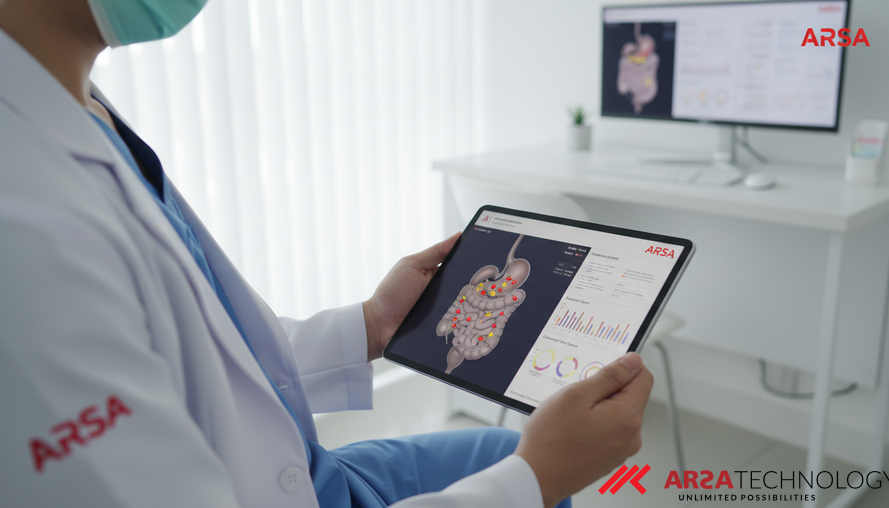
Artificial intelligence (AI) stands at the forefront of medical innovation, poised to revolutionize patient care, diagnostics, and research. Its advanced capabilities in processing vast datasets and discerning intricate patterns offer unprecedented potential to enhance diagnostic accuracy, streamline clinical decision-making, and accelerate biomedical breakthroughs. Within the specialized field of gastroenterology, AI has already demonstrated significant efficacy across various applications.
For instance, AI-driven systems have shown remarkable precision in detecting colorectal polyps, achieving sensitivities as high as 93% and specificities of 89%. Deep learning algorithms have proven capable of matching the diagnostic performance of expert endoscopists in identifying conditions like Barrett’s esophagus. In inflammatory bowel disease management, AI offers objective evaluations of endoscopic activity, moving beyond subjective assessments. Furthermore, predictive models in hepatology are refining risk stratification for patients dealing with metabolic dysfunction-associated liver disease. Despite these compelling advancements, the real-world integration of AI into clinical practice remains notably fragmented.
Unpacking the AI Adoption Gap in Gastroenterology
A recent national survey, conducted by the Spanish Society of Digestive Pathology (SEPD), shed light on this discrepancy, revealing a significant gap between the perceived value of AI and its actual integration among Spanish gastroenterologists. Published as "Artificial Intelligence in Spanish Gastroenterology: high expectations, limited integration. A national survey" (Source), the study indicated that a vast majority—87.5%—of specialists recognize AI as a transformative tool for their field. However, only 60.2% reported actively using AI in their practice, with most of this usage occurring outside formal institutional frameworks.
The survey also highlighted a rapid, albeit informal, surge in AI adoption, with over 80% of current users having initiated their AI engagement within the past year. This rapid individual uptake, often without institutional guidance, points to a clear demand for AI tools in clinical settings. The study identified key factors predicting more frequent AI use: previous formal training, employment within university hospitals, and younger age demographics among practitioners. Such insights underscore the importance of structured programs and supportive environments for fostering AI integration. For instance, healthcare facilities can benefit from solutions like the Self-Check Health Kiosk for automated patient pre-screening, or leverage AI Video Analytics to optimize patient flow and facility management, providing practical entry points for AI adoption.
Key Barriers Hindering AI Integration
The survey pinpointed several significant obstacles preventing the widespread, structured adoption of AI in gastroenterology. The most prominent barrier identified was a pervasive lack of adequate training, cited by 61% of respondents. This finding is particularly striking given that an overwhelming 93.8% of specialists believe comprehensive AI training programs are essential, yet only 18.4% have actually received any formal instruction. This educational deficit highlights a critical need for accessible and accredited training initiatives.
Another substantial hurdle is the absence of clear institutional strategies for AI implementation, noted by 46% of participants. This indicates a broader systemic challenge where individual enthusiasm for AI is not met with top-down support, infrastructure, or clear guidelines. Furthermore, ethical concerns surrounding AI's role in patient care were a significant apprehension for 50% of specialists. The European Union's classification of AI-driven healthcare systems as "high risk" under its AI Act underscores these ethical and regulatory complexities, requiring stringent monitoring and compliance. The rise of readily available generative AI tools, such as ChatGPT, further compounds these issues by introducing risks associated with unsupervised and potentially unregulated clinical use, necessitating robust governance and privacy-by-design principles in any integrated solution.
The Path Forward: Education, Governance, and Strategic Integration
To bridge the significant gap between high expectations and limited practical integration of AI in gastroenterology, a multi-faceted approach focusing on education, robust governance, and strategic implementation is crucial. The insights from the Spanish survey emphasize the urgent need for structured, accredited training programs that equip medical professionals with the necessary skills to effectively and ethically deploy AI tools. This would not only enhance individual competency but also build collective confidence in AI technologies.
Institutions must develop clear AI adoption strategies, moving beyond fragmented individual efforts. These strategies should address regulatory compliance, ethical considerations, and data privacy—concerns paramount in healthcare. The role of scientific societies, such as the SEPD, is vital in leading this digital transition, setting standards, and fostering collaboration between medical professionals and technology providers. By engaging with companies that deliver tailored AI & IoT solutions, healthcare organizations can implement systems that are designed for practical deployment, scalability, and adherence to privacy principles. ARSA Technology, for instance, has been experienced since 2018 in developing and deploying such secure and efficient AI solutions across various industries, including healthcare. Such partnerships can enable the integration of cutting-edge AI technologies that enhance diagnostic capabilities, improve operational efficiency, and ultimately lead to better patient outcomes.
Conclusion: A Collaborative Future for AI in Healthcare
The journey of artificial intelligence in gastroenterology, as revealed by the Spanish national survey, is a testament to both its profound potential and the significant integration challenges that lie ahead. While medical specialists widely acknowledge AI's transformative power, its formal adoption remains limited, hindered by gaps in training, institutional support, and ethical considerations. The rapid, informal uptake of AI tools underscores a strong desire within the medical community to harness these technologies for improved patient care.
To truly unlock the benefits of AI in healthcare, a concerted effort is required from all stakeholders. This means developing comprehensive educational frameworks, establishing clear governance and ethical guidelines, and fostering strategic partnerships between medical institutions and innovative technology providers. By addressing these critical areas collaboratively, we can move towards a future where AI is seamlessly integrated into clinical practice, delivering on its promise of making medicine faster, safer, and smarter for patients worldwide.
To explore how AI and IoT solutions can transform your healthcare operations and to discuss tailored implementation strategies, please contact ARSA for a free consultation.
Source: Crespo, J., Enériz, A., Iruzubieta, P., Carballo, F., et al. (2025). Artificial Intelligence in Spanish Gastroenterology: high expectations, limited integration. A national survey. arXiv preprint arXiv:2601.17011.