AI-Powered Image Registration: Overcoming Domain Shift for Precision Analytics
Discover how AI-powered image registration, using scene-appearance disentanglement, overcomes domain shift challenges to deliver unparalleled accuracy and real-time insights for critical industries.

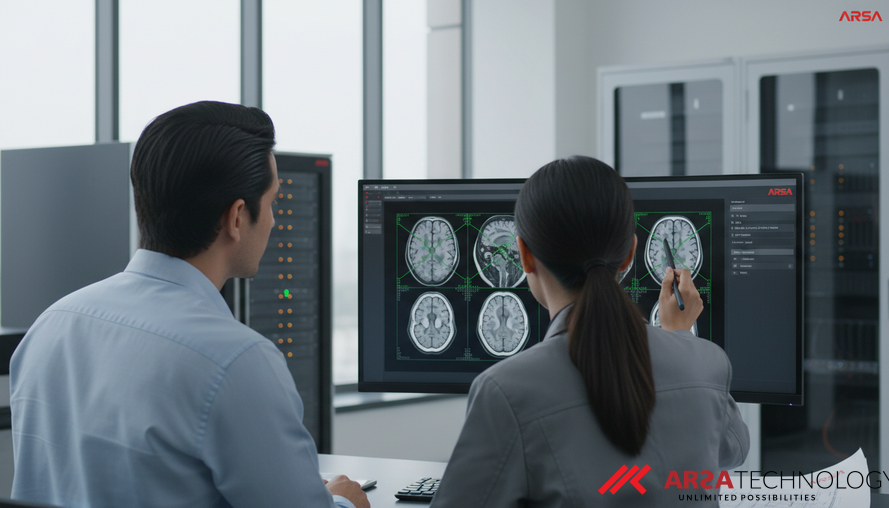
The Core Challenge: Aligning Imperfect Images in the Digital Age
In today’s data-driven world, the ability to accurately align and compare images from different sources is fundamental across numerous sectors, from advanced medical diagnostics to smart city management. This process, known as image registration, aims to establish precise spatial correspondence between two or more images. Traditional registration methods rely on a crucial but often flawed assumption: that corresponding points in different images will have similar intensity or brightness. This "brightness constancy" works well when images are acquired under nearly identical conditions.
However, real-world scenarios frequently present a significant hurdle: "domain shift." This occurs when images of the same scene are captured with different sensors, varying lighting conditions, or distinct imaging physics, leading to systematic intensity differences. For instance, comparing an X-ray with an MRI scan, or satellite imagery taken at different times of day, presents this challenge. When domain shift is coupled with actual geometric misalignment, traditional methods struggle, making accurate correspondence estimation incredibly difficult or even impossible. This problem affects critical applications where precision is paramount, hindering accurate analysis and decision-making.
Beyond Traditional Matching: Disentangling Scene from Appearance
To overcome the limitations of conventional image registration, a revolutionary approach focuses on "scene-appearance disentanglement." Imagine taking two photographs of the same building, one under a bright midday sun and another during a foggy dawn. While the lighting and colors (appearance) are vastly different, the underlying structure of the building (the scene content – its geometry, walls, windows) remains the same. The core idea behind disentanglement is to separate these two factors: the unchanging structural information (the "scene") from the variable visual characteristics (the "appearance").
By decomposing an observed image into these distinct, independent representations, we can effectively "normalize" the images. The scene representation captures the fundamental geometric and structural content, which is consistent regardless of how the image was acquired. Meanwhile, the appearance code accounts for the unique intensity and visual characteristics introduced by specific sensors or environmental conditions. This innovative factorization allows for image registration to occur not by directly matching potentially misleading pixel intensities, but by aligning images in a shared, domain-invariant scene space where true geometric correspondence can be reliably established. This eliminates the "brightness constancy" violation and paves the way for robust alignment even under severe domain shifts.
SAR-Net: A Unified Framework for Robust Alignment
Building on the principle of scene-appearance disentanglement, researchers have developed innovative frameworks like SAR-Net (Scene-Appearance Registration Network). This unified approach directly addresses both domain shift and geometric misalignment within a single, intelligent system. Instead of trying to directly match raw pixel intensities or distorting images to fit, SAR-Net learns to: first, understand and "deconstruct" the imaging process itself to extract the inherent scene content (`S`) and the specific appearance (`A`) from any given image; and second, re-render the scene using a target appearance.
This unique two-step process allows registration to happen in an abstract, domain-invariant space where the "brightness constancy" assumption naturally holds. SAR-Net effectively creates a neutral ground where images, regardless of their original acquisition conditions, can be accurately compared and aligned based solely on their underlying structural similarities. This represents a significant paradigm shift from previous methods, which often struggled with the coupled nature of domain shift and geometric distortion, either by making faulty assumptions or by preserving global content at the expense of local geometric accuracy. For sophisticated AI Video Analytics, this level of precision is invaluable.
Real-World Impact: Enhancing Precision Across Industries
The implications of such robust image registration extend far beyond academic research, offering tangible benefits across a multitude of industries. In healthcare, it enables precise alignment of multi-modal medical images (e.g., MRI, CT, X-ray), crucial for accurate diagnosis, surgical planning, and monitoring disease progression. Imagine comparing patient scans taken years apart, or combining data from different imaging techniques for a holistic view; SAR-Net's approach ensures these comparisons are geometrically sound despite differences in scanner models or acquisition protocols. ARSA Technology provides Healthcare Technology Solutions, including self-check kiosks, which can benefit from the foundational principles of such advanced image analysis for various applications.
Beyond medicine, this technology significantly impacts manufacturing, where automated visual inspection systems rely on comparing products against templates or detecting subtle defects. Domain shift, caused by varying lighting, camera angles, or material reflectivity, can lead to false positives or missed defects. Accurate cross-domain registration ensures consistent quality control. For urban planning and environmental monitoring, aligning satellite or drone imagery taken under diverse atmospheric conditions allows for precise change detection and analysis. The ability to achieve high accuracy and real-time performance means that critical insights can be generated swiftly, supporting faster, more informed operational decisions across various industries.
The Technical Edge: Accuracy and Speed for Critical Operations
SAR-Net's superior performance is rooted in its innovative technical components. It introduces a "scene consistency loss," a sophisticated mechanism that enforces geometric correspondence directly within the latent space where scene content is represented. This means the network is explicitly trained to ensure that the structural elements extracted from different domain images truly match up, without needing to calculate an explicit spatial transformation upfront. This theoretical foundation provides a robust basis for consistent cross-domain alignment.
Empirically, SAR-Net demonstrates remarkable results. On challenging real-world tasks like bidirectional scanning microscopy (where artifacts are complex and highly coupled), it achieves significantly improved image similarity metrics (SSIM of 0.885 and NCC of 0.979). These numbers represent a dramatic 3.1 times improvement over the strongest existing baseline methods, proving its ability to tackle scenarios where traditional techniques falter. Crucially, it maintains real-time performance at 77 frames per second (fps). Such speed is vital for applications requiring immediate feedback, such as live medical imaging or high-speed industrial quality control. Enterprises can leverage the power of such advanced AI with solutions like the ARSA AI Box Series, which offers edge computing capabilities for real-time processing directly where the data is captured.
Deployment Advantages: Efficiency, Reliability, and Data-Driven Insights
The practical benefits of adopting advanced image registration solutions like SAR-Net are multifaceted for businesses. Firstly, the high accuracy drastically reduces human error and the need for time-consuming manual adjustments or post-hoc calibrations, leading to significant operational cost reductions. In industries like manufacturing or microscopy, minimizing the burden on skilled personnel allows them to focus on more complex tasks. Secondly, by providing robust, real-time analytics, these systems enhance security and safety. Detecting anomalies or ensuring compliance becomes more reliable, whether it's monitoring personal protective equipment (PPE) usage on a construction site or identifying unauthorized access.
Moreover, the ability to extract quantitative, actionable data from disparate visual sources transforms passive video feeds into strategic data assets. This enables data-driven decision-making for optimizing layouts, improving resource allocation, and predicting maintenance needs, thereby enhancing overall efficiency and productivity. Such technology facilitates a step towards a truly "smart factory" or "smart facility" envisioned by Industry 4.0. The modular and adaptable nature of these solutions also means they can often integrate with existing CCTV or imaging infrastructure, avoiding costly overhauls and accelerating deployment, delivering measurable return on investment (ROI) within weeks, not months.
Partnering for Advanced Visual Intelligence
The complexity of image registration under domain shift demands cutting-edge AI expertise. Implementing and integrating such sophisticated solutions requires a deep understanding of AI vision, edge computing, and industry-specific challenges. ARSA Technology is a leader in developing and deploying AI and IoT solutions, transforming existing infrastructure into intelligent monitoring systems. Leveraging our expertise, businesses can unlock unparalleled precision, efficiency, and security from their visual data.
To learn more about how advanced AI-powered image registration can revolutionize your operations and to explore solutions tailored to your unique needs, we invite you to contact ARSA for a free consultation.