AI-Powered Personalized Nutrition: Elevating Diet Quality with LLM-RAG and Public Health Data
Discover how a novel LLM-RAG framework, anchored in NHANES and FPED, delivers personalized food recommendations for improved diet quality, with measurable HEI improvements.

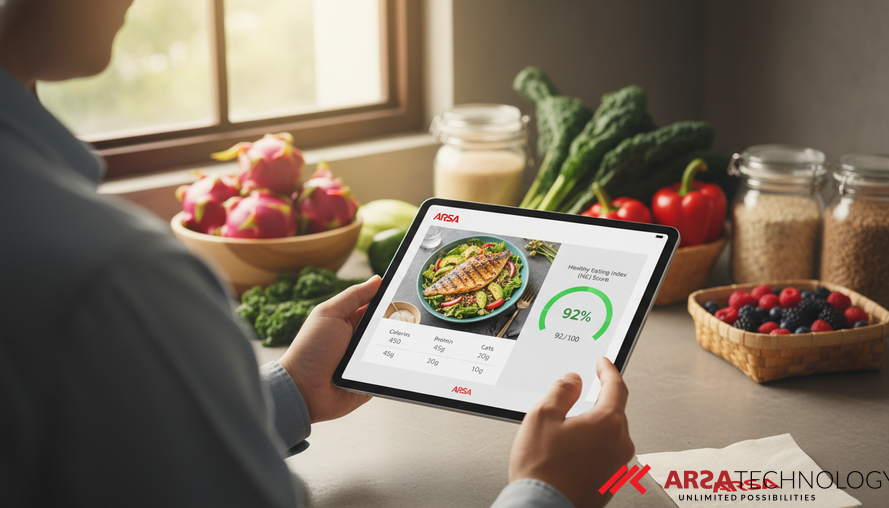
The Challenge of Healthy Eating in the Modern Age
Achieving and maintaining a healthy diet is a fundamental cornerstone of human well-being, directly impacting the risk of chronic diseases. Yet, for many adults, translating complex nutritional science into practical, daily food choices remains a significant hurdle. Generic dietary advice, often divorced from individual circumstances, struggles to resonate amid real-world constraints such as time limitations, financial pressures, food access, and personal taste preferences. This disconnect highlights a critical need for context-aware, personalized recommendations that genuinely support better long-term dietary outcomes.
Traditional methods of assessing dietary intake, such as 24-hour recalls or food frequency questionnaires, are scientifically validated and invaluable for research. However, their resource-intensive nature, cognitive demands, and inability to provide real-time, adaptive feedback make them impractical for continuous individual self-management. Such approaches typically offer generalized recommendations that may not align with an individual's unique dietary patterns, potentially leading to biased intake estimates and limiting their utility in guiding truly personalized nutrition strategies.
Leveraging Public Health Data for Precision Nutrition
Decades of public health investment have established robust national nutrition infrastructures. Key among these are the National Health and Nutrition Examination Survey (NHANES), which provides nationally representative data on dietary intake, and the Food Patterns Equivalents Database (FPED), which maps reported foods to their equivalent dietary components. Crucially, the Healthy Eating Index (HEI) serves as a validated, comprehensive metric that quantifies how closely an individual's diet adheres to established dietary guidelines. While these resources offer an invaluable snapshot of population-level health and nutrition, they have historically been underutilized for delivering individualized, actionable dietary guidance.
HEI scores, derived from detailed intake data linked to FPED, offer a rich summary of an individual's dietary strengths and weaknesses across various food groups and nutrients. However, this information largely remains descriptive; the HEI alone does not prescribe how an individual should adjust their eating habits in feasible and practical ways. Current commercial diet tools often fall short by focusing primarily on calories and macronutrients, relying on crowdsourced food databases with questionable quality control, and offering generic tips that lack explicit grounding in HEI components or robust, research-grade intake data. This significant gap underscores the necessity for innovative algorithmic approaches that can translate HEI-defined nutritional deficits into personalized, evidence-based food recommendations.
AI's Role: From Generic Tips to Personalized Guidance
Recent advancements in Artificial Intelligence (AI), particularly with Large Language Models (LLMs), offer a promising foundation for sophisticated food recommendation systems. LLMs are powerful AI programs capable of understanding, processing, and generating human-like text, drawing insights from vast datasets. However, a key challenge with pure generative LLMs is their potential to "hallucinate" or produce plausible but factually incorrect information. This is where Retrieval-Augmented Generation (RAG) becomes transformative.
RAG frameworks enhance LLMs by grounding their outputs in structured, external knowledge sources. Instead of relying solely on their internal training data, RAG systems first retrieve relevant information from trusted databases and then use this factual evidence to generate more accurate, context-aware, and explainable recommendations. This approach prevents the LLM from drifting from established scientific principles, ensuring that recommendations are robustly evidence-based. For instance, ARSA Technology utilizes ARSA AI API services to integrate advanced AI capabilities into various applications, demonstrating the power of modular, reliable AI solutions.
How the HEI-Informed RAG Framework Works
A recent study (Wang et al., 2024, An LLM-RAG Approach for Healthy Eating Index-Informed Personalized Food Recommendations) proposed an innovative HEI-informed RAG framework designed to bridge the gap between population-level nutrition data and individual dietary needs. This framework leverages standardized national nutrition databases, specifically NHANES and FPED, as its primary sources of truth. The process unfolds in several systematic steps:
First, a food-level embedding space is constructed from FPED-derived textual descriptions. This "embedding space" is a sophisticated way to represent each food item as a unique point in a multi-dimensional digital landscape. Foods with similar nutritional profiles and characteristics are positioned closer together in this space, enabling the AI to efficiently identify nutritionally comparable alternatives. The system then computes baseline HEI scores for each food entity. Next, it retrieves a pool of candidate foods that could improve an individual's intake. Crucially, the framework estimates the potential HEI impact of simple substitutions or additions, providing clear, quantifiable insights into how small dietary changes can lead to significant improvements. Finally, a constrained RAG pipeline, instantiated with a pretrained OpenAI LLM, generates personalized recommendations, complete with their nutritional profiles and HEI contributions. This ensures that the generated advice is not only tailored but also verifiable and rooted in scientific data.
Tangible Results: Proving the Impact of AI-Driven Recommendations
The simulation results from the study demonstrated a significant and measurable improvement in diet quality among users. The proposed LLM-RAG framework led to a mean HEI improvement of 6.45 ± 4.02 points. This is a substantial gain, especially considering the incremental nature of dietary change. Furthermore, the proportion of users whose HEI score exceeded 50 – a common benchmark for a reasonably healthy diet – increased from 45.12% to an impressive 61.26%.
Beyond these average improvements, a detailed quantile analysis revealed consistent positive shifts across the entire HEI distribution. This indicates that the system effectively nudged individuals at all levels of baseline diet quality towards healthier eating patterns, not just those on the cusp of improvement. Such findings underscore the framework's potential to deliver precise, explainable, and truly personalized nutrition guidance, positioning AI as a powerful ally in the ongoing effort to improve public health. These advancements showcase how systems built by companies like ARSA, leveraging their experience since 2018, can integrate complex data for real-world impact.
Beyond Recommendations: The Broader Implications for Public Health
The integration of advanced AI models like LLMs with rigorous public health data through RAG frameworks marks a significant step forward for personalized nutrition. This approach moves beyond the limitations of generic advice and the complexities of traditional dietary assessments, offering a scalable solution for delivering tailored, evidence-based recommendations. By systematically encoding HEI component scores and leveraging population-reference intake distributions, these systems ensure that recommendations are not only precise but also align with established dietary guidelines.
The ability to generate recommendations that are both personalized and explainable has profound implications. It empowers individuals to make informed choices, fostering a deeper understanding of how specific foods impact their overall diet quality. From a policy perspective, such operationalized insights can inform more effective evidence-based interventions and enhance the impact of nutrition programs and dietary guidelines on a broader scale. While this paper focuses on food recommendations, similar principles of AI-driven data processing and actionable insights are applied in other domains. For instance, ARSA’s Self-Check Health Kiosk uses AI and IoT to provide autonomous health screening and generate health insights, illustrating the diverse applications of AI in health-related fields. This focus on privacy-by-design and practical deployment ensures that solutions are robust and trustworthy, whether managing health data or recommending dietary changes.
Ready to explore how advanced AI and IoT solutions can transform your operations and create measurable impact? Our team at ARSA Technology is prepared to discuss your specific challenges and engineer intelligent solutions. To learn more or to discuss a potential project, please contact ARSA today for a free consultation.