AI-Powered Pool Cleaning: A Deep Dive into the Aiper Scuba V3 Robot and the Future of Smart Robotics
Explore the Aiper Scuba V3 pool robot's AI vision, performance, and challenges. Understand how computer vision and edge AI are transforming smart home devices, with insights relevant to enterprise automation.

Autonomous robotics are rapidly advancing, moving beyond controlled industrial environments into consumer smart homes and even specialized tasks like pool maintenance. The Aiper Scuba V3 pool cleaner represents a notable stride in this evolution, integrating advanced Artificial Intelligence (AI) features, particularly computer vision, to enhance its cleaning capabilities. This review explores the Scuba V3’s performance, technical specifications, and implications for broader AI and Internet of Things (IoT) applications, drawing parallels to the sophisticated solutions deployed in enterprise settings.
The Rise of AI Vision in Robotic Cleaning
The landscape of pool robotics is undergoing a significant transformation with the introduction of underwater cameras and AI vision systems. Similar to advanced industrial inspection systems, these lenses enable robots to "see" their environment, identify debris, and dynamically adjust their cleaning paths. This capability marks a departure from earlier, more rudimentary navigation systems, offering a level of precision and adaptability previously unattainable. The Aiper Scuba V3, following in the footsteps of other innovative robotic cleaners, leverages this technology to detect objects and optimize its cleaning route, identifying leaves and other detritus near its path.
While advanced sensing is crucial, the ultimate measure of a cleaning robot's effectiveness lies in its ability to collect what it identifies. ARSA Technology, for instance, develops AI Video Analytics solutions that use computer vision not just for detection but also for enabling actionable intelligence in diverse industrial settings, from safety monitoring to traffic management. The Scuba V3 attempts to bring similar precision to pool maintenance, striving for comprehensive cleanup.
Hardware and Core Functionality
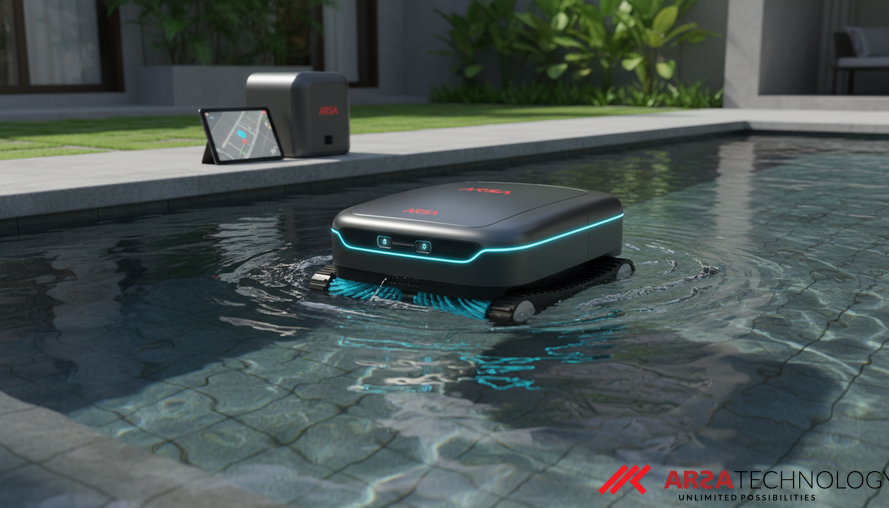
The Scuba V3 is a continuation of Aiper’s Scuba series, presenting a practical, boxy design in dark grey with blue highlights. Weighing approximately 18 pounds, it is relatively lightweight for a robot with its feature set, making it manageable for deployment and retrieval. Its central roller brush is designed to scrub pool floors, walls, and waterlines effectively. Powering this system is a 10400 mAh battery, which charges conveniently via an included dock, eliminating the need for manual cable connections.
Despite its substantial battery, the unit offers a maximum running time of about three hours, which is considered modest in today's market. A full charge from empty takes roughly five hours. A key differentiating factor for the Scuba V3 is its AI vision system, trained to detect 20 different types of debris and distinguish them from static obstacles within the pool. Additionally, the robot is equipped with two front-mounted LEDs, enabling it to detect foreign objects even in low-light conditions, a practical feature for varied operational scenarios.
Operational Modes and AI Integration
Setting up the Aiper Scuba V3 is straightforward. The charging dock features a simple hinged-leg design, requiring minimal assembly before being plugged into a wall outlet. The robot rests on the dock at an incline, facilitating water drainage while ensuring proper contact with the charging plates. A subtle beep confirms correct docking.
The robot is managed via a mobile application, which connects through Bluetooth and 2.4 GHz Wi-Fi. This app serves as the primary interface when the robot is out of the water, providing control and status updates. The Scuba V3 can alert users upon completion of a cleaning cycle by climbing to the waterline and sending a push notification. From its control panel or the app, users can select four distinct operating modes: floor-only, wall-only, waterline-only, and an auto mode that covers all three areas. Notably, the AI camera can be selectively activated for floor-only mode or is automatically enabled in auto mode, indicated by a blue icon in the app. This flexible control over AI activation allows users to balance cleaning efficiency with battery consumption based on immediate needs.
Performance and Challenges in Real-World Use
During test runs, the Scuba V3 demonstrated efficient debris collection, often cleaning visible detritus from the pool floor, walls, and waterline within a couple of hours. The integrated AI camera system proved effective, accurately identifying and routing the robot to collect small pebbles and organic debris. The pool appeared thoroughly clean after each run, typically lasting between 170 and 190 minutes. For synthetic debris, the robot achieved an impressive 96 percent cleanliness rating, with only minimal test leaves remaining in hard-to-reach areas. This performance is particularly commendable given the robot's relatively short three-hour operating window. The robot makes efficient use of its battery life, covering a substantial maximum area of 1,600 square feet, which aligns with modern expectations for robotic efficiency. ARSA Technology's AI Box Series, for example, offers pre-configured edge AI systems designed for similar rapid, efficient processing in challenging industrial environments.
However, the AI scheduling mode presented some inconsistencies. An attempt to utilize the analyzer feature resulted in an unexpected five-day schedule, which the robot then failed to follow, instead performing an unscheduled three-hour floor run that completely depleted its battery. Further attempts also saw the robot missing its schedule and running randomly later at night. This highlights a common challenge in AI-driven automation: ensuring the intelligent system's reliability and predictability in dynamic user environments. These complexities underscore the importance of robust testing and iterative development, areas where ARSA Technology has been experienced since 2018, focusing on real-world operational realities rather than just theoretical capabilities.
Post-Operation and Maintenance
Upon completing its cleaning cycle, the Scuba V3 ascends to the waterline and sends an app notification, signaling it's ready for collection and cleanup. Users have a limited 10-minute window to retrieve the robot, as it cannot float passively and relies on its remaining battery power to tread water. Missing this window means the robot will sink, necessitating retrieval with a pool hook. For practical use, setting a timer roughly 175 minutes after launching a run could serve as a helpful reminder.
Cleanup, while generally straightforward, does have a notable point of friction. The filter basket design allows easy access to the main filter, which can be quickly hosed down. However, the removable mesh within the interior basket, while highly effective at capturing fine debris, is quite challenging to clean. Removing and reinserting the mesh, especially when wet, can be cumbersome, leading many users to simply clean it as best as possible while still in place. This minor design detail, though seemingly small, can impact the overall user experience and long-term maintenance. Furthermore, the accompanying app provides basic logging of run times and square footage cleaned, but the debris detection feature in AI-active mode consistently displayed a generic "xx pieces of trash are recognized" message, indicating potential areas for software refinement.
This review draws insights from a detailed analysis by Wired on the Aiper Scuba V3, available here.
The Broader Impact of AI in Robotics
The Aiper Scuba V3 exemplifies the ongoing trend of infusing consumer robotics with sophisticated AI, especially computer vision and edge processing. While consumer devices like pool robots focus on convenience and effectiveness in a domestic setting, the underlying technologies have profound implications for enterprise solutions. From manufacturing quality control to public safety monitoring and logistics automation, the ability for autonomous systems to perceive, interpret, and react to their environment in real-time is invaluable.
The challenges observed in the Aiper Scuba V3's AI scheduling highlight the complexities of building truly intelligent autonomous systems. These issues are often magnified in mission-critical enterprise applications, where system reliability, robust data handling, and seamless integration are paramount. Companies like ARSA Technology specialize in bridging this gap, engineering AI and IoT solutions that deliver measurable impact in demanding environments by focusing on practical deployment, robust integration, and ensuring privacy by design.
Conclusion
The Aiper Scuba V3 pool robot, currently available at a competitive price point below its list price, offers compelling features, primarily driven by its innovative AI vision system. Its solid cleaning performance and convenient charging dock are significant advantages. While its battery life might be a consideration for exceptionally large pools, and the AI scheduling and filter cleaning could benefit from further refinement, it represents a strong contender in the evolving market of smart pool maintenance. For enterprises considering similar AI-driven automation for their operations, the principles observed in devices like the Scuba V3 – the power of computer vision, the importance of efficient edge processing, and the necessity of robust system integration – remain critical.
To discover how ARSA Technology can engineer intelligent solutions for your specific operational challenges, we invite you to explore our comprehensive range of AI and IoT services and contact ARSA for a free consultation.