AI-Powered Precision Agriculture: Revolutionizing Crop Monitoring with Advanced Vision Systems
Explore how AI vision, like the Sesame Plant Segmentation Dataset, is transforming agriculture with real-time crop monitoring, disease detection, and yield optimization for smarter, more efficient farming.

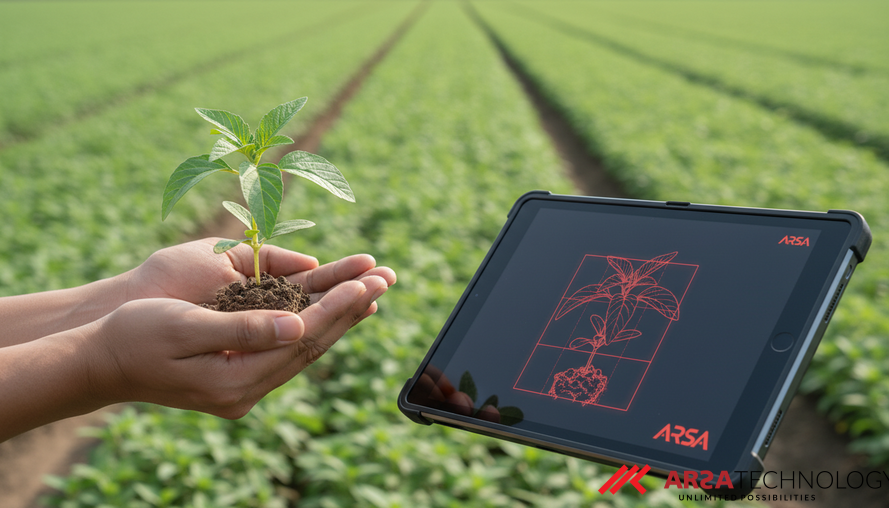
The Dawn of Precision Agriculture: AI-Powered Crop Monitoring
The agricultural sector, a cornerstone of global economies, is increasingly turning to advanced technologies like Artificial Intelligence (AI) and the Internet of Things (IoT) to tackle long-standing challenges. From optimizing crop yields to detecting early signs of disease, AI offers unprecedented opportunities for efficiency and sustainability. Traditionally, monitoring vast farmlands for subtle changes in plant health or growth patterns has been a labor-intensive and often subjective task, heavily reliant on human observation. This manual approach frequently leads to delays in identifying problems, suboptimal resource allocation, and ultimately, reduced productivity.
However, the integration of AI-powered vision systems is fundamentally changing this landscape. By leveraging computer vision, farmers and agricultural businesses can transform conventional surveillance into intelligent, proactive monitoring tools. These systems automate the assessment of crop conditions, enabling swift and data-driven decisions that save time, conserve resources, and significantly enhance agricultural output. The transition to precision agriculture, driven by such innovations, promises a future where farming is not only more productive but also more resilient to environmental and operational complexities.
Bridging the Data Gap for Local Agricultural Needs
While the promise of AI in agriculture is immense, its effective deployment hinges on access to high-quality, relevant data. Many existing agricultural datasets, often developed in Western contexts, struggle to accurately represent the unique environmental features, soil types, and crop varieties found in local ecosystems, especially in regions like Southeast Asia. This geographical disparity can hinder the development of AI models that are truly effective and robust for specific regional farming conditions. The need for localized, annotated datasets is critical to tailor AI solutions that can genuinely address regional agricultural challenges.
A recent research contribution, the Sesame Plant Segmentation Dataset, exemplifies this critical need. This open-source dataset, meticulously curated in Nigeria, focuses specifically on sesame plants during their early growth stages under diverse environmental conditions. Unlike generic datasets, it captures the unique characteristics pertinent to local cultivation, offering a valuable resource for AI developers and agricultural researchers aiming to build more accurate and context-aware models. Such localized data empowers the creation of prototypes and scalable applications designed to significantly improve crop management strategies.
Pixel-Perfect Insights: How Segmentation Transforms Crop Analysis
At the heart of advanced agricultural AI lies sophisticated computer vision technology, with image segmentation representing a significant leap forward from older methods. Traditional object detection often relies on "bounding box" annotations, which draw a rectangular frame around an object. While useful for general identification, bounding boxes can be imprecise in complex agricultural environments where plants overlap or grow densely. This imprecision limits the depth of analysis, potentially missing subtle indicators of plant health or distress.
The Sesame Plant Segmentation Dataset, however, utilizes "pixel-level segmentation." This technique precisely outlines each individual plant by assigning every pixel in an image to either a plant or the background. This granular level of detail allows for a far more accurate understanding of plant morphology, individual plant count, and early anomaly detection. Leveraging powerful annotation tools like the Segment Anything Model (SAM-2) on platforms such as Roboflow, and expert farmer supervision, the dataset achieves this high level of precision. The result is a robust foundation for building AI models that can navigate the intricacies of a real-world farm setting, offering clearer insights into crop health and growth. Solutions like ARSA Technology's AI Video Analytics can be customized to incorporate similar pixel-level segmentation for various monitoring applications.
Real-World Performance and Practical Applications
The effectiveness of any AI model is measured by its performance in real-world scenarios. The models developed and evaluated using the Sesame Plant Segmentation Dataset, leveraging the Ultralytics YOLOv8 framework, demonstrated strong capabilities across both bounding box and segmentation tasks. For instance, in bounding box detection, the model achieved a Recall of 79%, Precision of 79%, and a mean Average Precision at IoU 0.50 (mAP@50) of 84%, indicating a high rate of correctly identified plants. In the more precise segmentation task, it recorded an impressive Recall of 82%, Precision of 77%, and mAP@50 of 84%, further highlighting its ability to accurately delineate individual plants.
These strong performance metrics translate directly into tangible benefits for agricultural operations. Potential applications include:
- Real-time Plant Monitoring: Continuously track plant growth, health, and density across large areas, enabling immediate intervention if issues arise.
- Early Disease and Pest Detection: Identify subtle symptoms of infestations or diseases before they spread widely, minimizing crop damage and chemical use.
- Yield Estimation: Accurately forecast harvest volumes by analyzing plant density and health, aiding in logistics and market planning.
- Irrigation Optimization: Monitor moisture stress or plant vigor to apply water precisely where and when it's needed, conserving resources.
- Automated Harvesting and Robotics: Provide precise visual guidance for robotic systems, enhancing efficiency and reducing manual labor.
Such data-driven insights are invaluable for optimizing resource management and ensuring robust crop health. Businesses in various industries, not just agriculture, can benefit from similar real-time monitoring and analytics capabilities, as ARSA has been experienced since 2018 in developing.
The Future of Smart Farming with AI and IoT
The development of specialized, open-source datasets like the Sesame Plant Segmentation Dataset is a crucial step towards advancing precision agriculture globally. It addresses the critical need for localized data, enabling AI models to better understand and interact with the unique characteristics of regional agricultural systems. By transforming passive visual data into actionable intelligence, these technologies empower farmers, agricultural engineers, and policymakers to make more informed decisions, leading to higher yields, reduced waste, and more sustainable farming practices.
For enterprises looking to integrate AI and IoT into their operations, solutions extend far beyond just crop monitoring. ARSA Technology, for example, offers the ARSA AI Box Series, intelligent edge computing devices that can transform existing CCTV infrastructure into powerful analytics platforms for a multitude of applications. These solutions are designed for rapid deployment, prioritizing privacy, and delivering real-time insights across sectors from retail and smart cities to manufacturing and security. Embracing AI-powered vision systems means moving towards a smarter, more efficient, and more productive future for industries worldwide.
Ready to explore how AI and IoT can transform your business operations? Discover ARSA Technology’s innovative solutions and enhance your efficiency and decision-making. We invite you to contact ARSA for a free consultation.