AI-Powered Predictive Maintenance: Revolutionizing Lithium-Ion Battery Health and Lifespan
Discover a new multi-task AI framework for highly accurate Lithium-Ion battery SOH and RUL prediction, enhancing EV safety and operational efficiency with edge computing.

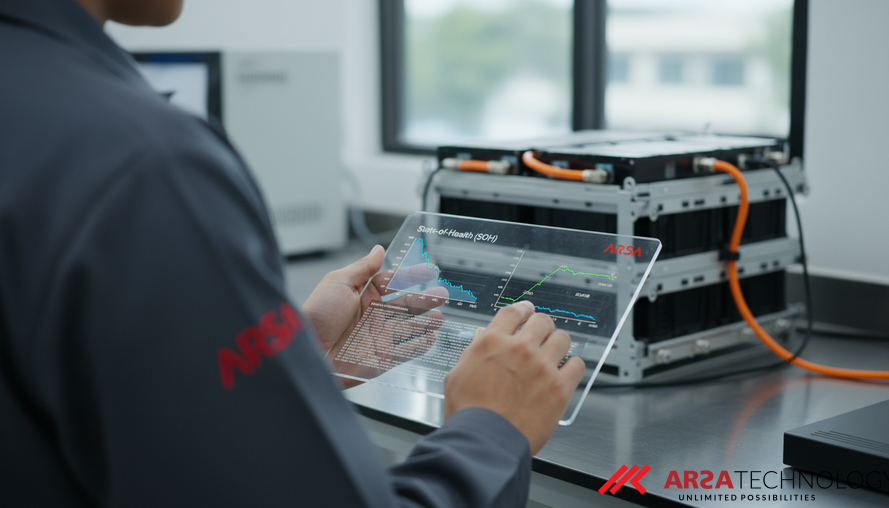
The Critical Role of Lithium-Ion Battery Health
Lithium-ion batteries are the silent workhorses powering our modern world, from smartphones to laptops and, critically, electric vehicles (EVs). Their high energy density and efficient performance have made them indispensable. However, like all power sources, they degrade over time, a process exacerbated by repeated charge-discharge cycles. This degradation isn't just about reduced performance; it poses significant safety risks, particularly in high-power applications like EVs, where battery failures can have severe consequences.
To mitigate these risks and optimize performance, accurately assessing battery health is paramount. Two key metrics stand out: State-of-Health (SOH) and Remaining Useful Life (RUL). SOH indicates the current health of a battery relative to its original capacity, essentially telling us how "new" or "worn" it is. RUL predicts how many more charge-discharge cycles or time a battery has left before it reaches its end-of-life. Precise prediction of these indicators is vital for effective battery management strategies, ensuring operational safety, and maximizing asset utilization, as highlighted in recent research by Chenhan Wang et al. (2026, source).
Limitations of Traditional Battery Health Prediction
Historically, predicting SOH and RUL has fallen into two main categories: model-based and data-driven methods. Model-based approaches rely on intricate physical or electrochemical models that attempt to simulate battery degradation. While these methods offer clear physical insights, they are often too complex, sensitive to external factors like temperature, and require extensive parameter tuning, making them impractical for the varied conditions of real-world use. Furthermore, adapting these models for different battery types or aging stages presents a significant challenge.
The rise of machine learning (ML) ushered in data-driven methods, which learn patterns from observed battery data. Early ML algorithms like Support Vector Machines or Gaussian process regression offered improvements but often struggled with scalability and generalizability across diverse operational scenarios. More recently, artificial neural networks, particularly Convolutional Neural Networks (CNNs) for feature extraction and Recurrent Neural Networks (RNNs) like Long Short-Term Memory (LSTM) for sequence modeling, have shown promise. However, conventional RNNs have inherent limitations in retaining long-term temporal information, making them less effective for predicting the nuanced, extended degradation patterns of batteries. Furthermore, many deep learning methods still rely on a sequential prediction approach, first estimating SOH and then using that output to predict RUL. This sequential dependency can compound errors, leading to inaccuracies, especially given the complex and interdependent nature of SOH and RUL degradation.
Innovating with a Multi-Task Targeted Learning Framework
Addressing the shortcomings of previous methods, a novel multi-task targeted learning framework has been proposed to enhance the accuracy and efficiency of SOH and RUL prediction. This framework integrates several advanced neural network components to create a robust and adaptable solution.
At its core, the framework introduces a Multi-Scale Feature Extraction Module utilizing CNNs. This module is designed to meticulously capture detailed local battery decline patterns. By analyzing battery data at different scales, it can identify subtle yet critical indicators of degradation that might be missed by single-scale approaches. This comprehensive feature extraction forms the bedrock for more accurate predictions.
Building on these rich features, an Improved Extended LSTM Network is employed. Traditional LSTMs are adept at processing sequential data, making them suitable for time-series predictions. However, the "extended" version significantly enhances the model's capacity to retain long-term temporal information. This improvement is crucial for understanding the entire degradation trajectory of a battery, preventing the model from "forgetting" early degradation trends that are essential for accurate RUL predictions.
A standout innovation within this framework is the Dual-Stream Attention Module. This module, comprising polarized and sparse attention mechanisms, acts like a smart filter, allowing the model to selectively focus on the most relevant information for each specific task. Polarized attention might highlight unique characteristics pertinent to SOH, while sparse attention could zero in on specific degradation stages critical for RUL. By assigning higher weights to important features, this module ensures that the model's focus is always on the most impactful data points for each prediction, leading to a more precise and targeted learning process. Finally, a dual-task layer facilitates a "many-to-two" mapping, enabling the model to predict both SOH and RUL simultaneously, leveraging their intertwined relationship for improved overall accuracy.
Optimizing Performance and Practical Deployment
The practical efficacy of any AI model hinges not just on its architecture but also on its optimization. This framework incorporates the Hyperopt optimization algorithm to automate and fine-tune the model's hyperparameters. This drastically reduces the need for laborious manual tuning, accelerates development, and ensures the model achieves optimal performance and robustness.
The results of extensive comparative experiments on battery aging datasets are compelling: the proposed method significantly reduced the average RMSE (Root Mean Square Error) for SOH predictions by 111.3% and for RUL predictions by 33.0% compared to traditional and state-of-the-art methods. While the 111.3% reduction in RMSE for SOH signifies an extraordinarily large improvement, it underscores the framework’s profound impact on predictive accuracy. This level of precision translates directly into tangible business benefits, enabling more proactive maintenance, safer operation of critical systems like electric vehicles, and more efficient resource allocation within a battery's lifecycle.
Such advanced predictive capabilities are also critical for enterprise applications. For organizations managing large fleets of EVs or extensive energy storage systems, accurate SOH and RUL predictions mean they can optimize charging strategies, plan maintenance schedules, and even identify batteries suitable for various industries or second-life applications, thereby maximizing asset value and reducing operational costs. The ability to deploy such AI on-premise or at the edge, as offered by solutions like ARSA's AI Box Series, ensures data sovereignty, low latency, and operational reliability, addressing critical concerns for regulated industries.
The Future of Battery Intelligence and Custom AI Solutions
The advancements in AI-powered battery health prediction signify a major leap forward for industries reliant on lithium-ion technology. By providing highly accurate and actionable insights into battery degradation, this framework enables enhanced safety, improved efficiency, and prolonged operational life for expensive assets. The ability to move beyond simple data collection to truly predictive intelligence fundamentally transforms how batteries are managed and utilized.
Companies like ARSA Technology are at the forefront of delivering custom AI solutions that bring such cutting-edge academic research into practical, real-world deployments. With deep expertise in Computer Vision, Industrial IoT, and Predictive Analytics, ARSA can architect bespoke systems that integrate complex AI models into existing infrastructure. Whether it’s enhancing AI Video Analytics to monitor battery conditions or developing specialized IoT platforms for advanced predictive maintenance, the focus remains on delivering practical, proven, and profitable AI solutions tailored to enterprise needs.
To learn more about how advanced AI and IoT solutions can transform your operations and to discuss your specific predictive intelligence needs, we invite you to contact ARSA for a free consultation. Our team is ready to engineer intelligence into your most critical assets.