AI-Powered Software Development: Transforming Engineering with Agentic Systems
Explore how AI-based agentic systems are revolutionizing the Software Development Lifecycle (SDLC) for businesses. Learn about applications, benefits, and future opportunities.

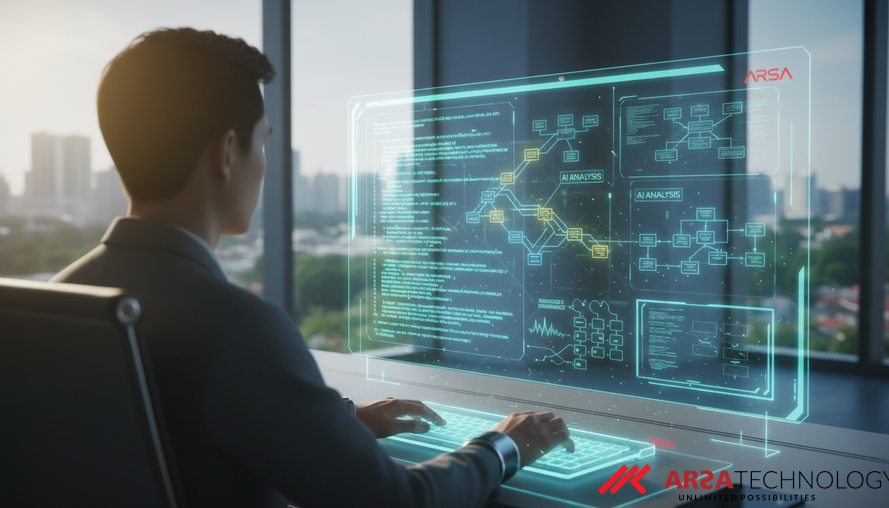
The Evolution of Software Development with AI
The landscape of software engineering is undergoing a profound transformation, driven by the remarkable capabilities of Artificial Intelligence (AI). Traditional software development, often characterized by complex, labor-intensive tasks and potential for human error, is now ripe for enhancement through advanced AI models. Large Language Models (LLMs), powerful AI systems capable of understanding, generating, and reasoning with human-like text, have emerged as a pivotal force in this evolution. These models offer unprecedented opportunities to automate and optimize various stages of the Software Development Lifecycle (SDLC), making the entire process faster, more efficient, and more reliable.
However, modern software development involves intricate challenges that often exceed the capacity of a single LLM. This recognition has given rise to a new paradigm: LLM-based multi-agent systems. Imagine a team of highly specialized AI assistants, each trained for a specific aspect of software development, working collaboratively and intelligently. This collaborative approach leverages the individual strengths of multiple AI agents, integrating diverse development tools and accessing vast knowledge bases to provide comprehensive, end-to-end solutions for complex real-world software engineering challenges. Companies like ARSA Technology, experienced since 2018, understand the value of specialized AI applications in digital transformation across various industries.
Understanding AI Agentic Systems: A Collaborative Approach
At the core of these transformative systems lies the evolution of AI. Building on innovations like the transformer architecture, which enabled AI to process vast amounts of text data efficiently, modern LLMs exhibit impressive "emergent abilities." These are capabilities that weren't explicitly programmed but appear as models scale in size and training data, allowing them to perform tasks like step-by-step reasoning or complex problem-solving. Techniques such as prompt engineering (carefully crafting instructions for the AI), in-context learning (showing the AI examples), and retrieval augmented generation (RAG, giving the AI external information) are all used to harness these capabilities.
LLM-based agentic systems take this further by orchestrating multiple specialized AI agents. Each agent can be designed for a specific role within the software development team, much like human experts. For instance, one agent might be a "programmer," another a "tester," and yet another a "documentation specialist." This specialization leads to superior performance and efficiency, as each agent can be optimized for its particular task. Furthermore, these systems offer significant advantages: they are inherently modular, allowing independent upgrades without affecting the entire system; they foster collaborative problem-solving; they excel at utilizing diverse tools and resources; and they can perform tasks in parallel, drastically speeding up development. This modularity and specialization echo the design principles found in innovative solutions like the ARSA AI Box Series, which offers dedicated AI capabilities for specific real-world applications.
AI Agents Across the Software Development Lifecycle
The integration of LLM-based multi-agent systems spans every stage of the Software Development Lifecycle (SDLC), bringing unprecedented levels of automation and insight. From initial concept to final deployment, AI agents are proving invaluable.
**Requirements Engineering:** This crucial initial phase focuses on defining and managing system requirements. AI agents can streamline this process by automatically generating and prioritizing user stories from project descriptions, helping to identify core features and enhance requirement analysis. Advanced frameworks can even divide specification generation into phases, using conversational AI to define requirements and then applying sophisticated techniques to validate them. Such systems, by performing multiple actions, can surpass traditional text parsing and logical reasoning methods, ensuring that software truly meets stakeholder needs.
**Code Generation:** Perhaps one of the most exciting applications, AI agents are transforming how code is written. Multi-agent setups often involve specialized roles such as an "orchestrator" to manage the process, a "programmer" to write code, a "reviewer" to check it, and a "tester" to ensure functionality. Strategies like "Chain-of-Thought" (CoT) enable LLMs to break down complex requirements into natural language steps before translating them into code. Some systems, like PairCoder, feature collaborative agents: a "navigator" agent plans and selects optimal solutions based on execution feedback, while a "driver" agent generates, tests, and refines the code. This iterative refinement process, often involving feedback from other models, development tools (like compilers), or even human experts, drastically improves code quality and reduces development time. Similar principles of intelligent automation are at play in ARSA's solutions, such as ARSA AI API, which provides advanced AI functionalities that developers can integrate into their applications.
**Static Code Checking:** Before running extensive tests, static code checking is vital for identifying bugs, vulnerabilities, and "code smells" (suboptimal code patterns). AI agents, trained on vast codebases, can effectively pinpoint these issues without executing the code. Whether through fine-tuning on specific code or simply using intelligent prompting, LLMs have shown superior effectiveness in rapidly detecting bugs, thereby enhancing code quality and reducing security risks early in the development cycle. This proactive approach to quality assurance is paramount for any business aiming for robust and secure software products.
**Testing and Debugging:** Once code is generated, AI agents step in to ensure its flawless operation. In testing, agents can automatically generate test cases, execute them, and analyze the results. This includes unit tests, integration tests, and even more complex scenario-based tests. When bugs are found, AI agents play a critical role in debugging. They can analyze error messages, trace code execution, and even suggest potential fixes by understanding the context and patterns of common errors. This automation significantly reduces the time and effort traditionally required for these labor-intensive stages, leading to faster deployment and more reliable software.
Key Challenges and Future Directions
While LLM-based agentic systems promise immense benefits, their widespread adoption and full potential come with several challenges and exciting opportunities for future development.
**Multi-Agent Orchestration:** Effectively coordinating numerous specialized AI agents, ensuring they communicate efficiently, avoid conflicts, and work towards a common goal, remains a complex task. Developing robust frameworks and communication protocols for seamless collaboration is crucial. This involves defining clear roles, managing dependencies, and establishing mechanisms for conflict resolution among agents.
**Human-Agent Coordination:** The ideal scenario isn't full automation, but rather intelligent collaboration between human engineers and AI agents. Designing interfaces and workflows that allow humans to effectively guide, oversee, and intervene in the AI's processes is essential. This ensures human expertise remains at the helm, especially for critical decisions, while leveraging AI for repetitive or data-intensive tasks.
**Computational Cost Optimization:** Running multiple powerful LLMs and agents simultaneously can be computationally expensive. Future efforts will focus on optimizing these systems to reduce their processing power and energy consumption. This might involve using smaller, more efficient LLMs for specific tasks, optimizing inference processes, or developing more energy-efficient AI hardware.
**Effective Data Collection:** AI models thrive on high-quality data. For specialized software engineering tasks, collecting relevant, diverse, and clean datasets for training and continuous improvement of agents is a perpetual challenge. This includes code samples, requirements documents, test cases, and debugging logs. Developing automated or semi-automated methods for collecting and curating this data will be vital for the continuous enhancement of agent capabilities. Solutions that efficiently gather and process data, such as ARSA's AI Video Analytics, demonstrate how data-driven insights underpin AI effectiveness across various industries.
ARSA's Role in AI-Powered Digital Transformation
The advent of LLM-based agentic systems heralds a new era for software engineering, promising faster development cycles, higher quality outputs, and significant cost reductions. For businesses looking to embrace this future, understanding the underlying AI technologies and their practical applications is key. ARSA Technology is committed to pioneering AI and IoT solutions that deliver measurable ROI and empower businesses to navigate their digital transformation journey. While the academic paper focuses on software engineering, the principles of AI specialization, real-time insights, and intelligent automation are at the core of ARSA's offerings, such as those found in our Smart Parking System for efficient urban management.
Ready to explore how advanced AI and IoT solutions can transform your business operations, reduce costs, and drive innovation? Our team of experts specializes in turning complex challenges into practical, impactful solutions.
Discover how ARSA Technology can be your partner in building the future. Contact ARSA for a free consultation today.