AI-Powered Urban Design: Transforming Cities with Participatory Tools and Generative AI
Explore how AI, latent diffusion, and semantic segmentation are revolutionizing urban design, enabling participatory planning and real-time visualization for smarter, more inclusive cities.

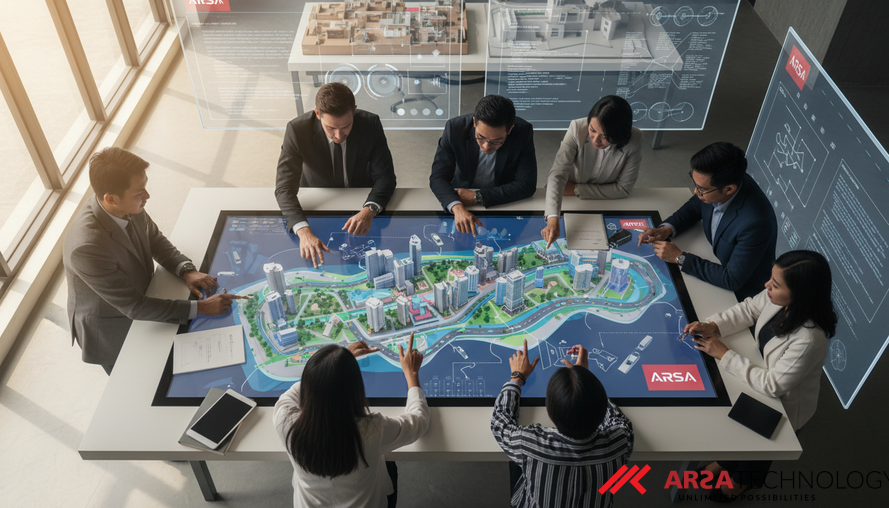
Urban environments are the fabric of our daily lives, influencing everything from our well-being to our economic opportunities. For decades, urban planning often followed a top-down approach, where design decisions were made by experts with limited public input. This method frequently led to a disconnect between the vision of designers and the real needs and desires of the communities they served. However, a significant shift is underway, propelled by advancements in Artificial Intelligence (AI) and digital tools, promising a future of more inclusive, dynamic, and responsive urban design.
The concept of 'placemaking' – actively involving people in the design of public spaces – has gained prominence, recognizing that successful urban areas are deeply rooted in human experiences and spatial cognition. Modern participatory urban design (PUD) models prioritize inclusivity and democratic participation, directly integrating community members into the planning process. This ensures that urban spaces are not just physically appealing but also truly reflective of and responsive to local aspirations. Now, AI is elevating PUD to unprecedented levels, offering tools that transform complex design concepts into interactive, visual experiences.
The Rise of Digital Tools in Participatory Urban Design
The digital revolution has introduced powerful tools like City Information Modelling (CIM) and augmented reality (AR), bridging the gap between urban designers and the public. These technologies allow stakeholders to visualize potential changes in 3D, providing a more intuitive understanding of complex plans. Further augmenting this capability, deep learning and latent diffusion models have significantly lowered the technical barriers to generating design alternatives. These AI models enable rapid prototyping and visualization of diverse design ideas, fostering a more iterative and collaborative process.
One such innovative tool is RECITYGEN, which combines state-of-the-art latent diffusion models with interactive semantic segmentation to allow users to interactively create variational street view images of urban environments using simple text prompts (Di Mo et al., 2026). This tool empowers individuals to suggest improvements for urban regeneration projects, directly visualizing their ideas in a realistic context. By simplifying the interaction to a few clicks and a text description, RECITYGEN significantly reduces the cognitive load for users, making advanced design generation accessible to everyone.
Understanding the AI Behind Interactive Urban Visualizations
At the core of tools like RECITYGEN are two powerful AI technologies: semantic segmentation and latent diffusion models. Semantic segmentation is akin to teaching a computer to "see" and "understand" the different components within an image. It precisely identifies and separates various elements in an urban image, such as buildings, roads, green spaces, and vehicles. This capability allows users to select specific areas of a street view with a simple click, rather than manually drawing outlines.
Once an area is selected, latent diffusion models, such as inpainting-based Stable Diffusion, take over. These models are highly adept at creating detailed and high-quality images based on both visual input (the segmented area) and textual descriptions. The model iteratively transforms random noise into a coherent image that aligns with the user's text prompt, capturing complex urban patterns and textures. For example, a user could select a building facade and input "add a modern glass balcony" or select a sidewalk and type "replace with a vibrant green space," and the AI would generate a realistic visualization of that change.
Revolutionizing Urban Street View Generation
Traditional urban planning often struggles with the slow and costly process of creating realistic visualizations. This limitation can hinder community engagement, as abstract plans are difficult for non-specialists to grasp. Generative AI tools overcome this by offering real-time, high-fidelity visualization capabilities. They transform static street view images into interactive canvases where users can instantly see the impact of their suggestions.
The ability of these models to interpret diverse urban scenarios from simple text descriptions makes them invaluable for participatory design. This means that instead of relying on professional designers to interpret and render every community suggestion, citizens can directly contribute to the visual brainstorming process. This not only speeds up the design cycle but also ensures that the final proposals are more closely aligned with public preferences.
Practical Applications and Business Impact
The applications of AI-powered participatory urban design extend far beyond simple visualization, offering tangible benefits for enterprises and municipal bodies. For urban developers and government agencies, such tools can streamline the consultation process, reducing project delays and increasing public acceptance. Retail businesses, for instance, could use these systems to visualize how changes to public spaces or storefronts might impact footfall and customer experience, providing data-driven insights for placemaking strategies. This is similar to how ARSA Technology's AI BOX - Smart Retail Counter provides valuable customer analytics for retail environments.
Furthermore, these systems can significantly optimize operational costs associated with design iteration and public outreach. By allowing a broad audience to experiment with design options in a virtual, risk-free environment, the need for extensive physical prototypes or multiple rounds of professional renderings is reduced. This also supports data-driven decision-making, where feedback from a wide user base can inform more effective and sustainable urban development. Businesses involved in out-of-home advertising, for example, could leverage similar AI analysis to understand audience demographics and engagement for strategic ad placement, much like ARSA's AI BOX - DOOH Audience Meter.
Towards Smarter, More Inclusive Cities
The integration of advanced AI in urban design tools marks a significant step towards creating smarter, more inclusive cities. By democratizing the design process, these technologies empower citizens to become active participants in shaping their environment. This shift fosters stronger community connections and ensures that urban spaces are truly "of the people, by the people, for the people." The success of pilot projects, like the one in Beijing for an urban regeneration initiative, demonstrates the real-world potential for aligning design aspirations with public preferences.
As AI and IoT technologies continue to evolve, the possibilities for interactive urban planning will only expand. Real-time video analytics, for instance, can provide data on traffic flow, pedestrian movement, and public space utilization, offering invaluable insights for optimizing urban designs. ARSA Technology, for instance, offers AI Video Analytics solutions that transform traditional CCTV infrastructure into intelligent monitoring systems, delivering real-time insights for security, safety, and operational intelligence in various urban and industrial settings. This data can then be fed back into generative AI models to create even more responsive and effective urban designs.
While challenges remain, such as ensuring data privacy and addressing potential biases in AI models, the foundational technologies are mature and rapidly improving. The future of urban design is interactive, intelligent, and deeply collaborative, promising cities that are not only efficient and secure but also genuinely reflect the diverse needs of their inhabitants.
Ready to explore how AI and IoT can transform your operational efficiency and public spaces? Discover ARSA’s innovative solutions and contact ARSA for a free consultation today.