AI Revolutionizes CT Image Reconstruction with Region-Adaptive MeanFlow
Discover RA-CMF, a novel AI-powered approach for CT image reconstruction. Learn how conditional MeanFlow and reinforcement learning enhance diagnostic accuracy, reduce noise, and improve image quality for critical medical applications.

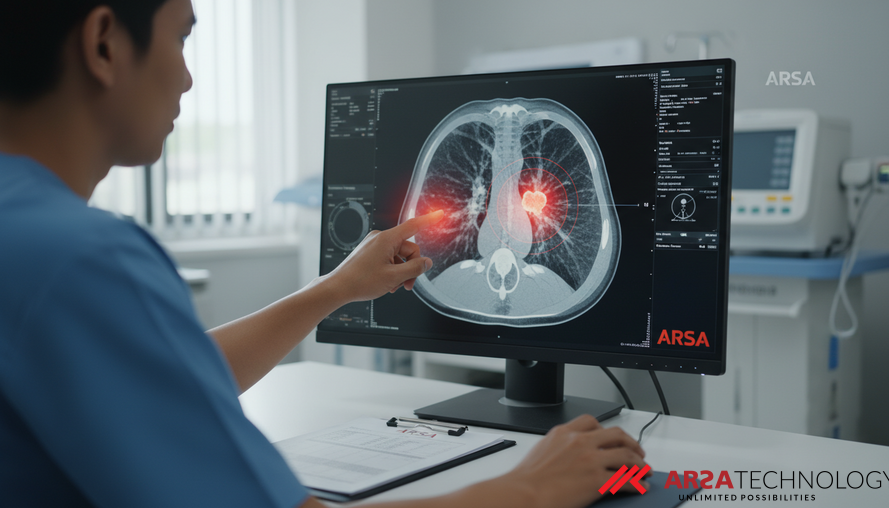
Computed Tomography (CT) imaging plays an indispensable role in modern medicine, particularly in the screening, diagnosis, therapy planning, and prognosis of conditions like lung cancer. However, the efficacy of CT scans can be significantly impacted by inconsistencies arising from varied imaging protocols and scanner models. These variations lead to differences in image noise, contrast, and texture, posing challenges for both visual interpretation and quantitative analysis. A groundbreaking approach, termed Region-Adaptive Conditional MeanFlow (RA-CMF), is emerging to tackle these limitations by integrating advanced AI techniques to revolutionize CT image reconstruction. This novel pipeline promises to deliver enhanced image quality and more reliable data for clinical decision-making.
The Challenge of CT Image Variability
Lung cancer remains a leading cause of cancer-related deaths globally. Early detection dramatically improves survival rates, making advanced diagnostic tools like CT imaging critically important. Beyond simply detecting abnormalities, CT scans provide rich quantitative data, known as radiomic features, which reflect tumor characteristics and can guide treatment strategies. Yet, the reliability of these features is often undermined by inconsistencies in image acquisition. Different CT scanners, varied imaging protocols, and even diverse reconstruction settings can introduce significant variability into the images. This inconsistency can make it difficult to compare scans, conduct large-scale multi-center studies, and ensure the robustness of AI models built upon these images. The impact is not merely aesthetic; such variability can obscure real biological differences, making accurate quantitative analysis a formidable challenge. Past efforts to harmonize CT images often relied on post-reconstruction adjustments or globally uniform transformations, which frequently overlook the localized heterogeneity of image degradation. The paper arXiv:2605.00901v1 highlights these challenges and the need for a more sophisticated solution.
Introducing Conditional MeanFlow for Image Enhancement
At the heart of the RA-CMF framework is a sophisticated AI technique called conditional MeanFlow. Imagine an image being progressively refined, like an artist meticulously restoring a painting. A traditional AI model might try to "paint" the whole canvas at once. In contrast, the conditional MeanFlow network learns an "enhancement trajectory," predicting how an image should evolve towards a cleaner, higher-quality state. It does this by understanding the "average velocity fields" required to transform an intermediate, noisy image into an improved version. "Conditional" means this network doesn't apply a one-size-fits-all transformation; instead, it adapts its enhancement process based on the specific characteristics and current state of the input image. This dynamic, adaptive refinement ensures that the enhancement is tailored to each unique scan, addressing individual noise patterns and contrast issues without over-smoothing critical details or introducing artifacts.
Region-Adaptive Refinement with Reinforcement Learning
A key innovation in RA-CMF is its ability to perform region-adaptive refinement, thanks to the integration of a reinforcement learning (RL)-driven policy network. Traditional image enhancement often applies uniform processing across an entire image, which can be inefficient and sometimes detrimental to areas that are already of good quality. The RL policy network acts like a "smart director," intelligently allocating computational resources and refinement efforts to specific regions of the image that need it most.
This policy network receives real-time feedback on the MeanFlow enhancement process, evaluating the quality of different image "tiles" or regions. Based on this, it makes crucial decisions:
- Refinement Budgets: How much processing power should be allocated to a particular region?
- Stopping Criteria: When is a region sufficiently enhanced, so further computation can be stopped?
- Total Budget Allocation: How to distribute the overall computational budget efficiently across the entire image?
The policy network is trained using a reinforcement learning framework, where its "goal" is to maximize the improvement in image quality (e.g., in tumor regions) while actively minimizing unnecessary computations and preventing instability in areas already deemed acceptable. This allows the system to focus intense attention on enhancing diagnostically challenging areas, such as tumor regions, while maintaining stability and efficiency in other parts of the scan. For enterprises seeking customized AI implementations for intricate tasks like this, solutions leveraging AI video analytics platforms can be adapted to integrate such intelligent, region-aware processing for various image data streams.
Radiomic Features and Clinical Impact
Radiomic features are quantitative metrics extracted from medical images, providing insights into tumor phenotypes, heterogeneity, and dynamics that go beyond what the human eye can perceive. These features are vital for personalized medicine, informing prognosis and therapeutic response. However, their sensitivity to imaging protocols means that inconsistencies can severely impact their reproducibility and clinical utility. For instance, subtle differences in scanner settings can cause feature values to vary as much as, or even more than, actual biological differences between tumors.
The RA-CMF approach aims to mitigate this by providing a more consistent and higher-quality input image. By stabilizing areas of sufficient quality and focusing enhancement on difficult regions, especially within tumor regions of interest (ROIs), it improves the reliability of extracted radiomic features. This enhanced consistency is critical for conducting robust multi-center clinical trials and developing AI-powered diagnostic models that can be trusted across diverse healthcare settings. This improved data consistency is a significant step towards enabling more reliable AI-driven insights in healthcare technology solutions.
Experimental Validation and Results
The effectiveness of the RA-CMF approach has been validated through experimental studies on CT image reconstruction. The results demonstrate significant improvements across several key metrics:
- Tumor ROI Accuracy: An average radiomic feature Concordance Correlation Coefficient (CCC) of 0.96 was achieved, indicating high reproducibility and consistency of quantitative features within tumor regions. This is crucial for precise tumor characterization and treatment monitoring.
- Image Quality in Tumor ROI: The Peak Signal-to-Noise Ratio (PSNR) averaged 31.30 ± 4.16, and the Structural Similarity Index Measure (SSIM) averaged 0.94 ± 0.07. These metrics confirm a substantial improvement in the clarity and structural integrity of the images, especially in areas critical for diagnosis.
- Overall Image Quality: Across the entire image, an average PSNR of 34.23 ± 1.71 and SSIM of 0.95 ± 0.01 were observed, showing a general uplift in image quality beyond just the tumor areas.
These results indicate that RA-CMF not only enhances visual clarity but also significantly improves the underlying quantitative data. By producing more consistent and high-fidelity CT images, this technology can empower clinicians with more accurate diagnostic information, facilitate more effective treatment planning, and ultimately lead to better patient outcomes. Such advanced image processing could be integrated into edge AI systems, similar to the ARSA AI Box Series, to deliver real-time, on-premise enhancements in clinical environments, preserving data privacy and minimizing latency.
The Future of Medical Imaging with AI
The RA-CMF framework represents a significant leap forward in the application of AI to medical imaging. By combining conditional MeanFlow's adaptive enhancement capabilities with reinforcement learning's intelligent spatial control, it addresses long-standing challenges related to CT image variability. This results in clearer, more reliable images and, crucially, more consistent quantitative data, which is essential for advancing precision medicine and large-scale research initiatives. As healthcare systems increasingly rely on AI for diagnostics and prognostics, technologies like RA-CMF will be vital in ensuring the accuracy and robustness of these intelligent systems.
If your organization is seeking to enhance its diagnostic capabilities or integrate advanced AI into its medical imaging workflows, consider how specialized AI solutions can transform your operations. To explore custom AI solutions tailored to your unique requirements and to learn how ARSA can help implement cutting-edge technology for tangible impact, we invite you to contact ARSA for a free consultation.
Source: Md Shifatul Ahsan Apurba, Md Selim, Jin Chen. RA-CMF: Region-Adaptive Conditional MeanFlow for CT Image Reconstruction. (2026). arXiv:2605.00901v1.