AI Unlocks Hidden Colorectal Cancer Risks in "Low-Risk" Lesions
Deep learning analyzes precancerous tubular adenoma whole-slide images, revealing subtle features predictive of colorectal cancer progression and enabling personalized patient surveillance.

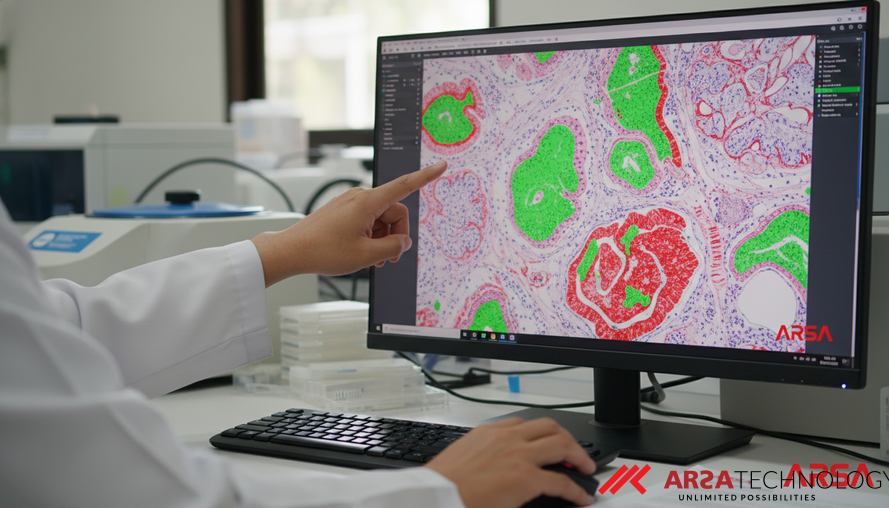
Colorectal cancer (CRC) remains a significant global health challenge, despite extensive screening programs designed to detect and remove precancerous lesions. While colonoscopies and polyp removal have demonstrably reduced mortality, a persistent gap exists: a subset of patients still develop CRC even after seemingly low-risk precancerous growths, known as tubular adenomas with low-grade dysplasia, have been identified and removed. This highlights an unmet need for more precise risk assessment.
Traditional pathology, relying on human microscopic evaluation, can sometimes overlook subtle indicators of future disease progression. However, with the advent of digital pathology and powerful deep learning algorithms, a new era of objective and highly accurate risk stratification is emerging. These technological advancements offer the potential to detect nuanced histological features that could revolutionize how precancerous lesions are assessed, leading to more personalized and effective patient care.
Deep Learning to Uncover Hidden Risks in Precancerous Lesions
A recent study, "Decoding Future Risk: Deep Learning Analysis of Tubular Adenoma Whole-Slide Images" (Source: "Decoding Future Risk: Deep Learning Analysis of Tubular Adenoma Whole-Slide Images"), explored how artificial intelligence (AI) could enhance the prediction of colorectal cancer development. The research focused on tubular adenomas, which are common precancerous growths found during colonoscopies. While these are generally considered to have limited malignant potential, the study aimed to identify microscopic features that indicate a higher, often hidden, risk of progressing to full-blown cancer.
The core objective was to determine if machine learning, specifically deep learning, could identify subtle histological patterns within these "low-grade" lesions that are predictive of future CRC development. By refining risk stratification at this early stage, healthcare providers could tailor post-polypectomy surveillance strategies, ensuring that patients receive the most appropriate follow-up based on their individualized risk profile. This moves beyond standardized protocols towards truly personalized medicine.
How AI Deciphers Microscopic Clues: The Methodology
This retrospective cohort study analyzed patient data collected between 2013 and 2022. Researchers identified patients with biopsy-confirmed tubular adenomas with low-grade dysplasia and then divided them into two groups: "non-progressors" (who did not develop CRC) and "progressors" (who later developed CRC). Crucially, patients with known genetic predispositions or other high-risk factors for CRC were excluded to focus purely on the subtle markers within the low-grade lesions themselves.
The process involved transforming traditional glass slides into high-resolution digital "whole-slide images" (WSIs). These massive images were then divided into smaller, manageable "tiles" for AI analysis. An advanced deep learning model, a convolutional neural network (CNN) based on EfficientNetV2S architecture, was trained to meticulously examine these tiles. CNNs are a type of AI particularly adept at learning and recognizing complex visual patterns in images, much like a human pathologist, but with unparalleled consistency and speed. The model's performance was rigorously evaluated using metrics like accuracy, precision, recall, and F1-score, alongside the Area Under the Receiver Operating Characteristic curve (AUROC), which measures a model's ability to distinguish between different classes.
Remarkable Accuracy: AI's Predictive Power in Pathology
The results of the study were compelling. The deep learning model analyzed an impressive 335,763 high-quality tiles, including over 40,000 held-out test tiles. At this granular, tile-by-tile level, the AI achieved an accuracy of 0.9788, with precision and recall also remarkably high (0.9762 and 0.9815, respectively). Its discrimination capability, indicated by an AUROC approaching unity, was excellent, demonstrating its ability to reliably differentiate between tiles associated with progression and non-progression.
Even more significantly, when tested on 20 entire whole-slide images (10 from progressors and 10 from non-progressors) that the AI had never seen before, the model achieved a perfect 100% correct classification rate. This whole-slide level accuracy is a powerful indicator of the model's robustness and potential clinical utility. To understand why the AI made these classifications, researchers employed Gradient-weighted Class Activation Mapping (Grad-CAM). This interpretability technique revealed that for progressor-associated tiles, the AI highlighted areas with increased architectural complexity, nuclear crowding, elongation, and pseudostratification – features indicative of more aggressive cellular behavior. Conversely, non-progressor tiles emphasized preserved glandular architecture and uniform nuclear spacing, signifying healthier tissue.
Beyond the Microscope: Business Impact and Future Applications
The findings from this study are a testament to the transformative power of AI in healthcare, particularly in digital pathology. By refuting the null hypothesis that no machine-detectable predictive features exist in low-grade adenomas, the research validates the potential for AI to provide objective, data-driven insights where human assessment might be subjective or prone to missing subtle cues. This has profound business implications for healthcare systems and life sciences enterprises.
Implementing such AI-powered risk stratification could lead to significant improvements in patient outcomes and operational efficiency. Patients with identified higher risk could receive more intensive, personalized surveillance, potentially catching CRC earlier. Conversely, truly low-risk patients might avoid unnecessary, costly, and anxiety-inducing frequent follow-up procedures, reducing healthcare burdens and costs. The automated analysis also means greater consistency and reproducibility in diagnoses, reducing interobserver variability among pathologists.
Companies like ARSA Technology, with expertise in AI Video Analytics, can provide the foundational technology to build and deploy similar intelligent solutions. While the specific application here is medical, the underlying principles of using computer vision and deep learning to analyze complex visual data and derive actionable insights are applicable across various industries. For instance, in other sectors, ARSA's AI Box Series already deploys edge AI for real-time monitoring and anomaly detection, demonstrating the practical deployment of sophisticated AI for critical decision-making.
Driving Medical Innovation with AI and Digital Pathology
The integration of deep learning into digital pathology represents a significant step forward in preventative medicine. It offers a pathway to more objective pre-cancer risk stratification, which can ultimately contribute to more personalized post-polypectomy surveillance strategies and improved colorectal cancer prevention efforts globally. The ability of AI to detect subtle morphologic features invisible or easily missed by the human eye positions it as an invaluable tool for enhancing diagnostic precision and supporting clinical decision-making.
As organizations globally continue their digital transformation journeys, the demand for robust, privacy-compliant AI solutions that can deliver measurable ROI and tangible business impact will only grow. With ARSA Technology experienced since 2018 in developing and implementing AI and IoT solutions, we understand the critical balance between technological innovation and practical, real-world deployment. This pioneering research underscores the vast potential for AI to not just assist, but truly transform, critical sectors like healthcare.
Discover how ARSA Technology's AI and IoT solutions can empower your enterprise with advanced analytics and predictive capabilities. For a deeper discussion on integrating cutting-edge AI into your operations and enhancing decision-making, we invite you to contact ARSA today for a free consultation.