AI Unlocks Long-Range Daily Arctic Sea Ice Forecasts: A Deep Learning Breakthrough
Explore IceBench-S2S, a groundbreaking benchmark for deep learning models that deliver challenging subseasonal-to-seasonal daily Arctic sea ice forecasts in deep latent space, enabling critical planning and climate insight.

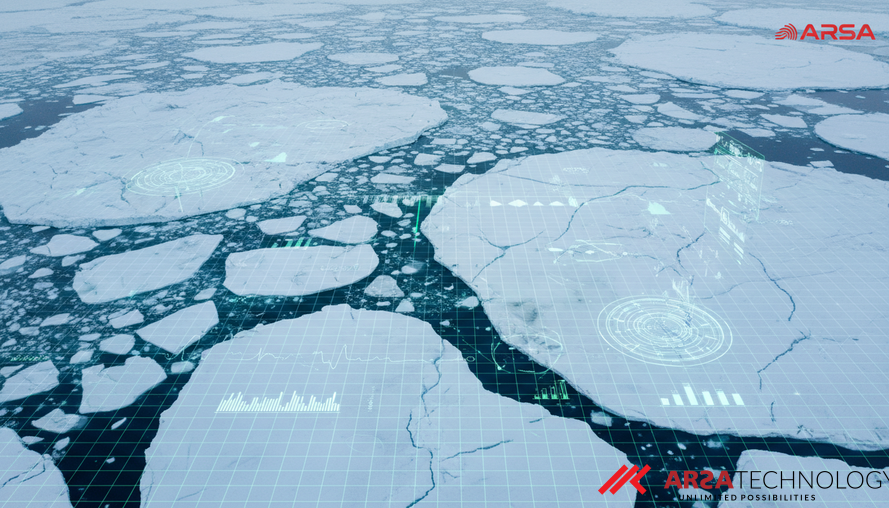
The Arctic region is a vital regulator of Earth's climate, directly influencing global weather patterns, polar ecosystems, and human activities, from shipping to scientific research. Accurate forecasting of Arctic sea ice is paramount for both environmental protection and operational planning. Traditionally, this has been a complex challenge, with conventional physics-based and statistical models struggling to maintain accuracy as forecasting periods extend. However, a new benchmark, IceBench-S2S, is demonstrating how deep learning (DL) is poised to revolutionize subseasonal-to-seasonal (S2S) daily Arctic sea ice forecasting, as detailed in the paper "IceBench-S2S: A Benchmark of Deep Learning for Challenging Subseasonal-to-Seasonal Daily Arctic Sea Ice Forecasting in Deep Latent Space" by Xu et al. (2026).
This pioneering research addresses a critical gap: while AI has significantly advanced short-term and monthly sea ice predictions, daily forecasts extending months into the future have remained largely out of reach. Bridging this gap is crucial for decision-makers in high-latitude logistics, resource management, and climate adaptation.
The Urgent Need for Extended Daily Forecasts
Arctic sea ice dynamics are intricate, driven by complex interactions between the ice, atmosphere, and ocean. Its consistent decline over recent decades, as highlighted by significant negative trends in sea ice extent (SIE) during melting seasons, underscores the escalating importance of precise S2S forecasting. Such forecasts are not merely academic; they are vital for pragmatic applications. For instance, maritime routine planning for Arctic transportation, oil and gas exploration, and scientific expeditions depend heavily on reliable, long-range daily sea ice information to ensure safety and efficiency.
Current deep learning models, while impressive, often limit their skillful predictions to daily subseasonal scales (ee.g., up to 90 days) or deliver only monthly averaged values for longer periods (up to six months). These monthly averages, though useful for understanding broad trends, fail to capture the fine-grained, day-to-day fluctuations and spatial continuum of sea ice. This lack of daily granularity on an inter-seasonal scale can render forecasts insufficient for real-world operations, compromising their practicality and business impact. Imagine planning a critical supply chain route through dynamic ice fields with only monthly average data; the risks are simply too high.
Introducing IceBench-S2S: A Deep Learning Framework for the Arctic
To overcome these limitations, the IceBench-S2S benchmark introduces a comprehensive approach for evaluating deep learning models in forecasting daily Arctic sea ice concentration (SIC) for consecutive 180-day periods. This is the first benchmark of its kind, specifically designed to push the boundaries of AI in this challenging domain. At its core is a generalized framework called the Sea Ice Forecasting Engine (SIFE).
SIFE operates in two main stages. First, it employs a sophisticated compression technique to transform complex spatial features of daily sea ice data into a "deep latent space." Think of this latent space as a highly condensed, abstract representation where the most critical patterns and relationships within the vast amount of raw data are preserved, but in a much more manageable form. This is akin to summarizing a thick book into its essential plot points and character arcs, making it easier to analyze overall narrative flow. This compression is crucial for processing the immense volume of data inherent in daily, long-term spatial forecasting.
Leveraging Latent Space for Unprecedented Accuracy
Once the sea ice data is compressed into this deep latent space, SIFE then utilizes various deep learning time series models, acting as "forecasting backbones," to predict future sea ice variations. These backbones are specialized AI architectures optimized for identifying temporal patterns and making predictions based on sequential data. By working with the condensed information in the latent space, these models can efficiently discern long-term trends and subtle changes that might be obscured in the raw, high-dimensional spatial data. This modular architecture allows IceBench-S2S to integrate and evaluate diverse DL models, providing a unified training and evaluation pipeline.
The use of a deep latent space addresses key challenges that traditional models face. It helps mitigate the reliance on incomplete knowledge of physical processes and reduces sensitivity to potentially inaccurate initial and boundary conditions that often plague numerical models. Furthermore, deep learning approaches are less computationally expensive than many conventional physics-based simulations, offering significant advantages in speed and resource allocation. Businesses seeking robust AI Video Analytics solutions can leverage similar principles of data compression and intelligent processing to transform vast amounts of visual data into actionable insights for various operational needs.
Real-World Impact: Enhancing Safety, Efficiency, and Climate Insight
The implications of accurate daily S2S Arctic sea ice forecasting are far-reaching. For industries like maritime logistics and resource extraction, reliable 180-day forecasts mean:
- Enhanced Safety: Avoiding hazardous ice conditions, reducing risks of accidents, and ensuring the well-being of personnel and cargo.
- Optimized Operations: Improving route planning, scheduling, and resource allocation, leading to significant cost reductions and increased efficiency.
- Strategic Planning: Enabling better long-term investment decisions for Arctic infrastructure and operations.
Beyond commercial applications, IceBench-S2S also represents a significant advancement for climate science. By improving our ability to predict Arctic sea ice, researchers can gain deeper insights into the complex phenomenon of Arctic amplification and its connections to extreme weather events in lower latitudes. This interdisciplinary development poses significant challenges for future deep learning models, encouraging innovation within the AI community. The ability to monitor environmental conditions over extended periods provides critical data. Companies can also use AI BOX - Traffic Monitor to observe and analyze traffic patterns in various environments, applying similar data analysis principles to different contexts.
As a leading provider of AI and IoT solutions, ARSA Technology also champions the use of edge computing devices like the ARSA AI Box Series to process data efficiently and securely at the source, which aligns with the localized data processing inherent in many advanced AI forecasting systems. This approach allows businesses to harness complex analytics without constant cloud dependency.
The IceBench-S2S benchmark is a testament to the transformative power of deep learning in addressing critical global challenges. By providing a framework for developing and evaluating models that can deliver granular, long-range forecasts of Arctic sea ice, it promises to usher in an era of more informed decision-making, greater operational safety, and deeper scientific understanding.
To explore how AI and IoT solutions can enhance your operational efficiency, safety, and decision-making across various industries, we invite you to contact ARSA for a free consultation.
**Source:** Xu, J., Wang, S., Yang, W., Tu, S., Bai, L., & Fei, B. (2026). IceBench-S2S: A Benchmark of Deep Learning for Challenging Subseasonal-to-Seasonal Daily Arctic Sea Ice Forecasting in Deep Latent Space. arXiv preprint arXiv:2602.02567.