AI's Role in Revolutionizing Engineering Education: Fostering Inclusivity and Ethical Leadership
Explore how AI transforms engineering education by enhancing accessibility, promoting diversity, and ensuring ethical learning environments, aligning with global sustainability goals.

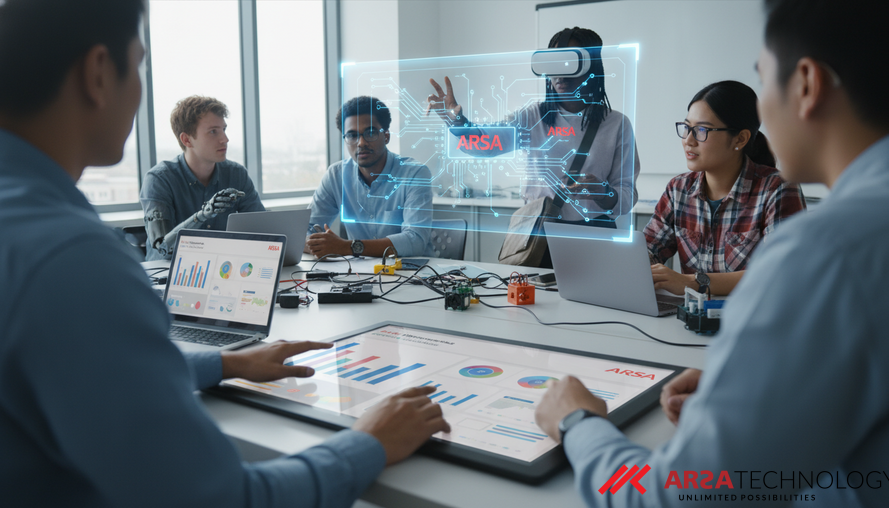
The Transformative Power of AI in Engineering Education
Engineering education stands at a pivotal juncture, undergoing a significant transformation driven by the rapid advancements in Artificial Intelligence (AI) technologies. This digital revolution is redefining how we approach learning environments, assessment methodologies, and accessibility standards within the realm of higher education. The increasing integration of AI holds immense potential to enhance student engagement and personalize instruction, yet it simultaneously brings to the forefront critical concerns regarding ethics, fairness, and true inclusivity. As highlighted by Mona G. Ibrahim and Riham Hilal in their work on AI for inclusive engineering education, the goal is to move beyond mere technological integration to foster equality, diversity, and inclusion (EDI) as core tenets of future engineering practice.
Beyond being a mere aspiration, diversity and inclusion are now recognized as fundamental catalysts for innovation and social responsibility within the engineering profession. Research consistently demonstrates that diverse engineering teams exhibit superior creativity, produce higher quality designs, and achieve more effective problem-solving outcomes. AI offers new and powerful avenues to promote this inclusion through adaptive learning systems, intelligent tutoring, and automated accessibility support. Furthermore, AI-based analytics can pinpoint participation gaps, recommend targeted interventions, and provide real-time feedback to both students and instructors, ensuring a more responsive and equitable learning ecosystem.
Addressing Persistent Barriers to Inclusivity
Despite concerted efforts to increase participation in engineering, significant barriers continue to impede inclusivity across various dimensions, including gender, culture, and accessibility. Structural gender disparities persist, with women remaining a minority in engineering programs. Culturally and ethnically minoritized students often face embedded biases and unstated norms that erode their sense of belonging, contributing to higher attrition rates. Additionally, students with disabilities or specific accessibility needs frequently encounter systemic disadvantages due to ableist structures, inadequate accommodations, and inflexible teaching methods. The confluence of these challenges—gender imbalance, cultural bias, and accessibility gaps—underscores the urgent need for thoughtfully engineered interventions specifically designed to champion equality, diversity, and inclusion in engineering education.
ARSA Technology recognizes these industry-wide challenges and develops innovative AI and IoT solutions that can contribute to creating more inclusive environments. While directly focused on industrial applications, ARSA's expertise in AI-driven video analytics, such as those found in its AI Video Analytics suite, could be adapted to monitor and analyze participation patterns in educational settings, helping institutions identify and address these gaps. Such foundational AI capabilities are crucial for building robust, data-driven platforms for educational equity.
Ethical and Human-Centered AI Frameworks
The ethical integration of AI in engineering education emphasizes the moral responsibility of institutions to use this technology transparently and with accountability. It also empowers students to critically assess AI's societal implications. A human-centered approach to AI governance and application prioritizes aligning technological advancement with ethical and cultural values, placing human well-being, equity, and learner autonomy at its core. This means moving beyond focusing solely on automation or performance optimization. By integrating EDI principles into AI-driven educational systems, institutions can design personalized learning experiences that acknowledge cultural diversity, promote fairness, and cultivate ethical awareness among engineering students. This approach ensures AI acts as a supportive partner in education, enhancing inclusion and accountability while maintaining human oversight.
Such ethical considerations are paramount in ARSA’s development philosophy, where privacy-by-design and responsible AI deployment are foundational. Our commitment as a company, experienced since 2018, is to provide solutions that not only deliver performance but also uphold high ethical standards, ensuring data privacy and transparent operation in various industrial and commercial deployments.
AI-Powered Solutions for Enhanced Learning
Artificial intelligence has emerged as a truly transformative catalyst in modern engineering education. It enables adaptive and equitable learning environments that can be tailored to individual learners' cognitive and socio-cultural contexts. Through intelligent tutoring systems and advanced learning analytics, AI supports personalized pathways that dynamically adjust instructional content and pace. This personalization significantly improves engagement and performance for a diverse student body. Systematic reviews confirm that AI technologies boost inclusivity by facilitating accessibility tools, language translation capabilities, and multimodal communication—all critical features for students with differing abilities and backgrounds.
Beyond individual personalization, AI-driven platforms assist educators in detecting participation or achievement gaps across groups, enabling timely, data-informed interventions that promote fairness. These systems not only democratize access to quality engineering education but also help reduce unconscious bias in assessment and feedback mechanisms, thereby ensuring more equitable participation and fostering ethical leadership across digital learning ecosystems (Ibrahim & Hilal, n.d., https://arxiv.org/abs/2602.02520). The research emphasizes two key objectives: first, to investigate how AI can enhance inclusivity through adaptive algorithms and intelligent systems; and second, to propose an ethical, human-centered AI framework that integrates EDI principles into pedagogy, ensuring technology complements human judgment.
Impact and Alignment with Sustainable Development Goals
The strategic and ethical adoption of AI in higher education directly supports the United Nations Sustainable Development Goals (SDGs), particularly SDG 5 (Gender Equality) and SDG 10 (Reduced Inequalities). These goals advocate for the equal participation of women and underrepresented groups in science, technology, engineering, and mathematics (STEM), while simultaneously ensuring equitable access to digital learning resources. The strategic use of AI for adaptive tutoring, bias detection, and accessibility enhancements allows engineering education to become a powerful driver of social inclusion and sustainable development. AI innovations, when integrated within ethical and educational frameworks that prioritize fairness and diversity, can accelerate multiple SDG targets.
For example, immersive VR-based training can address some of the challenges in traditional engineering education by providing risk-free, cost-effective, and highly realistic simulations. ARSA's VR-Based Training for Industry, while primarily for industrial safety and equipment operation, showcases how virtual reality technology can create a controlled environment for practicing complex skills and emergency procedures without real-world risks. This principle of immersive learning, coupled with AI for personalized feedback and performance tracking, is directly applicable to creating engaging and accessible engineering education modules.
The Future of Inclusive Engineering Education
The landscape of engineering education is evolving rapidly, and AI plays a crucial role in shaping a more inclusive, equitable, and effective future. By leveraging AI to personalize learning, enhance accessibility, and mitigate bias, institutions can break down long-standing barriers and foster environments where every student has the opportunity to thrive. This requires not just implementing technology, but doing so within a robust ethical framework that values human-centered design and promotes transparency and accountability. The synthesis of critical thinking and adaptive AI platforms, guided by principles of sustainability and ethical leadership, will ultimately transform education into a truly global and equitable system.
To explore how advanced AI and IoT solutions can help your organization achieve digital transformation goals, whether in education, industry, or smart city initiatives, we invite you to discuss your specific needs. Start your AI journey with us and discover measurable, impactful solutions. Learn more about our offerings and how we can partner with you by reaching out for a free consultation.