Arm Enters Chip Manufacturing with AGI CPU: Reshaping the AI and Data Center Landscape
Arm, a leading chip design firm, is now producing its own AGI CPUs for data centers, focusing on energy efficiency and agentic AI. Explore this strategic shift and its impact on the semiconductor industry and enterprise AI.

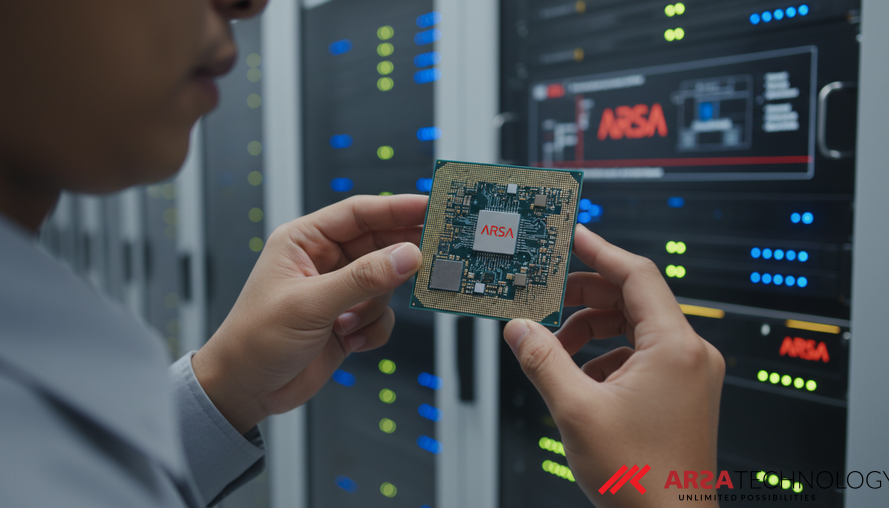
For decades, Arm has been the silent architect behind much of the world's digital infrastructure, licensing its foundational chip designs to countless companies that then manufacture and sell semiconductors. This model powered the mobile revolution and is embedded in billions of devices globally. However, in a significant strategic pivot, the company recently announced its direct entry into chip production, beginning with a new CPU specifically designed for artificial intelligence workloads in data centers. This move marks a profound shift for Arm, positioning it as a direct competitor to established chipmakers in a rapidly expanding market.
Arm's Strategic Shift: From Design to Production
Speaking to an audience in San Francisco, Arm CEO Rene Haas underscored the company's commitment to this new venture, stating, "We are now in a new business for ARM, and we are supplying CPUs." This bold declaration signals a departure from Arm's traditional intellectual property licensing model. The decision to produce its own semiconductors, long rumored, stems primarily from growing customer demand for highly specialized computing resources, particularly as artificial intelligence proliferates across industries. By directly manufacturing chips, Arm aims to capture a share of the burgeoning AI CPU market, addressing the intense computational needs that define the modern AI landscape. This strategic evolution could reshape the competitive dynamics of the semiconductor industry. The original report on this development can be found here.
Introducing the Arm AGI CPU: Engineered for Agentic AI
At the heart of this new strategy is the Arm AGI CPU, a processor conceptualized with Artificial General Intelligence (AGI) in mind, even though AGI remains a theoretical benchmark for AI capabilities. This advanced chip is specifically engineered to pair with other processors within high-performance data center servers, focusing on handling complex agentic AI tasks. These tasks involve autonomous decision-making and problem-solving, which require immense processing power and efficient architecture. The AGI CPU is being manufactured by Taiwan Semiconductor Manufacturing Corporation (TSMC), a global leader in foundry services, utilizing their state-of-the-art 3nm process technology. This choice highlights Arm's commitment to cutting-edge manufacturing processes for its proprietary hardware.
ARSA Technology understands the critical role such advanced hardware plays in delivering high-performance AI solutions. Our AI Box Series, for instance, leverages optimized edge AI systems to deliver real-time insights for various applications, demonstrating how specialized hardware can drive efficiency in practical deployments.
Unprecedented Efficiency for Data Centers
A key differentiator for the Arm AGI CPU is its claimed energy efficiency. Arm executives have emphasized the company's long-standing heritage in designing power-optimized chips, asserting that the new AGI CPU will be the world's "most efficient agentic CPU on the market." This claim is significant for enterprises running large-scale AI operations, as data centers are major consumers of electricity. The company suggests its new chip will offer superior performance per watt compared to rivals like Intel's and AMD's x86 processors, potentially translating into billions of dollars in electricity cost savings for customers over time. For businesses investing heavily in AI infrastructure, this efficiency promise is a compelling proposition, directly impacting operational expenditure and sustainability goals.
Strong Industry Endorsement and Market Penetration
Arm's entry into chip manufacturing has garnered immediate attention and adoption from major players in the tech industry. Meta, a company with extensive AI infrastructure needs, has already received samples of the AGI CPU, with its Head of Infrastructure, Santosh Janardhan, expressing enthusiasm for how Arm's chip will "expand the [chip] industry on multiple axes." Janardhan noted Meta's drive towards "personal superintelligence," an ambition that demands more silicon and greater power efficiency.
Other prominent firms, including OpenAI, SAP, Cerebras, and Cloudflare, along with Korean tech giants SK Telecom and Rebellions, have committed to purchasing the new chips. Kevin Weil, OpenAI's vice president of science, echoed a common sentiment within his organization: "I need more compute," highlighting the insatiable demand for processing power in advanced AI development. Further testament to the chip's potential came from pre-recorded video testimonials by Nvidia CEO Jensen Huang, Amazon senior vice president James Hamilton, and Google AI infrastructure chief Amin Vahdat, all praising Arm's hardware, despite their companies already incorporating Arm's designs into their own custom processors. Arm expects the AGI CPU to achieve "full production availability" in the latter half of the current year. Enterprises looking to optimize their AI infrastructure might find ARSA's AI Video Analytics solutions benefit immensely from such power-efficient processing units at the core.
Strategic Implications and Evolving Competition
Arm's transformation from a pure intellectual property licensor to a chip producer fundamentally alters the competitive landscape. Historically, Arm's neutral position allowed it to partner with nearly every major tech company. However, as it now competes directly with its licensees, some may perceive Arm more as a rival than solely a collaborator. Ben Bajarin, CEO and principal analyst at Creative Strategies, points out that Arm is initially targeting a niche: a streamlined CPU with a relatively small number of cores, optimized for running AI agents. This strategic entry allows Arm to tap into a high-growth segment without immediately clashing head-on with general-purpose CPU offerings from Intel and AMD.
However, the long-term vision suggests a potential convergence. As Arm might expand into more general-purpose CPUs and Intel/AMD develop chips tailored for agentic AI, direct competition is inevitable. This dynamic shift is happening in a market poised for explosive growth. Creative Strategies forecasts that the demand for data center CPUs will surge from $25 billion today to $60 billion globally by 2030. When factoring in the specific demand for agentic AI CPUs, this estimate climbs closer to a staggering $100 billion by 2030. Capturing even a fraction of this market could represent a substantial new revenue stream for Arm, solidifying its position not just as a design leader, but as a critical hardware provider in the AI era. ARSA, an AI & IoT solutions provider experienced since 2018, understands the transformative power of such technological advancements on enterprise operations.
This bold step by Arm signifies a new chapter in the semiconductor industry, driven by the relentless demand for AI computing. For enterprises worldwide, this means more options for high-performance, energy-efficient hardware, accelerating the deployment and scalability of their AI initiatives.
Discover how ARSA Technology leverages cutting-edge hardware and AI innovation to deliver practical, proven, and profitable solutions for enterprises. To explore our custom AI and IoT offerings and discuss your specific needs, contact ARSA today for a free consultation.
Source: https://www.wired.com/story/chip-design-firm-arm-is-making-its-own-ai-cpu/