Beyond Zero: Elevating Enterprise Security for the AI-Driven Era
Explore Beyond Zero, a new security paradigm shifting from application-centric Zero Trust to real-time, action-based, AI-driven defense for humans and autonomous agents in enterprises.

The Evolution of Enterprise Security: From Zero Trust to Beyond Zero
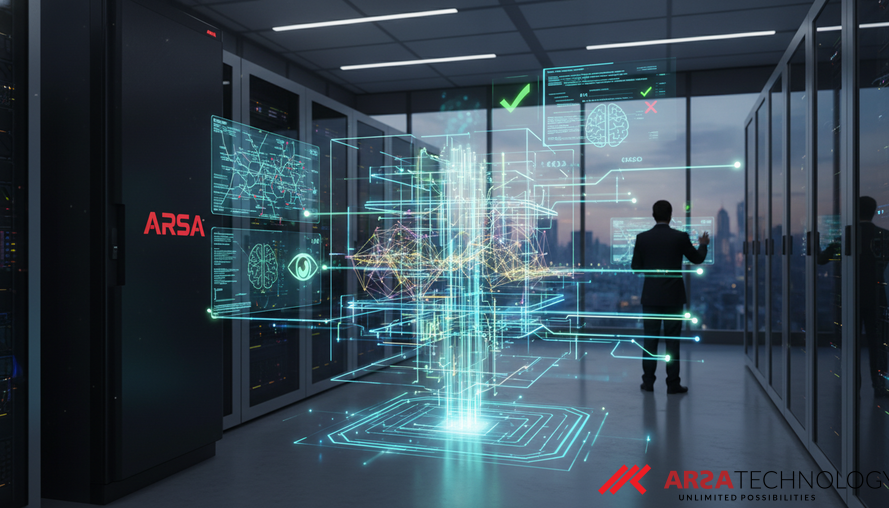
The landscape of enterprise security is undergoing a monumental shift, driven by the rapid proliferation of autonomous AI agents and an unprecedented velocity of corporate data access. The traditional application-centric Zero Trust model, while foundational, is increasingly strained by these modern demands. In response, a new security paradigm, termed Beyond Zero, is emerging. This advanced model moves beyond simply verifying identity and device, to performing highly granular, per-resource and method access decisions for both human users and AI agents, all at machine speed. By shrinking the trust boundary from the broad application level to the individual action, and by integrating static authorization with dynamic, AI-driven reasoning, Beyond Zero aims to create a self-defending enterprise capable of mediating thousands of decisions every second. This forward-thinking approach, as discussed in the paper "Beyond Zero: Enterprise Security for the AI Era" by Joseph Valente and Michal Zalewski, accepted for publication in ACM Queue, outlines a critical vision for the future of digital defense Source.
Beyond Zero fundamentally redefines the scope of trust and access within an enterprise. Where a traditional Zero Trust model like BeyondCorp, introduced in 2014, assumed human-speed actions and applications as the primary trust boundary, Beyond Zero acknowledges the disruptive force of AI agents. These agents interact with data at speeds orders of magnitude faster than humans, often reasoning across vast, unstructured datasets. This necessitates a model that can secure data not just at human pace, but with the responsiveness and intelligence of AI itself. The core of Beyond Zero lies in its ability to manage authorization at a contextual, risk-based, and resource-level, ensuring security without impeding legitimate operations.
Key Pillars of the Beyond Zero Architecture
Beyond Zero introduces several critical features that collectively enable a more robust and intelligent security posture for the AI era. First, it emphasizes resource/action-based security, meaning authorization decisions are made for individual actions on specific resources, rather than simply granting broad access to an application. This is vital because it limits the boundary of trust to the smallest possible unit, providing a far more granular control mechanism that traditional Access Control Lists (ACLs) cannot match. Whether access is attempted via a front-end tool, API, or other methods, each action is independently evaluated.
Second, the model employs blended static and dynamic security. Granular static policies define baseline access rules, but these are augmented by fully dynamic controls that apply stronger security in risky or complex scenarios. This hybrid approach ensures a strong security baseline while allowing for flexible, real-time adjustments without sacrificing the ability to statically verify core security tenets. This capability is particularly important when dealing with the non-deterministic nature of AI agent behavior, which can be difficult to predict with static rules alone.
Dynamic Context and Autonomous Defense
A defining characteristic of Beyond Zero is its capacity for automatically enriched context. The decision systems continuously draw on a rich array of contextual information about the user or agent. This includes what the user should be working on, the sensitivity of the data being accessed, the intended action, and available risk mitigations. By always having these facts available, the decision-making infrastructure can achieve a holistic view comparable to, or even surpassing, a human security analyst. This continuous contextual awareness is crucial for interpreting agent intent and mitigating risks like prompt injection.
Furthermore, Beyond Zero enables automated in-depth investigations to be triggered autonomously by risk signals. These investigations can, in turn, activate immediate challenges or containments applied directly to the user's or agent's stream of accesses. This ability for near-real-time investigation and response allows enterprises to operate at machine speed, drastically reducing incident response times from days or hours to mere minutes. For instance, ARSA's AI Video Analytics could detect anomalous behavior in a physical environment, triggering an investigation in a connected Beyond Zero system that then dynamically adjusts access permissions for an identified individual or associated agent.
Challenges, Containments, and Deployment Realities
The ability to issue challenges and containments directly linked to security policies is another significant advancement. This allows the system to prompt users for additional risk information on demand (e.g., a security key touch in response to a suspected hijacking attempt). For legitimate accessors, this means reduced disruption compared to traditional, often cumbersome approval processes. For malicious actors, it means encountering tailored, hard challenges designed to stop them in their tracks. This intelligent, adaptive response mechanism is central to maintaining both security and operational efficiency.
For organizations considering implementing such an advanced security framework, flexible deployment models are key. Solutions that can integrate with existing infrastructure, whether on-premise servers, private data centers, or edge compute environments, offer the best path forward. For example, ARSA provides the ARSA AI Box Series, which offers pre-configured edge AI systems for rapid, on-site deployment, processing video streams at the edge without cloud dependency. This type of distributed processing aligns well with the Beyond Zero philosophy of localized decision-making and privacy preservation. Similarly, for environments requiring the highest level of data sovereignty, ARSA offers the Face Recognition & Liveness SDK, which can be deployed entirely on-premise, giving full control over biometric data and operational security, a critical consideration for enterprises adopting AI-driven identity and access controls within a Beyond Zero framework.
Addressing the Modern Threat Landscape
The shift to Beyond Zero is not merely an upgrade; it's a necessity driven by profound changes in the operational and threat landscape. AI agents now drive an exponential growth in access volume, straining legacy infrastructure designed for human-centric workflows. This "geometric shock" to enterprise systems means that more sensitive data is accessible at unprecedented speeds, far outpacing manual oversight. Any after-the-fact security operations review becomes less effective when data is processed and acted upon almost instantaneously.
Compounding this challenge is the increasing sophistication of the threat landscape. Adversaries are weaponizing AI, using large language models to rapidly generate and modify malicious code, rendering static detection methods less effective. New attack vectors, such as the exploitation of "ambient authority" where AI agents are granted overly broad permissions, demand a more dynamic, intent-based defense. Beyond Zero provides the crucial capabilities to combat these machine-speed attacks and the non-deterministic behavior of malicious AI. By enabling real-time evaluation and containment, it shifts the focus from post-incident cleanup to proactive, in-the-moment protection.
The Path Forward for Enterprise Security
Beyond Zero represents a fundamental paradigm shift in enterprise security, moving from a reactive, application-level defense to a proactive, action-level intelligence model. It’s about building a security architecture that can match the speed and complexity of the AI era, protecting critical assets from increasingly sophisticated threats. This evolution calls for industry-wide collaboration and the development of new standards to ensure that organizations can effectively secure their digital environments in a world increasingly powered by AI.
For enterprises looking to bridge this gap between traditional security and the demands of the AI era, integrating robust AI and IoT solutions is a critical first step. Explore how ARSA Technology's enterprise AI solutions can help secure your operations and begin your journey to a more intelligent, self-defending infrastructure.
Ready to secure your enterprise for the AI era? We invite you to a free consultation to discuss how our AI and IoT expertise can be tailored to your specific needs.