Boosting Autonomous Driving Safety: The SECURE Framework for Robust Accident Anticipation AI
Discover SECURE, a new AI framework enhancing accident anticipation in autonomous driving. It ensures stability and robustness against real-world perturbations, achieving reliable, safety-critical predictions.

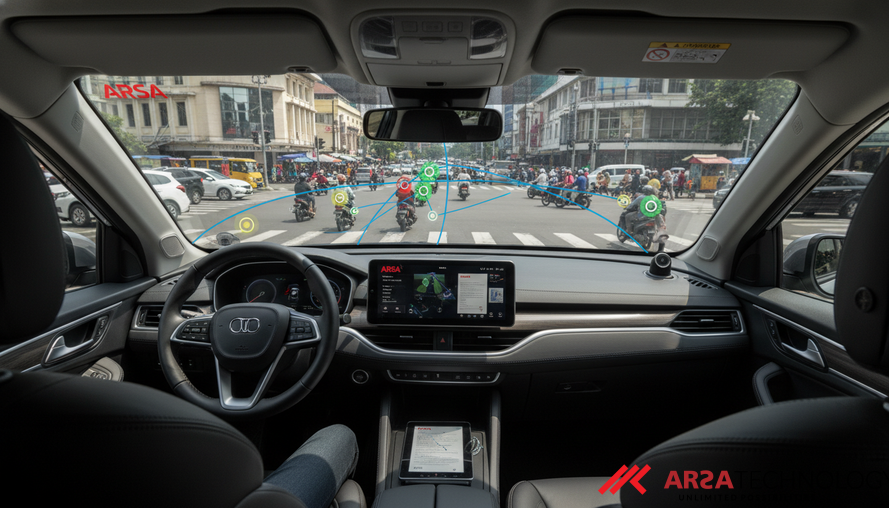
Autonomous driving systems are rapidly transforming our transportation landscape, promising enhanced safety and efficiency. At the heart of this revolution lies artificial intelligence, particularly deep learning models, tasked with perceiving complex environments and making split-second decisions. One of the most critical functions is accident anticipation – the ability to predict potential hazards seconds before they occur. However, despite significant advancements, a major challenge remains: the inherent instability of these safety-critical AI systems when confronted with minor real-world disturbances. This instability can pose serious reliability risks, undermining the trust and safety essential for widespread autonomous vehicle adoption.
The Unseen Vulnerability in Advanced AI Systems
Cutting-edge accident anticipation models, such as CRASH, have demonstrated impressive performance on benchmark datasets. These systems integrate sophisticated mechanisms, like context-aware processing and temporal focus, to effectively identify hazardous patterns in video sequences. Yet, research reveals a significant limitation that often goes unnoticed: these models can exhibit considerable instability in both their predictions and their internal "latent representations" – the abstract features they learn from data.
Even subtle "perturbations" – minor changes to input data like sensor noise, slight shifts in illumination, temporal jitter (tiny variations in timing), or irregular sampling – can distort the model's understanding. This distortion can lead to substantial fluctuations in predicted accident probabilities, potentially causing delayed or unreliable time-to-accident estimates. In high-stakes scenarios like autonomous driving, such instability is unacceptable, compromising system reliability, complicating safety verification, and hindering dependable operation in diverse, unconstrained environments. This highlights the need for AI solutions that maintain consistent performance under varied and challenging conditions, a principle that ARSA Technology champions in its AI Video Analytics offerings.
Introducing SECURE: A Framework for Unwavering Reliability
To tackle this pervasive instability, a novel framework called SECURE – Stable Early Collision Understanding via Robust Embeddings – has been introduced. SECURE formally defines and enforces robustness in accident anticipation models, moving beyond mere accuracy to ensure consistent and reliable performance in critical applications. It is built upon four fundamental attributes: ensuring both consistency and stability across the model's prediction output and its internal latent feature space. This multi-dimensional approach to robustness is vital for systems operating where lives are at stake.
SECURE employs a principled training methodology designed to enhance the resilience of baseline models. This involves fine-tuning the model using a multi-objective loss function. This function not only minimizes the divergence of predictions and latent features from a stable "reference" model but also actively penalizes the model's sensitivity to "adversarial perturbations" – intentionally crafted inputs designed to trick the AI. By training against these subtle, yet potent, attacks, SECURE forces the model to learn more robust features, leading to more dependable decision-making.
Technical Foundations: How Robustness is Achieved
Traditional approaches to accident prediction often rely on a combination of deep learning techniques. Early systems leveraged Convolutional Neural Networks (CNNs) to extract visual features from video footage, often paired with sequential networks like Recurrent Neural Networks (RNNs) or Long Short-Term Memory (LSTM) networks to understand temporal dynamics. More recent advancements incorporate Graph Neural Networks (GNNs) and Transformer-based architectures to model complex interactions between traffic entities, alongside attention mechanisms that prioritize critical regions in a scene.
Despite achieving high accuracy in controlled settings, these models frequently struggle with the unpredictable nature of real-world traffic environments. They face challenges like "long-tail distribution issues," where rare events or unknown categories are poorly handled, and vulnerability to sensor noise or adversarial interference. This is where SECURE makes its mark. By integrating insights from prior work and leveraging advanced training techniques, SECURE provides a unified framework for evaluating and enhancing robustness. It transforms passive video analysis into proactive, reliable intelligence, critical for ensuring that an autonomous vehicle's cameras become active, dependable sensors, a capability also central to the ARSA AI Box Series for edge-based processing.
Real-World Impact and the Future of Autonomous Safety
The implications of the SECURE framework extend far beyond academic research, offering tangible benefits for enterprises and governments deploying autonomous driving technology. Enhanced robustness translates directly into increased safety for passengers and pedestrians, reducing the risk of accidents caused by AI misinterpretations. For developers and operators, this means more reliable systems that require less intervention and are easier to certify for safety compliance.
Furthermore, improved stability builds greater public trust in autonomous technologies, accelerating their adoption. By providing predictable and consistent outputs even under adverse conditions, SECURE contributes to a more secure and efficient intelligent transportation ecosystem. This level of reliability is paramount for critical infrastructure operators, government agencies, and enterprises across various industries, ensuring that AI-powered decisions are always grounded in stable and consistent analysis. ARSA Technology, having been experienced since 2018 in developing production-ready AI and IoT systems, understands the imperative for such robust solutions in mission-critical applications.
The experiments conducted on benchmark datasets like DAD and CCD have demonstrated that the SECURE approach not only significantly enhances robustness against various real-world perturbations but also unexpectedly improves the model's performance on clean, unperturbed data, setting new state-of-the-art results. This dual benefit underscores the framework's potential to redefine safety standards in autonomous driving.
Transform your organization's operational challenges into intelligent, robust solutions with AI and IoT technology. Explore how ARSA Technology's production-ready systems can deliver measurable impact and unwavering reliability for your critical applications. To learn more about our comprehensive AI and IoT solutions and discuss your specific needs, please contact ARSA today for a free consultation.