Data Privacy in Connected and Autonomous Vehicles: Balancing Innovation with Trust
Explore the complex interplay between innovation and privacy in Connected and Autonomous Vehicles (CAVs). Learn how V2X data sharing drives progress while addressing critical security and regulatory challenges.

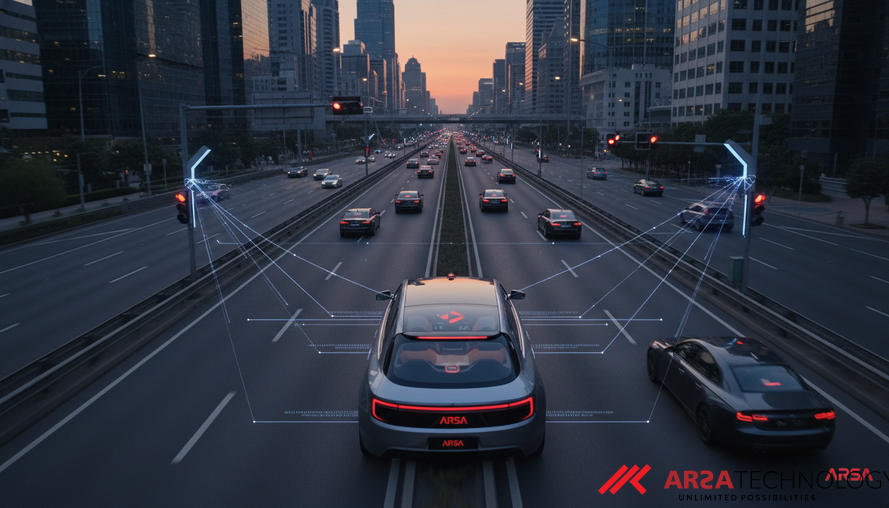
The Automotive Revolution: Connected and Autonomous Vehicles
The automotive industry is in the midst of a profound transformation, driven by the rapid evolution of Connected and Autonomous Vehicles (CAVs). These aren't just cars; they are sophisticated, data-generating machines designed to communicate, operate, and interact seamlessly with their environment. While traditional vehicle advancements focused on mechanical improvements like engines and suspension systems, the modern era emphasizes the integration of advanced sensors and Artificial Intelligence (AI) to enhance every aspect of the driving experience—from safety and comfort to real-time navigation and personalized services. This shift promises a future of smarter, more efficient transportation systems.
At the heart of this revolution is Vehicle-to-Everything (V2X) communication, an umbrella term for how vehicles exchange data with various real-world entities. This intricate network of communication allows CAVs to share critical information, contributing to a more intelligent and responsive transportation ecosystem. The sheer volume of data generated is staggering, with a single CAV estimated to produce over 300 terabytes (TB) of data annually. This massive data flow is crucial for real-time decision-making, optimizing routes, improving safety features, and delivering personalized user experiences.
Unpacking V2X Communication: The Data Lifeline
V2X communication encompasses several sub-categories, each vital for the holistic functioning of CAVs:
- Vehicle-to-Vehicle (V2V) Communication: Vehicles wirelessly share vital information such as speed, location, and direction with nearby vehicles. This instant data exchange can significantly enhance road safety by providing drivers—or autonomous systems—with early warnings about potential collisions or sudden changes in traffic conditions.
- Vehicle-to-Infrastructure (V2I) Communication: This involves vehicles communicating with roadside units (RSUs) like traffic lights, road signs, and toll booths. V2I enables real-time traffic management, dynamic speed limits, and optimized signal timing, contributing to smoother traffic flow and reduced congestion.
- Vehicle-to-Pedestrian (V2P) Communication: Designed to boost pedestrian safety, V2P allows vehicles to share data on pedestrian location and movement direction. This helps CAVs anticipate and react to human road users, preventing accidents.
- Vehicle-to-Network (V2N) Communication: When a vehicle connects to broader cellular networks or the internet, it engages in V2N communication. This is essential for accessing cloud-based services, over-the-air updates, and general internet connectivity for infotainment and navigation.
- Vehicle-to-Cloud (V2C) Communication: Data is exchanged with cloud-based services for advanced analytics, remote vehicle diagnostics, and AI model updates. This centralizes much of the processing power and data storage, enabling complex insights and service delivery.
- Vehicle-to-Device (V2D) Communication: Vehicles interact with personal devices such as smartphones and wearables. This connectivity facilitates personalized settings, remote control features, and seamless integration with personal digital ecosystems.
These diverse communication modes generate a wealth of data—from sensor readings and camera feeds to radar and lidar outputs—all critical for situational awareness and real-time operations. Solutions such as AI Video Analytics and Smart Parking System leverage these data streams to provide actionable insights for traffic management, security, and urban planning.
The Privacy Conundrum: Risks in the Data-Driven Ecosystem
While the benefits of data sharing in CAVs are undeniable, this data-driven ecosystem introduces significant challenges, particularly concerning data privacy, security, and governance. The immense volume of data generated by CAVs—which includes highly sensitive information about travel patterns, personal habits, and even biometric data via in-car sensors—is a lucrative target for various entities. Currently, there's a concerning lack of transparency and comprehensive regulatory frameworks to manage this data.
Many companies, including service providers, manufacturers, insurance firms, and maintenance organizations, access CAV data. However, in numerous instances, this access occurs without obtaining explicit user permission or adequately informing users about what specific data is being collected and how long it will be retained. Such practices erode consumer trust and raise serious questions about data misuse. The potential for unauthorized access, prolonged retention, and secondary exploitation of personal data transforms a consumer advantage into a potential privacy nightmare. Enterprises seeking to leverage these technologies must prioritize robust data governance and security measures.
Building Trust: The Imperative for Robust Data Governance
The absence of clear guidelines creates a climate of uncertainty where users are unaware of who has access to their information, how it's handled, and for what duration. This situation underscores the urgent need for stronger regulatory frameworks and ethical data management practices in the automotive sector. Regulatory bodies worldwide are grappling with how to strike a balance between fostering technological advancements and ensuring secure, consumer-friendly solutions that uphold privacy rights.
Robust data governance in the CAV landscape requires transparent policies on data collection, usage, and retention. It mandates obtaining explicit consent from users and providing them with clear control over their personal data. Furthermore, implementing advanced security measures, such as encryption and anonymization techniques, is crucial to protect data from breaches and unauthorized access. Businesses deploying CAV technologies must invest in these measures to build and maintain consumer trust, transforming potential privacy risks into sustainable, secure innovations.
ARSA's Commitment to Secure AI & IoT Solutions
ARSA Technology recognizes the intricate balance required between technological innovation and data privacy in the evolving world of Connected and Autonomous Vehicles. As a company experienced since 2018 in delivering AI and IoT solutions, we prioritize privacy-by-design in our offerings. Our solutions, like the AI Box Series, are built on edge computing principles, enabling local data processing directly at the source. This approach minimizes data transfer, reduces reliance on cloud infrastructure for raw data, and significantly enhances data privacy and security by keeping sensitive information within the user's premises.
By transforming existing CCTV systems into intelligent monitoring platforms, ARSA offers real-time analytics for traffic, safety, and retail environments, always with a focus on ethical data handling. Our commitment extends to providing transparent and adaptable solutions that empower businesses to leverage the full potential of CAV data while adhering to global privacy standards and fostering consumer trust.
Ready to explore how ARSA Technology can help your enterprise navigate the complexities of AI-driven smart mobility and ensure data privacy? We invite you to explore our advanced AI & IoT solutions and request a free consultation with our expert team to discuss your specific needs.