Driving the Future: AI Anticipation of Traffic Accidents with Generative Data and Semantic Reasoning
Explore how advanced AI leverages generative data augmentation and semantic graph neural networks to predict traffic accidents, enhancing autonomous driving safety and reliability.

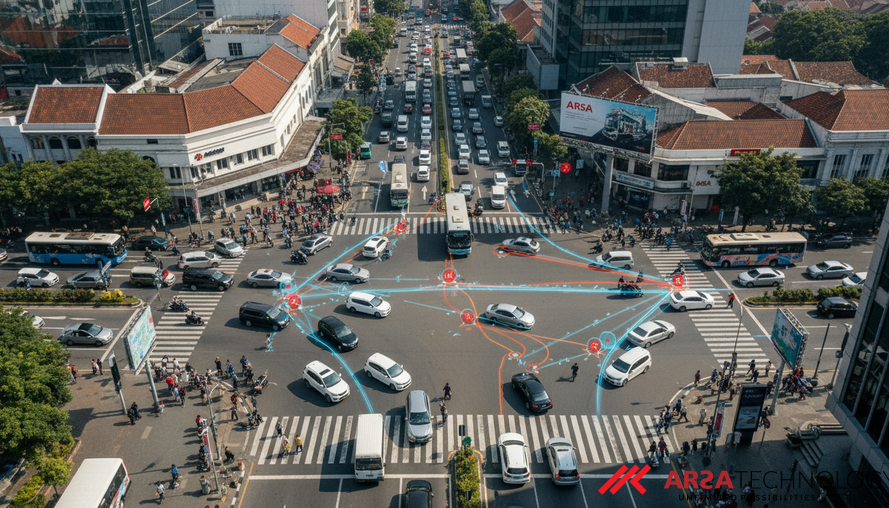
The Critical Need for Proactive Accident Anticipation in Autonomous Driving
The rapid advancement of autonomous driving technologies promises a future of enhanced road safety and efficiency. A cornerstone of this vision is the ability for self-driving vehicles to not merely react to incidents, but to proactively anticipate potential traffic accidents before they occur. This foresight enables automated systems, and even human drivers, to take timely preventive actions, significantly reducing the likelihood of collisions and improving overall traffic safety. Unlike general time-series predictions, accident anticipation zeroes in on anomalous interactions among road users within dynamic environments, often requiring instantaneous assessment of rapidly evolving scenes.
Current challenges in accident anticipation systems stem from several critical issues. Many existing models focus broadly on temporal understanding, often overlooking the nuanced causes of accidents. This can lead to weak perception of interactions between distant vehicles, while close-proximity interactions suffer from extremely short time-to-accident windows, visual obstructions, or blurred cues. These limitations are particularly detrimental in fast-changing traffic scenarios, where every millisecond counts. This foundational research, detailed in the paper Learning from the Unseen: Generative Data Augmentation for Geometric-Semantic Accident Anticipation by Guan et al., proposes innovative solutions to these pervasive problems.
The Challenge of Unseen Events: Why Current Data Falls Short
A primary obstacle in developing robust accident anticipation AI is the scarcity of sufficiently large and diverse datasets. Traffic accidents, by their nature, are infrequent and unpredictable events. The processes of collecting, curating, and meticulously labeling accident videos are incredibly costly and labor-intensive due to their randomness and time-critical characteristics. Consequently, existing accident datasets are often limited in size and vary significantly in their coverage. For instance, one dataset might feature subtropical urban environments without snowfall, while another predominantly captures traffic on temperate open roads. These discrepancies can introduce systematic biases, leaving specific scenarios or categories underrepresented and increasing the risk of model overfitting when evaluated on smaller, independent datasets.
The lack of comprehensive, real-world accident data leads to models that may perform well on specific scenarios but struggle with generalization to unseen or rare events. This weakness undermines the reliability of autonomous driving systems, which require near-perfect performance across an infinite spectrum of possibilities. To mitigate these data bottlenecks, innovative approaches are needed to expand and diversify training data while preserving the authentic statistical patterns of real-world environments, ensuring that AI models learn from a broader, more representative range of potential hazardous situations.
Learning from the Unseen: Generative AI for Data Augmentation
To overcome the inherent limitations of real-world accident data, a novel traffic video synthesis pipeline has been introduced. This pipeline leverages generative AI, specifically a video generation module, to produce high-fidelity synthetic driving scenes. Crucially, this process is guided by structured prompts derived from the environmental feature distributions of existing real-world datasets. This means the synthetic videos, while artificial, are statistically consistent with the visual characteristics (like lighting, weather, and road conditions) of genuine traffic footage.
This approach significantly increases both the volume and diversity of training data. By generating new traffic scenarios that mirror real-world complexities but feature novel interaction patterns, the AI model can learn to recognize a wider array of accident precursors. This strategy is vital for training robust systems, especially for rare and unpredictable events that are difficult to capture naturally. The result is a richer training corpus that enables AI models to better generalize and perform stably, even in diverse and complex driving conditions.
Beyond Pixels: Semantic & Geometric Reasoning for Accident Prediction
Beyond simply augmenting data, the research introduces a sophisticated AI model designed to interpret complex traffic scenes more effectively. This model, a semantic and geometric enhanced dynamic graph convolutional network, moves beyond treating individual frames in isolation. Instead, it processes short video segments through temporal convolutional layers, significantly enlarging its "receptive field" – its ability to understand context over time. This approach mitigates transient information loss and enhances the accuracy of predictions by providing a more coherent narrative of unfolding events.
The core innovation lies in its ability to reason dynamically over both spatial (geometric) and semantic relationships among traffic participants. Traditional systems might only see objects and their positions. This enhanced Graph Neural Network (GNN) represents vehicles, pedestrians, and other road users as "nodes," while their interactions and relationships become "edges" in a dynamic graph. Crucially, it enriches these connections with "semantic cues." This means the model understands not just where a car is relative to a pedestrian (geometric), but also what that car is doing (e.g., accelerating, braking, turning) and what that means in terms of potential risk (semantic). For instance, it can distinguish between a car safely passing another and one aggressively cutting off another vehicle, adapting its focus to critical targets that pose a genuine hazard. This sophisticated interaction modeling is vital for precise and timely accident anticipation, offering a comprehensive understanding of the scene that goes beyond raw visual data. Enterprises can implement similar advanced video analytics capabilities, like those offered by ARSA AI Video Analytics, to transform existing CCTV feeds into real-time operational intelligence.
Validating Advanced AI: The Multi-source Accident Anticipation (MAA) Dataset
To empirically validate the effectiveness of this dual-pronged approach, the researchers introduced the Multi-source Accident Anticipation (MAA) dataset. This new benchmark dataset is a significant contribution to the field, offering a more extensive collection of accident cases with detailed annotations compared to prior datasets. The MAA dataset features standardized, finely annotated video sequences that encompass a broad spectrum of geographical regions, weather conditions, and traffic patterns, providing a robust foundation for reproducible evaluation and future research.
Evaluations conducted across both existing datasets and the newly released MAA benchmark confirm the notable gains achieved by the proposed framework. The results demonstrate significant improvements in both accident anticipation accuracy and the lead time before an incident, giving autonomous systems more time to react. This augmentation strategy consistently surpasses prior art and effectively mitigates model performance bottlenecks, leading to more stable and reliable accident anticipation capabilities. For organizations requiring robust, on-premise AI deployments for similar high-stakes applications, solutions like the ARSA AI Box Series offer pre-configured edge AI systems that combine hardware with advanced video analytics software for rapid, reliable on-site processing.
Real-World Impact: Enhancing Autonomous Driving Safety and Efficiency
The innovations in generative data augmentation and geometric-semantic reasoning have profound implications for the real-world deployment of autonomous driving systems and broader public safety. By addressing the critical data scarcity problem and enhancing the AI's ability to understand complex, dynamic traffic interactions, this research lays the groundwork for more reliable and safer automated vehicles. The ability to accurately predict accidents with greater lead time translates directly into tangible business outcomes:
- Reduced Costs: Fewer accidents mean lower insurance premiums, reduced repair costs, and minimized legal liabilities for autonomous fleet operators.
- Increased Security & Safety: Proactive alerts prevent incidents, safeguarding lives and property, and building public trust in autonomous technologies.
- Optimized Operations: Smoother traffic flow due to fewer incidents can lead to more efficient logistics and transportation networks.
This research aligns perfectly with ARSA Technology's vision of building the future with AI & IoT by delivering solutions that reduce costs, increase security, and create new revenue streams. As an AI & IoT solutions provider, ARSA is experienced since 2018 in translating advanced AI research into practical, production-ready systems for diverse industries. The integration of such cutting-edge AI methodologies ensures that deployed solutions are not only intelligent but also robust, reliable, and privacy-compliant, meeting the stringent demands of global enterprises.
Strategic technology transformation requires a partner who understands both your operational realities and the art of the possible. ARSA Technology is committed to engineering systems that work today, at scale, and under real industrial constraints.
To explore how advanced AI and IoT solutions can transform your operations and enhance safety, we invite you to contact ARSA for a free consultation.
Source: Learning from the Unseen: Generative Data Augmentation for Geometric-Semantic Accident Anticipation by Yanchen Guan et al.