Elevating Enterprise Security: Lessons from High-Profile Incidents and the Future of Protected Venues
Explore the crucial role of advanced AI and IoT in securing critical infrastructure, drawing insights from a recent high-profile security incident. Understand the challenges and solutions for robust, compliant physical security systems.

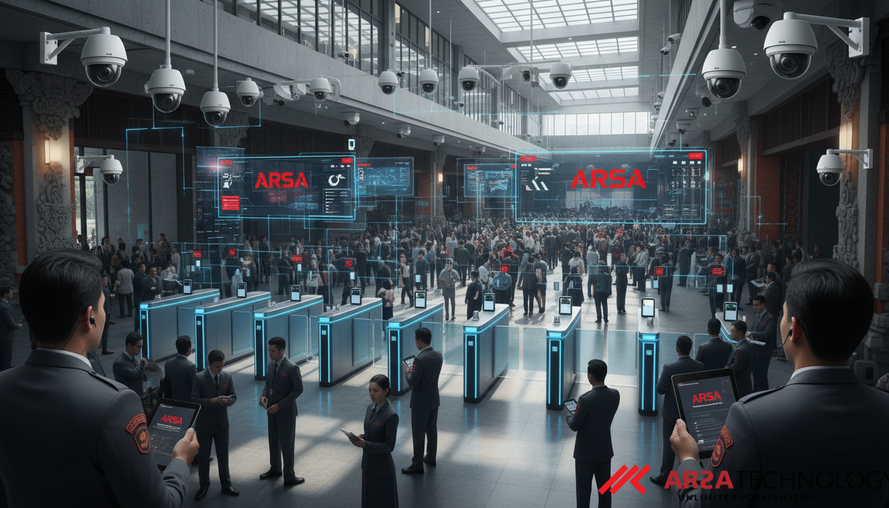
In an increasingly complex world, the security of high-profile events and critical infrastructure has become paramount. A recent incident involving an attempted shooting at the White House Correspondents' Dinner (WHCD) in April 2026, as reported by The Verge, underscored the continuous need for robust, multi-layered security measures in both public and private venues. This event, which saw the immediate evacuation of top administration officials and hundreds of journalists, also brought into sharp focus the ongoing debate around security infrastructure investments and their wider implications.
The Incident and its Security Ramifications
The attempt on President Donald Trump's life during the WHCD served as a stark reminder of the persistent threats faced by prominent figures and public gatherings. The incident occurred at the Washington Hilton, a venue with historical significance, having previously been the site of a 1981 assassination attempt on President Ronald Reagan. In the aftermath, President Trump was quick to point out what he perceived as vulnerabilities in the hotel's security, stating that it was "not a particularly secure building" and using the event to advocate for a controversial, high-security ballroom project at the White House.
Preliminary reports identified the alleged shooter as Cole Allen, a 31-year-old individual who had been a guest at the hotel. While the hotel's general entrance area had lighter security, Allen was reportedly unable to breach the stringent security perimeter established around the entrance to the subterranean ballroom where the dinner was taking place. This distinction highlights a crucial lesson for enterprise security: the importance of establishing impenetrable perimeters and utilizing advanced security layers that can withstand determined threats, regardless of external vulnerabilities.
The "Militarily Top Secret Ballroom" Project: A Nexus of Security and Oversight
The White House ballroom project, a $400 million initiative, became a central topic in the post-incident discussions. Initiated by President Trump in October, the project involved the demolition of the East Wing and was framed as a necessary upgrade to provide a larger and more secure venue for official events. However, its development has been shrouded in controversy, facing legal challenges from organizations like the National Trust for Historic Preservation, which alleged improper authorization due to the lack of congressional approval.
Beyond the political and legal debates, the project underscores the immense challenges and considerations involved in securing high-value government or corporate assets. While the stated goal was enhanced safety, the funding structure, which saw donations from major tech and crypto corporations such as Amazon, Apple, Coinbase, Gemini, Google, Meta, and Microsoft, raised questions about potential influence on policy. This exemplifies how large-scale infrastructure projects, especially those with security implications, often intersect with public trust, financial transparency, and regulatory compliance.
Implementing Advanced Physical Security Solutions
The effectiveness of security perimeters and rapid response protocols is paramount in preventing high-profile incidents from escalating. Modern enterprise security relies heavily on the integration of Artificial Intelligence and Internet of Things technologies to create intelligent, proactive defense systems. These systems move beyond mere surveillance, offering real-time threat detection, behavioral monitoring, and automated response capabilities.
For instance, advanced AI Video Analytics can transform passive CCTV feeds into active intelligence. Such systems can automatically detect unusual behavior, identify restricted area intrusions, or monitor crowd density, triggering immediate alerts for security personnel. Beyond visual monitoring, sophisticated access control systems leverage biometrics and liveness detection to ensure that only authorized individuals gain entry, preventing spoofing attempts and enhancing identity verification. Technologies like the ARSA AI Box Series offer pre-configured edge AI systems that can be rapidly deployed to upgrade existing CCTV infrastructure, providing on-premise processing for low latency and enhanced data privacy, crucial for sensitive environments. For critical access points, an on-premise Face Recognition & Liveness SDK allows enterprises to maintain full control over biometric data within their own infrastructure, ensuring compliance with strict data sovereignty and privacy regulations.
Navigating Complex Projects: From Conception to Compliance
The controversy surrounding the White House ballroom project highlights that security upgrades, particularly for critical national or enterprise infrastructure, are not purely technical endeavors. They require careful navigation of legal frameworks, ethical considerations, and stakeholder expectations. Ensuring privacy-by-design, adhering to data protection regulations like GDPR or HIPAA (where applicable), and maintaining transparency are as vital as the technology itself. Solutions must be scalable, maintainable, and adaptable to evolving threats and regulatory landscapes.
Organizations undertaking such transformative projects need partners with deep engineering expertise and a track record of delivering robust, compliant, and production-ready systems. A consultative engineering approach that diagnoses operational needs, maps value chains, and designs solutions with measurable financial and security outcomes is indispensable. ARSA Technology, for example, has been experienced since 2018 in developing and deploying AI and IoT solutions across various industries, prioritizing accuracy, scalability, and operational reliability.
Ensuring Robust Protection for Critical Infrastructure
The attempted WHCD shooting underscores the ongoing and evolving nature of security threats. For enterprises and government entities, investment in advanced, intelligent security infrastructure is not just a reactive measure but a proactive strategy for risk reduction, operational continuity, and compliance. By leveraging the power of AI and IoT, organizations can transform their security postures, moving from reactive responses to predictive intelligence and real-time threat neutralization.
This incident serves as a critical case study illustrating the complexities of securing high-value assets and the necessity of integrating cutting-edge technology with meticulous planning and regulatory adherence. The future of protection lies in seamlessly blending physical security with digital intelligence, ensuring comprehensive defense against all forms of threats.
To explore how ARSA Technology’s AI and IoT solutions can enhance the security and operational intelligence of your enterprise, we invite you to contact ARSA for a free consultation.
(Source: The Verge)