Elon Musk Unifies xAI and SpaceX: The Vision for a Trillion-Dollar Space-Based AI Future
Explore Elon Musk's strategic decision to merge xAI with SpaceX, creating the world's most valuable private company at $1.25 trillion. Discover his vision for space-based AI and its implications for global enterprises.

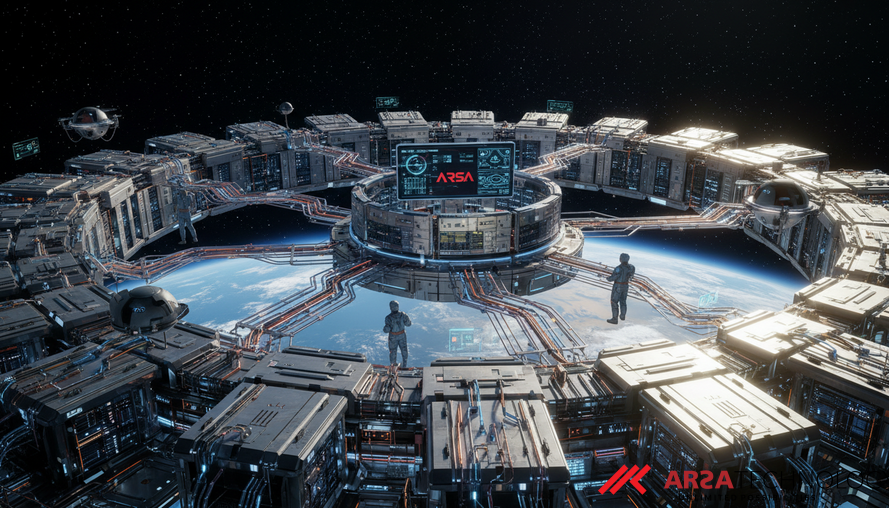
In a bold move that reshapes the landscape of private enterprise, Elon Musk has announced the integration of his artificial intelligence startup, xAI, into the satellite and space transportation company, SpaceX. This strategic consolidation, unveiled recently, positions the combined entity as the most valuable private company globally, with an estimated worth of $1.25 trillion, according to a report from Bloomberg. The decision underscores a burgeoning trend towards leveraging space for advanced technological endeavors, specifically in the realm of AI development.
The Strategic Imperative: AI Beyond Terrestrial Limits
Musk's primary justification for this integration stems from a fundamental belief: the Earth’s infrastructure cannot sustainably meet the escalating global electricity demand for artificial intelligence. He articulated this vision, stating that "terrestrial solutions" are insufficient and that Silicon Valley, and indeed the world, will eventually need to construct data centers in space to power future AI ambitions. "In the long term, space-based AI is obviously the only way to scale," Musk remarked in a blog post, emphasizing the boundless resources available in the cosmos. He highlighted that space offers vast power and room, making it the "only logical solution" for these resource-intensive efforts. This foresight points to a future where computational capacity for AI transcends Earth's physical and energy constraints.
A Trillion-Dollar Enterprise and Future Plans
The amalgamation of xAI and SpaceX is not merely a technical realignment but a monumental financial event. Prior to this acquisition, SpaceX was already on track for a significant valuation increase, having informed employees in December of its intent to buy back insider shares in a deal that valued the rocket company at $800 billion, as reported by The New York Times. Meanwhile, xAI had recently concluded a successful funding round, securing $20 billion from investors, which brought its valuation to approximately $230 billion. The combined $1.25 trillion valuation of the newly merged entity instantly establishes it as the world's most valuable private company. Despite this major integration, SpaceX's plans for an initial public offering (IPO) later this year are reportedly still moving forward, according to Bloomberg.
A History of Strategic Consolidation
This isn't Musk’s first foray into consolidating his diverse business holdings. His empire, predominantly privately owned, spans AI, space exploration, neurotechnology (Neuralink), and infrastructure (The Boring Company). Last year, xAI acquired Musk's social media platform, X (formerly Twitter), in a deal that valued that combined venture at over $110 billion. Since then, xAI's flagship AI product, Grok, has been deeply integrated into X, powering various features and the platform’s content-recommendation algorithms. A decade earlier, Musk similarly leveraged shares of Tesla, his electric car company, to acquire SolarCity, a renewable energy firm led by his cousin, Lyndon Rive. These moves illustrate a consistent pattern of using his extensive network of companies to fuel his often ambitious and long-term visions for technological advancement.
From Satellites to Sentient Suns: The Grand Vision
With xAI now part of SpaceX, the immediate focus will be on launching satellites to support AI development on Earth. However, this is merely a stepping stone towards a far grander aspiration. Musk envisions building space-based data centers that could ultimately power civilizations on other planets, such as Mars. His ambitious outlook transcends mere technological advancement, hinting at philosophical implications. "This marks not just the next chapter, but the next book in SpaceX and xAI's mission: scaling to make a sentient sun to understand the Universe and extend the light of consciousness to the stars," Musk articulated in his blog post. This statement highlights a profound long-term objective of pushing the boundaries of consciousness and understanding through advanced AI and space capabilities.
Implications for Enterprise AI and IoT
While space-based AI might seem a distant future, the underlying principles of advanced AI and IoT are driving immediate transformations across various industries today. Enterprises must consider scalable, efficient, and secure AI solutions to remain competitive. For instance, sophisticated AI Video Analytics can transform passive surveillance into active business intelligence, enhancing security and optimizing operations. Furthermore, integrating specialized AI API suites allows businesses to embed advanced functionalities like facial recognition or predictive analytics into existing systems, democratizing access to cutting-edge AI without extensive infrastructure investments. Companies are also adopting edge AI devices for on-premise data processing, ensuring maximum privacy and real-time insights for critical applications such as industrial safety monitoring or retail analytics. These practical applications demonstrate the immediate value of AI and IoT for enhancing efficiency, security, and decision-making on Earth.
Elon Musk’s integration of xAI into SpaceX is a testament to the colossal ambitions driving the modern technology landscape. It highlights a future where AI's computational demands could extend beyond Earth, necessitating innovative solutions in space. For global enterprises navigating their own digital transformation, the strategic deployment of scalable, privacy-conscious, and impactful AI and IoT solutions remains paramount.
To explore how advanced AI and IoT solutions can optimize your operations and drive measurable outcomes, we invite you to contact ARSA for a free consultation.
Source: Wired.com