Empowering Insurance Agents: How AI Chatbots are Revolutionizing Operational Efficiency
Discover how AI-powered chatbots like Axlerod are transforming the insurance industry by assisting agents with real-time policy retrieval, boosting efficiency, and improving customer service. Learn about LLMs, NLP, and RAG.

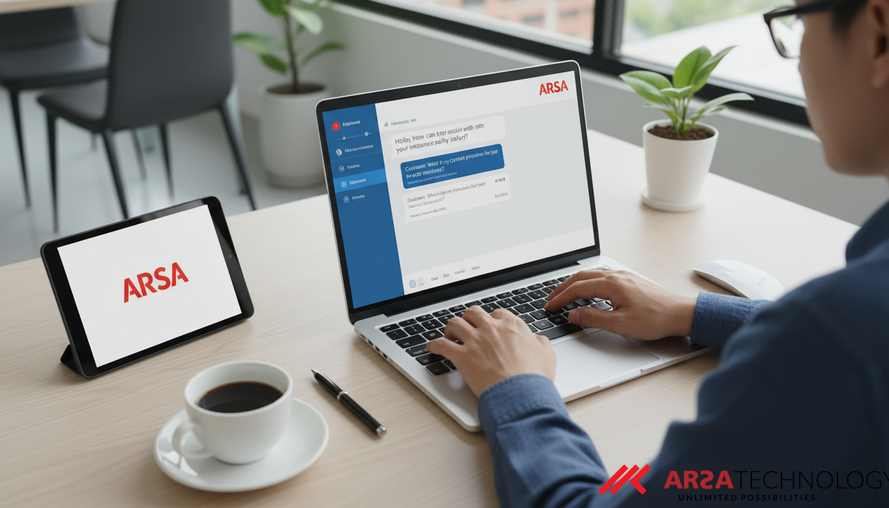
The Transformative Power of AI in the Insurance Sector
The global insurance industry, a cornerstone of financial stability and economic development, is in the midst of a profound digital transformation. Driven by the rapid advancements in artificial intelligence (AI) technologies, particularly intelligent conversational agents, insurers are discovering innovative ways to enhance operations, streamline decision-making, and enrich customer experiences. While much of the early focus has been on customer-facing AI applications, a significant shift is now occurring towards empowering internal teams, specifically independent insurance agents, with sophisticated AI tools.
This strategic evolution acknowledges that augmenting human expertise with AI can yield immense benefits, allowing agents to focus on high-value tasks that require human judgment and empathy. By leveraging technologies like Natural Language Processing (NLP) and Large Language Models (LLMs), businesses can create powerful agent-assistive tools. This article delves into the potential of such AI-powered chatbots, drawing insights from real-world applications and highlighting how these innovations translate into tangible business outcomes, from increased productivity to superior customer satisfaction.
Bridging the Gap: Agent-Assistive AI, Not Just Customer-Facing
Traditionally, insurance agents face numerous operational challenges. Manually sifting through vast policy databases, cross-referencing complex documents, and ensuring consistent, accurate responses can be time-consuming and prone to human error. These inefficiencies can lead to delays in client support and impact overall business performance. Recognizing this, the insurance industry has long sought technological solutions, evolving from rule-based automation to predictive analytics, and now, advanced AI methodologies.
A particularly impactful development is the deployment of LLM-based chatbots as direct support tools for agents. This approach is not merely pragmatic but strategically advantageous. Insurance agents, armed with deep domain expertise, are uniquely positioned to interpret nuanced policy language, validate the accuracy of AI-generated output, and identify potential "hallucinated" responses—a common challenge with generative AI systems. By keeping human agents in the loop, AI becomes an augmentation layer, offering a safer and more effective application within highly regulated service environments. This minimizes risks while maximizing the benefits of AI in enhancing agent productivity and client retention.
The Technological Backbone: LLMs, NLP, and Retrieval-Augmented Generation (RAG)
At the core of these advanced agent-assistive chatbots are sophisticated AI technologies. Large Language Models (LLMs) are powerful AI systems trained on enormous datasets, enabling them to understand, generate, and process human language with remarkable fluency. They can interpret complex queries and generate coherent, contextually appropriate responses. However, LLMs sometimes lack specific, up-to-date information or may "hallucinate" facts.
To counter this, a crucial architectural component called Retrieval-Augmented Generation (RAG) is employed. RAG systems combine the generative capabilities of LLMs with a robust information retrieval mechanism. When an agent submits a query, the RAG system first searches a comprehensive, domain-specific knowledge base—such as a company's structured policy databases, internal documents, and FAQs. It then retrieves the most relevant information and feeds it to the LLM, which uses this factual context to formulate a precise and accurate answer. This synergy significantly enhances the chatbot's reliability and relevance, ensuring that responses are grounded in verified data. ARSA Technology leverages such advanced NLP and AI capabilities in its AI API products, allowing businesses to integrate intelligent functionalities into their existing applications seamlessly.
Axlerod: A Case Study in Agent Empowerment
An excellent example of this agent-assistive paradigm is Axlerod, an AI-powered conversational interface designed to improve the operational efficiency of independent insurance agents. Developed in collaboration with Safety Insurance, a regional carrier, Axlerod's primary objective was to assist agents with policy and coverage-related inquiries. By transforming existing, large-scale policy databases into accessible knowledge, the chatbot allowed agents to swiftly review client coverage, query extensive documentation, and respond to complex customer questions with exceptional contextual precision.
The empirical evaluation of Axlerod demonstrated significant improvements in operational metrics. It achieved an impressive overall accuracy of 93.18% in policy retrieval tasks, ensuring agents received reliable information. Crucially, the system also reduced the average search time by 2.42 seconds. This reduction, though seemingly small, accumulates across hundreds of thousands of daily interactions, translating into substantial productivity gains and faster service delivery. This powerful combination of accuracy and speed underscores how AI, when applied strategically, can directly contribute to measurable ROI and enhanced business operations.
Realizing Business Impact with Intelligent Automation
The success of agent-assistive AI extends beyond mere efficiency. For businesses across various industries, implementing such intelligent solutions translates into concrete benefits that drive growth and competitive advantage. In insurance, faster access to information means agents can handle more client inquiries, close sales more quickly, and resolve claims disputes with greater accuracy. This directly impacts customer satisfaction, leading to higher retention rates and positive word-of-mouth referrals.
Moreover, by automating the mundane tasks of information retrieval, AI empowers agents to concentrate on what humans do best: building relationships, providing personalized consultation, and exercising critical judgment in complex scenarios. This approach transforms the role of an agent from a data retriever to a strategic advisor, significantly boosting morale and reducing burnout. Businesses considering similar AI deployments can look to ARSA’s track record, as an experienced since 2018 AI and IoT provider, in delivering solutions that offer tangible impact and measurable outcomes across diverse operational landscapes.
Implementing Intelligent Chatbots: Practical Considerations
For businesses looking to implement AI-powered chatbots for internal use, several practical considerations are paramount. First, the solution must be easily integrable with existing enterprise systems, whether it’s a CRM, ERP, or legacy database. Solutions like ARSA’s AI Box Series exemplify how edge computing devices can transform existing infrastructure, like CCTV cameras, into intelligent monitoring systems with plug-and-play ease, minimizing disruption.
Second, data privacy and security must be a top priority. Agent-assistive chatbots typically process sensitive information, necessitating robust security protocols and strict adherence to data governance policies. The ability to process data locally, an advantage of edge AI, can significantly enhance privacy. Finally, the solution should be scalable, capable of growing with the business and adapting to evolving needs, whether for a single department or a large-scale enterprise.
The paradigm of agent-assistive AI, exemplified by the Axlerod chatbot, demonstrates a clear path for businesses to harness the power of AI to empower their workforce. By automating repetitive information search and retrieval, minimizing human error, and providing instant, accurate insights, these tools enhance operational efficiency and elevate the quality of human-client interactions. It is a future where AI serves not to replace, but to augment and amplify human capabilities.
To explore how AI-powered solutions can transform your business operations and empower your teams, we invite you to discuss your specific needs. Start your journey towards a faster, safer, and smarter enterprise today.
Ready to implement an AI solution tailored for your business? contact ARSA for a free consultation.