Enhancing Cybersecurity: The Critical Need for Explainable Decisions in Security Operations Centers
Explore a real-world study on why SOC operators struggle to justify their alarm triage decisions, despite high accuracy. Learn how explainable AI can empower security teams and improve enterprise defense.

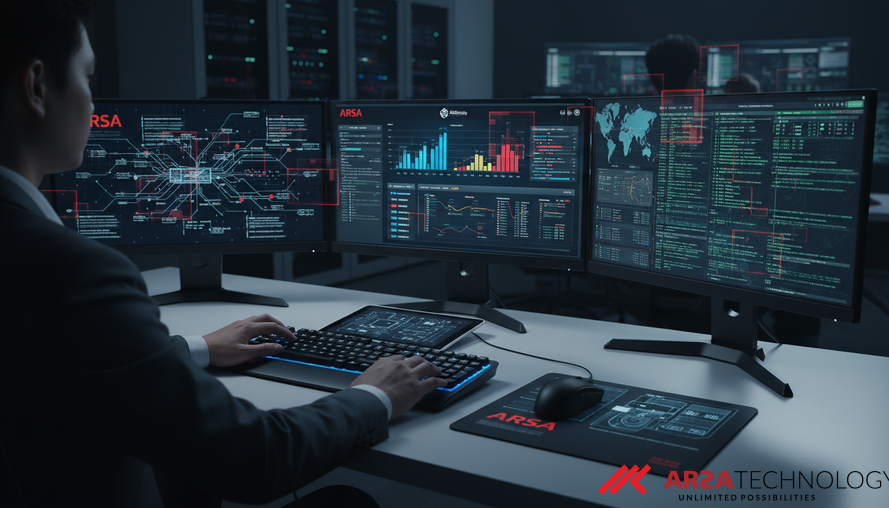
The Silent Struggle in Security Operations Centers
In today's interconnected world, cyberattacks are a constant threat to organizations of all sizes. To combat this relentless assault, Security Operations Centers (SOCs) stand as a fundamental asset, acting as the first line of defense. These dedicated teams operate around the clock, tasked with monitoring intricate network environments, preventing intrusions, detecting threats, and executing recovery plans. Their arsenal includes sophisticated tools like Security Information and Event Management (SIEM) platforms, which aggregate and analyze vast amounts of security data. However, the sheer volume of alerts generated by these systems, often including numerous false positives, presents a significant challenge: alert fatigue, which can severely impact the efficiency and effectiveness of SOC analysts.
A recent academic paper, "Can SOC Operators Explain their Decisions while Triaging Alarms? A Real-World Study" by Jessica Moosmann, Irdin Pekaric, and Giovanni Apruzzese, delves into a critical, yet often overlooked, aspect of SOC operations: the ability of analysts to articulate the reasoning behind their alarm triage decisions. This research, available at arxiv.org/abs/2604.22001, highlights a crucial gap in how security decisions are made and justified, underscoring the pressing need for enhanced decision-support systems.
The Unseen Challenge in Security Operations
The complexity of modern IT infrastructures means that automated security mechanisms frequently trigger an overwhelming number of alarms. Not all of these alerts signify genuine security incidents; many are "false positives" — benign activities misinterpreted as malicious. This constant barrage of notifications leads to alert fatigue among SOC operators, diminishing their ability to differentiate real threats from background noise. Effectively triaging these alarms, which means prioritizing and investigating them based on established knowledge and evidence, is a high-stakes task. An incorrect decision can either waste valuable resources on non-threats or, far more dangerously, allow a critical security breach to go undetected.
Beyond simply making the right call, SOC analysts are increasingly expected to justify their decisions. This is vital for internal accountability, regulatory compliance, and maintaining trust with customers, especially when an incident occurs or a decision is questioned. The ability to provide a clear, evidence-based explanation transforms a reactive operation into a proactive, intelligent defense strategy, reinforcing an organization's security posture against evolving cyber threats.
A Deep Dive into SOC Decision-Making
To investigate the explainability of SOC operators' decisions, the researchers first conducted a systematic literature review across 257 research documents. Their findings revealed that the specific question of whether SOC analysts can explain their alarm triage decisions has received surprisingly limited attention in prior academic work. This identified research gap paved the way for a unique field study.
The study partnered with a real-world SOC in Europe, engaging 12 full-time analysts. Participants were presented with actual alarms generated within their own SOC, spanning six cases of varying difficulty and encompassing over 30,000 events. For each scenario, analysts were asked to determine if the alarm indicated a true security problem or a false one, and crucially, to provide a detailed, open-text explanation for their choice. This methodology allowed for a direct assessment of both the accuracy of their decisions and the quality of their justifications in a practical, operational context.
Key Findings: Correct Decisions, Lacking Explanations
The results of the study offered a compelling, if somewhat concerning, insight into SOC operations. While analysts demonstrated high proficiency in identifying genuine threats, their ability to justify those decisions was significantly weaker:
- Decision Accuracy: In an impressive 83% of cases, the SOC analysts correctly identified whether an alarm was indicative of a true security problem or a false one. This highlights their strong intuition and technical skill in threat detection.
- Explanation Accuracy: Despite accurate decisions, a correct and precise justification for those decisions was often lacking. Only 39% of the explanations provided by the analysts truly reflected the actual root cause or underlying reasoning for their triage decision. A staggering 61% of explanations were either incorrect or imprecise.
Qualitative analyses, derived from pre- and post-study questionnaires, further revealed that factors such as an analyst's expertise or self-confidence did not correlate with the accuracy of their explanations. Interestingly, some alarm scenarios were consistently perceived as more challenging, with analysts frequently citing "missing information" as a barrier, even when all necessary tools and data were technically available to them. This suggests a disconnect between available data and actionable, explainable insights.
Why Explainability Matters for Cybersecurity
The findings from this study carry significant implications for modern enterprises. For organizations deploying sophisticated cybersecurity measures, the ability to explain decisions is not merely an academic exercise; it directly impacts operational efficiency, regulatory compliance, and overall trust. Without clear justifications, SOCs face several challenges:
- Accountability and Compliance: Many industry standards and legal bodies require demonstrable reasoning for security decisions. Inaccurate or vague explanations can lead to compliance issues and make audits more difficult.
- Trust and Communication: Customers and stakeholders need assurance that their security incidents are handled competently. When analysts can't clearly explain a decision, it erodes confidence, especially if that decision later proves problematic.
Resource Allocation: Understanding why* an alarm is false helps refine detection rules and reduce future false positives, optimizing resource allocation. Without this insight, the cycle of alert fatigue continues.
- Improved Training and AI Development: Identifying the systematic gaps in human explanation can guide the development of better training programs for analysts and inform the design of next-generation, more explainable AI decision-support systems.
Bridging the Gap: The Future of Explainable Security AI
The study powerfully advocates for the development of decision-support systems that not only guide SOC analysts to the right conclusions but also equip them with the understanding and articulation needed to explain why those conclusions are correct. This is where advanced AI and IoT solutions come into play, offering practical tools to enhance the explainability and effectiveness of security operations.
For instance, enterprise-grade AI Video Analytics can be deployed to process CCTV footage in real-time, identifying objects, people, vehicles, and behaviors with high accuracy. Such systems can provide granular, verifiable data that serves as robust evidence for security alerts, moving beyond simple detections to offer rich context for human operators. This data can directly contribute to more accurate and justifiable alarm triage decisions.
Furthermore, integrating edge AI systems, such as the AI Box Series, allows for localized processing of security data. By analyzing video streams and other sensor data at the source, these systems can deliver instant insights with low latency and without constant cloud dependency. This localized intelligence can enrich alerts with more immediate and relevant contextual information, helping SOC analysts quickly grasp the underlying causes of an alarm and articulate their reasoning with confidence. ARSA Technology, an AI & IoT solutions provider, has been experienced since 2018 in developing and deploying such production-ready systems that focus on accuracy, scalability, privacy, and operational reliability for various industries, including those requiring stringent security.
In conclusion, while SOC operators are skilled at identifying threats, their ability to explain their decisions is a critical area for improvement. Empowering these vital teams with AI-driven decision support that emphasizes explainability will not only reduce alert fatigue and optimize resource use but also foster greater accountability and trust in an increasingly complex cybersecurity landscape.
To explore how AI and IoT solutions can enhance your enterprise security operations and provide actionable, explainable intelligence, please contact ARSA for a free consultation.
Source: Moosmann, J., Pekaric, I., & Apruzzese, G. (2026). Can SOC Operators Explain their Decisions while Triaging Alarms? A Real-World Study. Retrieved from https://arxiv.org/abs/2604.22001