Enhancing Multi-Agent AI with Cooperative Resilience: A New Era for Robust Systems
Discover how learning reward functions from ranked behaviors boosts cooperative resilience in multi-agent AI. ARSA Technology explores hybrid strategies for robust, self-recovering systems.

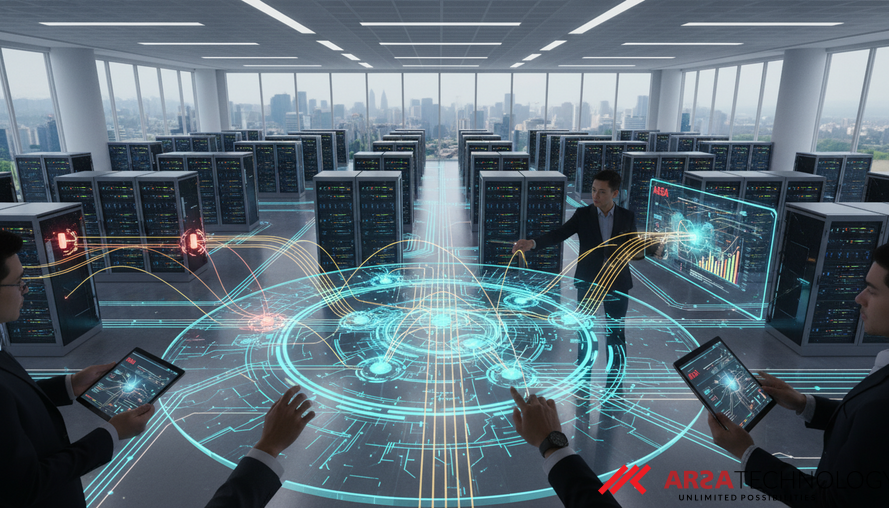
Navigating the Unpredictable: The Imperative of Cooperative Resilience in AI Systems
Modern Artificial Intelligence (AI) solutions increasingly rely on multi-agent systems, where multiple AI entities collaborate to achieve complex objectives. These systems, whether governing smart city infrastructure, coordinating logistics fleets, or managing industrial automation, operate within environments that are inherently dynamic and uncertain. Disruptions, ranging from internal system failures and resource scarcities to external environmental shocks or even malicious attacks, constantly threaten the overall functionality of these interconnected networks. For systems where agents must balance both individual goals and collective well-being – known as mixed-motive multi-agent systems – the challenge extends beyond mere individual optimization to ensuring the sustained integrity and performance of the entire group.
This critical need highlights the concept of cooperative resilience: the capacity of a group of AI agents to not only anticipate and resist disruptions but also to effectively recover and adapt, or even transform, under adverse conditions. Unlike traditional measures of stability or basic robustness, cooperative resilience acknowledges the temporal, dynamic, and distributed nature of how these sophisticated AI systems function in real-world, unpredictable scenarios. It's about ensuring that the collective purpose is upheld, even when individual components face challenges, representing a vital, yet often overlooked, dimension in the realm of Multi-Agent Reinforcement Learning (MARL) research, as highlighted in recent academic investigations (Chacon-Chamorro et al., 2026).
The Complexities of Multi-Agent Reward Design
At the heart of how AI agents learn lies the reward function – a critical mechanism that defines what constitutes "good" or "bad" behavior. In simple, single-agent scenarios, designing this function can be straightforward. However, in multi-agent environments, especially those with mixed motives, the task becomes significantly more complex. Traditional MARL approaches often focus on optimizing individual agent performance, which, while effective for discrete tasks, can inadvertently lead to selfish behaviors that degrade shared resources or undermine collective goals, particularly in situations known as "social dilemmas."
The introduction of disruptions further complicates this picture. How do you design a reward structure that not only encourages agents to perform their individual tasks but also incentivizes them to cooperate, adapt, and persist when faced with unexpected challenges? This fundamental question underscores a significant gap in current understanding, where the influence of reward design on the ability of agents to achieve cooperative resilience is not yet fully explored. Without a coherent reward structure that explicitly guides agents toward collective adaptation and recovery, multi-agent systems risk fragility when confronted with the inevitable uncertainties of real-world deployment.
Beyond Explicit Rules: Inferring Resilience with Inverse Reinforcement Learning
To address the intricate challenge of designing effective reward functions for cooperative resilience, researchers are turning to Inverse Reinforcement Learning (IRL). Unlike traditional Reinforcement Learning, where engineers define explicit reward rules for agents to follow, IRL works in reverse. It's a principled framework that allows AI to infer the underlying reward function by observing and analyzing expert behaviors or preferred trajectories. Imagine teaching a robot by showing it how humans perform a task perfectly, rather than programming every step. IRL infers the "why" behind successful actions.
This approach is particularly powerful for complex, emergent properties like cooperative resilience. Instead of trying to explicitly encode every possible resilient behavior into a reward function, IRL can deduce the latent incentive structures that naturally lead to systems capable of anticipating, resisting, recovering, and transforming under disruption. By analyzing historical data or simulated scenarios where agents demonstrated desirable, resilient responses to challenges, IRL can reverse-engineer the reward functions that would have generated such effective behaviors. This provides a flexible and adaptive method for uncovering the hidden motivations that drive robust collective action, complementing other efforts to improve resilience through collaboration protocols.
ARSA's Approach: Crafting Hybrid Reward Functions for Sustainable AI Cooperation
Building on the principles of Inverse Reinforcement Learning, ARSA Technology leverages advanced methodologies to design reward functions that inherently foster cooperative resilience within multi-agent systems. Our approach centers on learning these reward functions from ranked trajectories. This involves collecting examples of multi-agent behaviors, then quantitatively evaluating them using a specific "cooperative resilience metric." This metric assesses how effectively a given set of agent actions preserves collective welfare in the face of disruptions, effectively scoring different behavioral outcomes.
By generating preference rankings over these observed behaviors—from highly resilient to less so—ARSA utilizes a preference-based IRL pipeline. This process infers sophisticated reward functions that implicitly encourage cooperative resilience, translating complex behavioral patterns into actionable incentives for AI agents. The innovation lies in the introduction of a hybrid reward strategy, which judiciously balances traditional individual performance rewards with these newly inferred, resilience-focused collective rewards. This balanced approach, explored through linear models, hand-crafted features, and neural networks, ensures that agents not only perform their designated tasks efficiently but also prioritize collective well-being and adaptive recovery when disruptions occur. Such a framework could be applied to enhance various ARSA products, for instance, by optimizing the collective response of AI BOX - Traffic Monitor deployments in smart cities to dynamically manage traffic flow during unexpected incidents or large-scale events, ensuring continued urban mobility despite challenges.
Real-World Impact: Securing Operations and Maximizing Collective Well-being
The practical implications of embedding cooperative resilience directly into AI reward functions are substantial, particularly for industries relying on complex, interconnected multi-agent systems. Our validation, conducted in mixed-motive social dilemma environments—like resource management scenarios where individual agents might over-consume shared resources—demonstrated significant improvements. When agents were trained with resilience-inferred hybrid reward strategies, the systems showed enhanced adaptive behaviors under disruption, leading to extended operational sustainability and better collective outcomes compared to traditional individual reward models.
For enterprises, this translates directly into tangible business benefits:
- Reduced Operational Costs: By preventing catastrophic system failures and resource overuse, businesses can avoid costly downtime and repair expenses. For instance, in a manufacturing setting, a fleet of robotic agents could use resilient reward functions to intelligently redistribute tasks and compensate for a malfunctioning unit, preventing a complete line stoppage and maintaining production efficiency.
- Enhanced Security and Safety: In environments like smart warehouses or construction sites, multi-agent systems monitoring for safety compliance or managing autonomous vehicles can exhibit greater robustness. If an essential sensor fails or an unauthorized intrusion is detected, resilient agents can cooperatively adjust their patrols or response protocols, ensuring continuous monitoring and rapid incident mitigation. Solutions like AI Video Analytics could leverage these advanced reward strategies to ensure continuous, intelligent surveillance despite partial system outages.
- Improved System Uptime and Performance: The ability of agents to recover quickly and adapt means critical services remain functional. This is vital for smart city applications, logistics, and industrial automation where continuity is paramount. The study’s results indicate that these hybrid strategies significantly improve robustness without degrading an agent's individual task performance, showcasing a win-win for both individual efficiency and collective stability. ARSA, with its AI Box Series offering edge AI capabilities, is uniquely positioned to implement such robust systems on-premise, ensuring data privacy and rapid response.
Pioneering Robustness: The Future of Adaptive AI
The findings from this research underscore the profound importance of intelligent reward design in cultivating robust and cooperatively resilient multi-agent systems. By moving beyond explicit, hand-coded rules and embracing methodologies like Inverse Reinforcement Learning from ranked behavioral trajectories, it becomes possible to imbue AI agents with an intrinsic motivation for collective well-being and adaptive survival in the face of uncertainty. This approach represents a significant step forward in the development of AI systems that can not only achieve their goals but also maintain their functionality and integrity in dynamic and challenging real-world environments.
As ARSA Technology continues to innovate in AI and IoT solutions, integrating advanced research like this into practical deployments ensures our clients receive systems that are not just intelligent, but also inherently dependable and resilient, leveraging expertise we've cultivated as an experienced since 2018 provider. The future of AI lies in its ability to adapt and collaborate under pressure, transforming disruptions from system-threatening events into opportunities for dynamic, resilient operation.
To explore how advanced AI and IoT solutions can enhance the cooperative resilience of your operations and ensure robust performance in uncertain environments, we invite you to contact ARSA for a free consultation.
**Source:** Chacon-Chamorro, M., Giraldo, L. F., & Quijano, N. (2026). Learning Reward Functions for Cooperative Resilience in Multi-Agent Systems. arXiv preprint arXiv:2601.22292. Available at: https://arxiv.org/abs/2601.22292