Ensuring Safety in Embodied AI: A Comprehensive Look at Risks, Attacks, and Defenses
Explore the critical safety challenges of Embodied AI operating in physical environments, from adversarial attacks to human-robot interaction risks, and discover robust defense strategies.

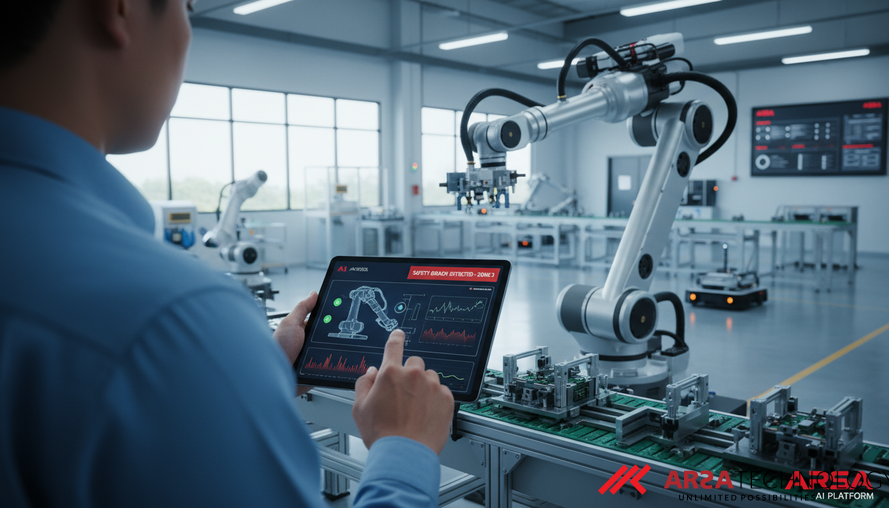
Embodied Artificial Intelligence (Embodied AI) represents a significant leap in technological advancement, integrating sophisticated capabilities like perception, cognition, planning, and real-world interaction into autonomous agents. These systems are designed to operate within dynamic, open-world environments, presenting both immense opportunities and complex safety challenges. As Embodied AI increasingly permeates critical sectors such as transportation, healthcare, and industrial automation, ensuring its reliability and safety becomes not just a technical aspiration but a societal imperative. Unlike their purely digital counterparts, embodied agents face the inherent complexities of the physical world, including uncertain sensor data, incomplete environmental knowledge, and unpredictable human-robot interactions. Failures in such systems can transcend digital errors, leading directly to physical harm, significant financial losses, and erosion of public trust.
The growing autonomy of these systems, as outlined in a recent survey by Xiao Li et al. titled "Safety in Embodied AI: A Survey of Risks, Attacks, and Defenses" published on arXiv (Source: arXiv:2605.02900), necessitates a deep understanding of the unique vulnerabilities that arise when AI moves from code to concrete action. This article distills key insights from this comprehensive survey, simplifying technical concepts to highlight the practical implications for businesses and emphasizing the critical need for robust safety frameworks in real-world AI deployments.
The Unique Imperative of Embodied AI Safety
Embodied AI distinguishes itself from traditional digital AI through its direct interaction with the physical world. While digital AI systems might face challenges like data breaches or computational errors, the consequences are largely confined to the digital realm. Embodied agents, however, perform actions in shared physical spaces, meaning their errors can have tangible, often irreversible, impacts. Consider an autonomous vehicle misinterpreting a stop sign due to a minor visual perturbation, or a collaborative robot in a factory making an erroneous movement; such incidents can lead to accidents, injuries, or costly operational disruptions.
This critical difference highlights a "capability-risk duality." As embodied systems gain more advanced capabilities – from basic perception to complex agentic decision-making – their potential attack surface expands dramatically. Vulnerabilities in foundational layers can cascade, amplifying risks in more autonomous and safety-critical applications. For instance, an issue at the perception level (e.g., misinterpreting an object) can lead to flawed cognition (wrong assessment of a situation), which then results in incorrect planning (dangerous trajectory), culminating in an unsafe physical action. This interconnectedness makes a multi-layered approach to safety paramount.
Understanding the Multi-Layered Attack Surface
The survey identifies distinct attack surfaces across the embodied AI pipeline, each presenting unique vulnerabilities:
- Perception: This is the innermost layer, where agents gather information from the physical world using sensors (vision, LiDAR, auditory, etc.). Attacks at this level often involve subtle, adversarial perturbations to sensory inputs. For example, a cleverly placed sticker or a small change in lighting could cause a computer vision system to misclassify an object or overlook a critical safety hazard. This vulnerability is critical for systems like perimeter security, where accurate detection of intrusions or compliance is essential. Solutions like ARSA AI Video Analytics are designed to provide robust, real-time detection, but the threat of sophisticated adversarial inputs remains a persistent challenge that demands continuous research and defense.
- Cognition: Once perceived, information is processed and interpreted to build a "world model" and inform decision-making. Attacks here can manipulate the agent's understanding of its environment or its intended goals. For example, maliciously poisoned training data could lead a robot to develop unsafe reasoning patterns, potentially causing it to ignore safety protocols under certain conditions. This can manifest as an agent failing to recognize a human worker in its immediate vicinity or misjudging the intent of a human collaborator.
- Planning: Based on cognitive understanding, embodied agents formulate plans and trajectories. Vulnerabilities in this layer could lead to erroneous or unsafe plans. Jailbreak attacks, often associated with large language models, could, in an embodied context, coerce an agent into overriding its safety parameters or choosing an unsafe route. Backdoor attacks embedded during training could activate under specific, rare conditions, causing a robotic arm to execute dangerous movements or an autonomous vehicle to deviate from a safe path.
- Action & Interaction: This layer involves the physical execution of plans and the agent's interaction with humans and its environment. Attacks here could directly compromise control policies or human-robot collaboration protocols. For example, malware could take over a robot's physical controls, or a compromised dialogue system could lead a human to make unsafe decisions. Ensuring secure and predictable human-agent interaction is vital to maintaining operational safety and user trust in applications like assistive robotics.
- Agentic Systems: The outermost layer encompasses highly autonomous agents with capabilities like persistent memory, tool use, and self-evolution. This creates the broadest and most complex attack surface, as compromises at any inner layer can cascade and be amplified. An agent with poisoned memory might repeatedly make the same unsafe decisions, or one with malicious tool use capabilities could pose a significant physical threat.
Robust Defenses: A Multi-Pronged Approach
Defending against these diverse threats requires a comprehensive strategy that addresses each stage of the embodied AI pipeline. The survey highlights several categories of defenses:
- Attack Detection: Proactive detection mechanisms are crucial. This includes anomaly detection in sensor inputs, behavior monitoring for deviations from safe operating norms, and real-time validation of cognitive processes. Early detection can prevent potential physical harm by allowing systems to halt or enter a safe state.
- Safe Training & Robust Inference: Building resilience from the ground up is essential. This involves incorporating adversarial training techniques, utilizing certified and verified datasets, and employing robust inference methods that are less susceptible to subtle data perturbations. Secure software development practices and continuous model validation are also vital for long-term reliability.
- Risk-Aware Human-Agent Interaction: As human and AI agents increasingly collaborate, designing interaction protocols that prioritize safety and transparency is paramount. This includes clear communication of AI capabilities and limitations, mechanisms for human override, and interfaces that convey an agent's "understanding" and intentions. For critical applications, human supervision and robust safety barriers are often indispensable.
Organizations like ARSA Technology, with expertise since 2018 in deploying practical AI & IoT solutions, understand these complexities. Their offerings, such as the ARSA AI Box Series, provide edge AI systems designed for on-premise processing. This approach significantly enhances data privacy and security by analyzing video streams directly on-device, minimizing cloud dependency and reducing the external network attack surface, which is a critical defense mechanism in privacy-sensitive and regulated environments.
Overlooked Challenges and the Path Forward
The survey identifies several critical research gaps that need addressing to build truly safe embodied AI systems:
- Fragility of Multimodal Perception Fusion: Combining data from various sensors (e.g., vision, LiDAR, audio) often introduces new vulnerabilities. Attacks on one modality might subtly influence the interpretation of another, leading to a compromised overall perception that is difficult to detect.
- Instability of Planning Under Jailbreak Attacks: While jailbreak attacks on language models are well-studied, their impact on an embodied agent's physical planning capabilities is less understood. Such attacks could potentially lead agents to generate unsafe trajectories or make unethical physical decisions.
- Trustworthiness of Human-Agent Interaction in Open-Ended Scenarios: In unpredictable real-world situations, ensuring that human-agent interactions remain safe and trustworthy is complex. How do agents respond to unforeseen human behavior, and how do they communicate uncertainty or potential risks in a way that humans can understand and act upon effectively?
Addressing these challenges requires a collaborative effort across academia, industry, and regulatory bodies. Developing unified taxonomies and shared benchmarks will be essential for advancing research in this critical field. Furthermore, a focus on privacy-by-design principles, robust hardware security, and transparent AI explainability will be fundamental to building trust and ensuring the safe deployment of embodied AI.
The journey to building fully trustworthy and safe embodied AI is ongoing. By systematically identifying and addressing the unique risks and vulnerabilities these advanced systems face, we can pave the way for a future where intelligent agents enhance human capabilities and contribute to a safer, more efficient world.
To explore how ARSA Technology delivers production-ready AI and IoT solutions with built-in security and privacy features for various industries, and to discuss your specific safety requirements for embodied AI deployments, please contact ARSA for a free consultation.