ERGO: Enhancing 3D Content Generation from Single Images with Adaptive AI Optimization
Discover ERGO, an AI framework that revolutionizes 3D content creation from single images. Learn how adaptive optimization and risk decomposition improve geometric and textural fidelity.

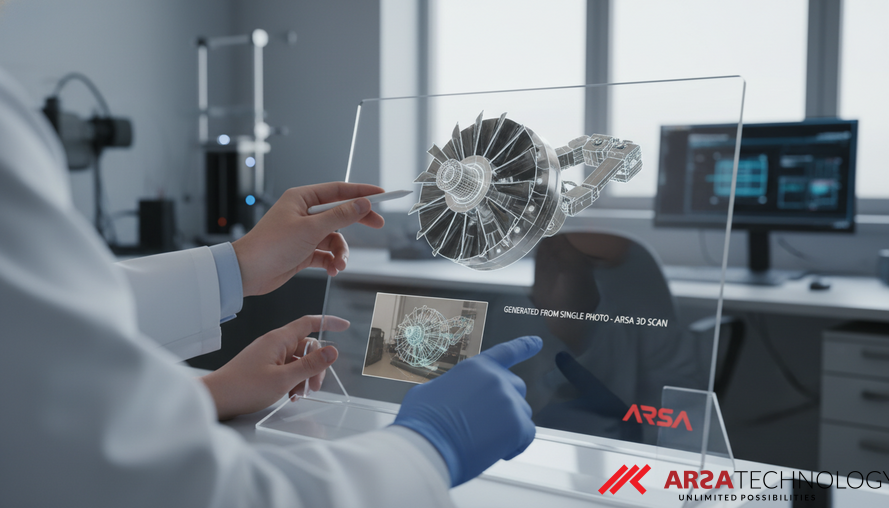
Generating realistic 3D content from a single 2D image is a long-standing challenge in artificial intelligence and computer graphics. This task is inherently difficult because a single image lacks crucial depth and detail for hidden areas, making the reconstruction of a complete 3D object an "ill-posed problem" – one with insufficient information for a unique solution. Traditional approaches often struggle with inconsistencies, blurriness, or high computational costs.
A groundbreaking new adaptive optimization framework, termed ERGO (Excess-Risk-Guided Optimization), is addressing these issues head-on. By introducing an intelligent method to handle the imperfections in AI-generated "auxiliary views" (additional synthesized perspectives), ERGO significantly enhances the geometric accuracy and textural quality of 3D reconstructions. This innovation promises to accelerate the creation of high-fidelity 3D assets for virtual reality, augmented reality, and game development, among other applications. The insights from this research are detailed in a recent academic paper (Source: arXiv:2602.10278).
The Challenge of Single-Image 3D Generation
Current methods for creating 3D content from a single image typically fall into two categories: "feed-forward large reconstruction models (LRMs)" and "optimization-based methods." LRMs are massive AI models trained on vast 3D datasets to directly predict 3D structures. While efficient in producing results, they demand substantial computing power for training and can underperform on unique or "out-of-distribution" data (content unlike what they were specifically trained on).
Optimization-based methods, on the other hand, iteratively refine a 3D model using clever objectives, often leveraging "score distillation sampling (SDS)" which extracts texture information from pre-trained 2D image generative models. However, these methods frequently produce inconsistent or blurry textures, a problem often exacerbated by the "Janus problem" where objects appear to have multiple, conflicting faces or features due to the model's uncertainty about unseen areas.
To overcome the limited information of a single view, some approaches use "multi-view diffusion (MVD) models" to synthesize complementary views. When combined with advanced rendering techniques like "3D Gaussian splatting (3DGS)" (which uses small, 3D ellipses to represent and render scenes quickly), this can make optimization more efficient. Yet, even these MVD-generated views aren't perfect; they can introduce their own "geometric inconsistencies" (distortions in shape) and "textural misalignments" (mismatches in surface appearance), leading to artifacts that hinder reconstruction quality.
Introducing ERGO: A Smarter Approach to 3D Optimization
ERGO tackles these limitations by proposing an adaptive optimization framework that intelligently deals with the imperfections inherent in AI-synthesized views. Unlike traditional methods that apply uniform weights to all parts of the optimization process, ERGO dynamically estimates and adjusts the importance of each objective during iterative refinement. This allows the system to focus its efforts where they will yield the most improvement, even when the initial data is flawed.
The core of ERGO lies in "excess risk decomposition," a sophisticated technique borrowed from machine learning theory. This method breaks down the overall optimization error into two key components:
- Excess Risk: This quantifies the "sub-optimality gap" – essentially, how much more the current model parameters could potentially improve to reach their ideal state. It reflects areas where further optimization effort would be most beneficial.
- Bayes Error: This represents the "irreducible noise" inherent in the supervisory signals. In the context of 3D generation, this noise is the geometric and textural inconsistencies present in the AI-generated multi-view images. This error cannot be eliminated through further optimization of the current model; it's a fundamental limitation of the input data itself.
By accurately estimating excess risk, ERGO can dynamically modulate the optimization process. It adaptively assigns higher weights to those loss objectives and views that exhibit greater excess risk, as these are the most informative signals for guiding the model toward an optimal solution. This intelligent weighting strategy helps ERGO be robust against the noise (Bayes error) in the synthesized views, preventing the propagation and amplification of artifacts during reconstruction.
How ERGO Works: Deconstructing the Optimization Process
Beyond its global adaptive weighting mechanism derived from excess risk, ERGO introduces two complementary "objectives" (specific goals for the AI to achieve during optimization) to refine the 3D content both globally and locally:
- Geometry-Aware Objective: This component focuses on ensuring local geometric consistency across all multi-view images. It uses "visibility maps" generated by the 3DGS process to adaptively adjust the loss weight of each local region. This means regions with more reliable geometric information receive higher priority, helping to correct shape distortions more effectively.
- Texture-Aware Objective: This objective is designed to model regional texture complexity, facilitating the preservation of fine-grained texture fidelity and intricate details. By understanding the texture patterns, ERGO can ensure that surfaces are not only visually appealing but also consistent across different angles.
This dual "global-local adaptive design" establishes a synergistic optimization paradigm. The global modulation, guided by excess risk, ensures overall consistency between different views, while the local adjustments, driven by geometry- and texture-aware objectives, enhance the fine-grained quality within each view. The result is a system that effectively mitigates geometric and textural artifacts that typically arise from simply combining MVD models with optimization techniques.
Extensive experiments on prominent datasets, including the Google Scanned Objects dataset and the OmniObject3D dataset, have demonstrated ERGO's superiority over existing state-of-the-art methods, both in qualitative visual appearance and quantitative metrics.
Practical Benefits and Real-World Impact
The development of ERGO marks a significant step forward for several industries reliant on high-quality 3D assets:
- Virtual Reality (VR) and Augmented Reality (AR): Faster and more accurate 3D asset generation means richer, more immersive experiences for users. Developers can rapidly prototype and deploy complex virtual environments or integrate realistic digital objects into the real world.
- Game Development: Artists and developers can quickly create detailed game assets from concept art or photographs, dramatically shortening production cycles and enhancing visual quality.
- E-commerce and Product Visualization: Businesses can generate highly realistic 3D models of products from single images, enabling interactive online shopping experiences and improving customer engagement.
- Industrial Design and Manufacturing: Rapid 3D reconstruction can aid in prototyping, quality control, and creating digital twins for monitoring and analysis. This reduces design iterations and associated costs.
- Cultural Heritage and Digital Archiving: Preserving historical artifacts or creating digital copies of real-world objects becomes more accessible and accurate.
By making high-fidelity 3D content generation more robust and efficient, ERGO supports the broader digital transformation efforts seen across various industries. Businesses can leverage this type of advanced computer vision to unlock new levels of visual quality and operational efficiency.
For enterprises looking to integrate advanced AI and IoT solutions, understanding these innovations is key. ARSA Technology, for instance, offers specialized expertise in computer vision and AI-powered analytics. Our AI Video Analytics solutions already transform traditional CCTV into intelligent monitoring systems, providing real-time insights for security, safety, and operational intelligence. These advanced capabilities, which our team has been experienced since 2018 in developing, can be tailored to address unique business challenges, from optimizing industrial processes to enhancing retail experiences. Such adaptive optimization frameworks like ERGO are indicative of the future direction of AI-driven content generation, paving the way for more efficient and higher-quality digital assets across numerous applications.
To explore how advanced AI and IoT can transform your operations and create measurable impact, we invite you to discuss your specific needs with our experts. Learn more about our comprehensive AI & IoT solutions and how they can be customized for your enterprise.
Ready to build the future with AI and IoT? Contact ARSA today for a consultation.