Fauna Sprout: Ushering In a New Era of Safe, Expressive, and Accessible Humanoid Robotics
Explore Fauna Sprout, a lightweight, developer-ready humanoid robot designed for safe, expressive, and long-term deployment in human environments. Discover its innovations in safety, interaction, and accessible AI.

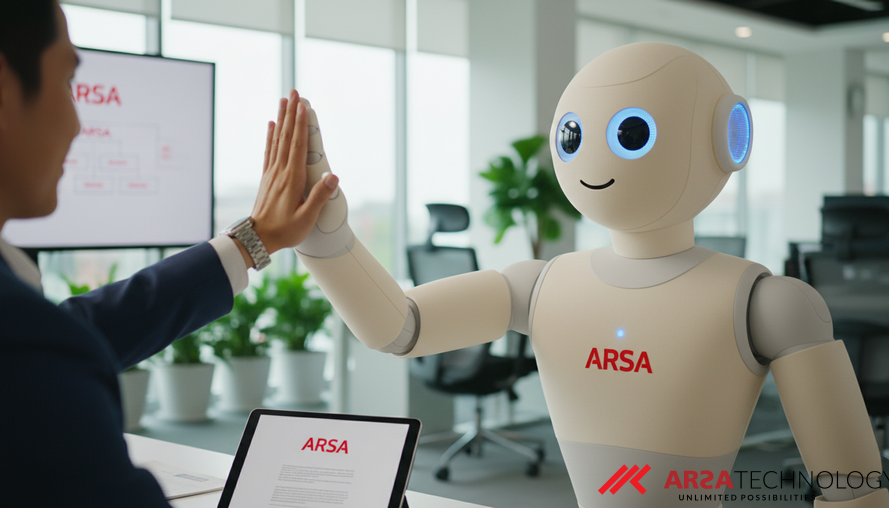
The landscape of robotics is undergoing a significant transformation, driven by advancements in artificial intelligence and simulation technologies. Yet, a critical gap remains: the absence of humanoid robots that are truly safe, expressive, and accessible enough for long-term deployment in everyday human environments. While industrial robots excel in controlled settings and academic prototypes showcase technical prowess, few are suitable for natural, sustained interaction with people. This challenge has limited the pace of innovation in "embodied intelligence" – the ability of AI to learn and act within the physical world.
Fauna Robotics, based in NYC, introduces "Sprout," a humanoid robot platform designed to bridge this gap. Sprout aims to democratize access to advanced robotics, enabling a wider range of developers, educators, and creative technologists to experiment with human-robot interaction in real-world settings. By prioritizing safety, expressivity, and ease of use, Sprout seeks to replicate the "inflection point" seen in personal computing, where accessible platforms spurred widespread innovation. The full academic paper can be found at arXiv:2601.18963.
Engineering for Safety and Real-World Interaction
Sprout's design philosophy centers on mitigating the inherent risks of robots operating in shared human spaces. Standing at 1.07 meters tall and weighing 22.7 kilograms, its lightweight form factor naturally limits its kinetic energy, significantly reducing potential impact forces during incidental contact. This foundational safety choice is complemented by several innovative mechanical and control features.
The robot incorporates soft exterior panels and minimized pinch points, drastically reducing the chances of injury during close-proximity interactions. Its motors are designed to be "backdrivable," meaning they can be easily moved manually, even when powered, and operate with conservative joint torque limits. This "compliant control" allows the robot to move flexibly and absorb impacts, making it yield rather than resist force, further enhancing safety during human contact. These deliberate design choices aim to facilitate routine operation in bustling human environments, moving beyond the confines of isolated or tightly controlled laboratory settings.
A Platform for Developers: Bridging the Gap in Robotics Research
Beyond its physical safety, Sprout is crafted to be a robust and accessible platform for general robotics research and application prototyping. It features a rear handle for easy manual maneuvering and a swappable battery for convenient day-to-day operation. Its integrated, durable grippers are capable of grasping a wide array of everyday objects, extending its utility for practical tasks.
The core of Sprout's developer-friendliness lies in its modular hardware-software architecture. This unified stack offers essential system services at various levels of abstraction. For those focusing on low-level motor control, APIs provide direct access to sensing, actuation, and logging. Meanwhile, reusable "whole-body controllers" manage complex tasks like locomotion and postural transitions, freeing developers to concentrate on higher-level planning and reasoning. Integrated teleoperation, mapping, and navigation capabilities further support advanced manipulation and autonomous behavior development. Companies like ARSA Technology, with expertise in custom AI development and tailored IoT solutions, are well-positioned to help enterprises integrate advanced AI capabilities into such platforms, leveraging solutions like the ARSA AI Box Series for edge processing.
Beyond Utility: The Power of Expressive Robotics
One of Sprout's most distinctive features is its character-like appearance, which is central to its mission of fostering new modes of human-robot interaction rooted in social connection. Unlike many industrial humanoids that often feature utilitarian, expressionless heads or digital screens for displaying emotions, Sprout employs non-screen elements to convey personality.
An articulated neck allows for controllable gaze, mimicking human eye contact. Actuated eyebrows and an integrated LED array support a range of non-verbal cues, enabling more nuanced social interactions. This emphasis on physical embodiment and expressive capabilities helps lower the barrier to creating meaningful robot interactions, inviting a broader community of innovators to explore embodied intelligence in a more engaging and accessible way. This kind of expressive capability can also be leveraged in public-facing applications, much like ARSA's AI BOX - DOOH Audience Meter enhances digital advertising by understanding audience engagement.
The Broader Landscape of Humanoid AI and Control
The development of humanoid robots like Sprout relies on cutting-edge advancements in AI and control systems. Over the past years, "GPU-accelerated physics simulation" has revolutionized how whole-body control is developed. This involves using powerful graphics processing units (the same hardware that powers video games) to run incredibly fast and accurate virtual simulations. Robots can experience years of simulated interaction within practical development timelines, allowing them to learn complex behaviors safely and efficiently.
This capability has shifted control development from purely "analytical modeling" (where engineers try to mathematically describe every aspect of a robot's movement) to "empirical optimization," primarily through "model-free reinforcement learning." In this approach, an AI system learns by trial and error, much like a human or animal, receiving rewards for desired behaviors. This is particularly effective for complex challenges like maintaining balance, handling unexpected contact, or adapting to disturbances, which are difficult to model precisely. Furthermore, higher-level control systems increasingly integrate "vision- and language-conditioned systems." These AI models can interpret visual information and natural language commands, enabling robots to understand their environment and respond to human instructions. Such advanced capabilities are also at the core of ARSA's AI Video Analytics solutions, which transform passive surveillance into active business intelligence across various industries, a domain where ARSA has been experienced since 2018.
The Significance of Accessible Robotics for Industry and Beyond
The introduction of platforms like Sprout signifies a crucial step forward for the robotics industry. By making advanced humanoid capabilities more accessible and safer for operation around people, it addresses a fundamental challenge that has long hampered widespread adoption. This accessibility is not just about convenience; it is about providing the essential infrastructure for innovation in fields like elder care, education, retail assistance, and even entertainment, where close human-robot interaction is paramount.
The ability to rapidly prototype and test robot behaviors in human environments, rather than isolated labs, will accelerate the development of truly useful and intuitive embodied AI. This expanded access will also foster interdisciplinary collaboration, inviting experts from design, psychology, and social sciences to contribute to robotics in ways previously constrained by technical barriers. Just as VR-based training solutions, such as ARSA's VR-Based Training for Industry, allow for safe and cost-effective skill development in hazardous industrial settings, accessible humanoid platforms will enable safer and more effective exploration of human-robot co-existence.
Conclusion: Enabling a New Era of Human-Robot Collaboration
Fauna Sprout represents a significant leap towards a future where humanoid robots can safely and effectively integrate into our daily lives. By combining a lightweight, compliant design with an expressive interface and a robust developer toolkit, it aims to unlock new possibilities for research and application. This platform paves the way for a generation of robots that can not only perform complex tasks but also interact socially and adapt fluidly within human environments, fostering a more collaborative and intelligent future.
To learn more about how advanced AI and IoT solutions can transform your operations and to discuss custom implementations for your unique business challenges, we invite you to contact ARSA.