From Data Storage to AI Experience: The Evolution of LLM Agent Memory for Enterprises
Explore the three evolutionary stages of LLM agent memory: Storage, Reflection, and Experience. Understand how these mechanisms enhance AI consistency, adaptability, and learning for enterprise applications.

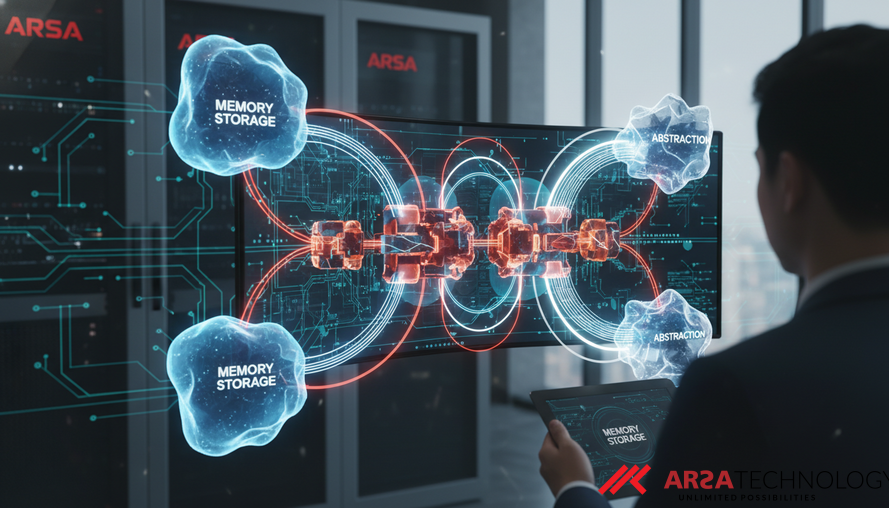
Large Language Models (LLMs) have ushered in a new era for artificial intelligence, enabling machines to understand, generate, and process human language with unprecedented fluency. However, to move beyond simple conversational tasks and truly empower AI for complex, real-world enterprise operations, these LLMs need more than just language proficiency. They need a robust way to remember, learn, and adapt over time – a capability we refer to as "memory mechanisms" for LLM agents.
Bridging the Gap: Why AI Needs Memory
Imagine an AI assistant tasked with managing a multi-stage manufacturing process, identifying safety hazards in real-time, or even navigating a smart city's traffic flow. While LLMs excel at understanding and reasoning, they are inherently "stateless." This means that without an explicit memory system, each interaction or step in a complex task is treated in isolation. The AI "forgets" previous turns, leading to logical inconsistencies, repetitive errors, and an inability to learn from past experiences. This fundamental limitation hinders an LLM agent’s capacity to maintain coherence across lengthy, multi-step operations and prevents it from evolving its performance over time.
The development of effective memory mechanisms is therefore crucial. It transforms LLM agents from powerful but forgetful tools into intelligent, adaptive partners capable of tackling mission-critical enterprise challenges. Current research into these memory systems, however, often falls into two separate camps: those focused on the engineering principles of data management (like an operating system) and those inspired by cognitive science, aiming to simulate human memory functions. This fragmented approach has historically slowed progress. A recent academic survey proposes a unified framework, tracing the evolution of LLM agent memory through three distinct stages: Storage, Reflection, and Experience. This framework, outlined in the paper “From Storage to Experience: A Survey on the Evolution of LLM Agent Memory Mechanisms” (Source), provides a clear roadmap for future innovation.
The Three Stages of LLM Agent Memory Evolution
The proposed evolutionary framework categorizes LLM agent memory mechanisms based on their level of information abstraction and cognitive processing. Each stage represents a leap in how AI agents learn from and interact with their environment.
Storage: Preserving the Past
The foundational stage of memory for LLM agents is Storage. At this level, the memory system primarily focuses on faithfully recording an agent's historical interactions. Think of it as a meticulously kept logbook. Every action the agent takes and every observation it receives within a task session is documented in a chronological "trajectory." This raw data is preserved with minimal transformation, maintaining a direct, one-to-one correspondence between what happened and what is stored.
In practical enterprise applications, this means logging every step an AI-powered surveillance system takes to detect anomalies or every decision a predictive maintenance agent makes. For example, in an industrial setting, ARSA’s AI Video Analytics solutions capture and process real-time CCTV footage. The initial stage of memory here would be the raw or structured logging of events – like "PPE non-compliance detected at zone A," or "vehicle count increased by X in zone B" – providing a verifiable record of activity. This foundational storage ensures that the agent has a historical context to draw upon, preventing it from making the same mistakes repeatedly and providing essential data for auditing or retrospective analysis.
Reflection: Learning from Mistakes and Successes
Moving beyond simple record-keeping, the Reflection stage introduces a dynamic feedback loop to actively manage and refine these historical records. Here, the agent doesn't just store interactions; it evaluates them. It asks questions like: "Was that a good outcome?" "Could I have done better?" "What were the key steps that led to this result?" This semantic transformation allows the agent to analyze its own "trajectories" – its past sequences of observations and actions – to identify patterns, pinpoint errors, and extract more meaningful insights.
In essence, Reflection enables the AI agent to self-correct and improve. By dynamically evaluating its performance, it refines its internal understanding of tasks and environments. For instance, an AI agent managing traffic flow might reflect on a trajectory where congestion worsened despite its interventions. Through reflection, it might identify that a particular routing strategy was ineffective under certain conditions, leading it to refine future decision-making. This stage is crucial for building more robust and efficient AI systems, as it equips them with a self-improvement mechanism, akin to how human experts review their performance to enhance skills.
Experience: Abstracting Wisdom for Future Guidance
The most advanced stage of memory evolution is Experience. This frontier stage moves beyond simply refining individual trajectories to abstracting high-level behavioral patterns and strategic insights from clustered interactions. Instead of just remembering what happened or how it could be refined, the agent learns why certain strategies work and when to apply them. It’s about deriving general principles and actionable knowledge from a multitude of past events.
This stage encompasses two transformative mechanisms:
- Active Exploration: Here, the LLM agent proactively seeks new information or tries alternative approaches, even if it hasn't encountered the exact scenario before. This is vital for adapting to dynamic environments and discovering novel solutions.
- Cross-Trajectory Abstraction: The agent learns by comparing and contrasting multiple past trajectories. It identifies commonalities and differences across various tasks or similar situations, distilling them into generalized "experiences" that can guide future decision-making. This enables truly continuous learning and adaptability.
For enterprises, the Experience stage means AI agents can move from reactive problem-solving to proactive, strategic operation. An AI agent with advanced Experience could, for example, not just detect a security breach but understand the underlying attack patterns across various incidents and proactively recommend preventative measures, even for novel threats. This level of abstraction allows for faster adaptation to changing conditions and unlocks new avenues for operational optimization. ARSA, with its strong foundation in building custom AI solutions, leverages these advanced memory concepts to develop systems that are not only accurate but also inherently adaptable and capable of continuous improvement for various industries. For specialized on-premise deployments or rapid rollout projects, ARSA’s AI Box Series can also serve as the edge infrastructure that facilitates the local processing and memory accumulation required for such sophisticated AI operations.
Driving the Evolution: Why Memory Advances
The journey from basic storage to advanced experience in LLM agent memory is propelled by three critical needs in the deployment of real-world AI:
- Necessity for Long-Range Consistency: As enterprise tasks become more complex and multi-step, AI agents must maintain logical coherence across prolonged interactions. Simple storage isn't enough; the ability to reflect and synthesize learned experiences ensures decisions remain consistent and aligned with overarching objectives, even over hundreds or thousands of steps.
- Challenges in Dynamic Environments: Real-world operational environments are rarely static. Whether it's fluctuating market conditions, evolving security threats, or changing manufacturing demands, AI agents must continually adapt. Memory mechanisms, particularly Reflection and Experience, enable agents to learn from new data and modify their behavior without extensive retraining.
- Ultimate Goal of Continual Learning: Enterprises aim for AI systems that get smarter over time. The ultimate vision is for AI agents to continuously absorb new information, refine their understanding, and improve their performance autonomously. The Experience stage is a significant step towards achieving this, allowing agents to develop abstract knowledge that transcends specific incidents and applies broadly.
This evolutionary path underscores ARSA's commitment to delivering practical, production-ready AI systems. As a company experienced since 2018 in AI and IoT, we understand that true enterprise value comes from AI solutions that are reliable, secure, and capable of adapting to real-world complexities.
The Future of AI Agent Memory: Beyond the Horizon
Looking ahead, the development of LLM agent memory mechanisms points to several exciting directions. Future systems will likely feature more dynamic triggering modes for memory access, allowing agents to retrieve and process information based on the specific type and urgency of a task. The concept of "working memory"—akin to human short-term memory—will become vital for enabling agents to handle immediate, high-priority tasks with greater efficiency.
Furthermore, the need for more comprehensive datasets, especially for the advanced Experience stage, is critical to train agents on diverse scenarios and facilitate robust cross-trajectory abstraction. The coordination of distributed shared memory will also be a key breakthrough, allowing multiple AI agents to collaborate and share learned experiences seamlessly. Finally, the fusion of multimodal memory, where agents learn from various data types like text, images, and sensor data simultaneously, will enable a richer, more holistic understanding of the environment.
These advancements promise to unlock unprecedented levels of autonomy and intelligence in AI agents, making them indispensable partners for businesses navigating the complexities of Industry 4.0 and beyond.
To explore how advanced AI and IoT solutions can transform your operations and to request a free consultation, we invite you to contact ARSA today.