From Outdoor Gear to Enterprise Insights: Unpacking Data and AI in Everyday Technology
Explore how diverse technologies, from smart wearables to remote communicators, leverage data and AI to deliver insights. Discover ARSA's enterprise AI & IoT solutions.

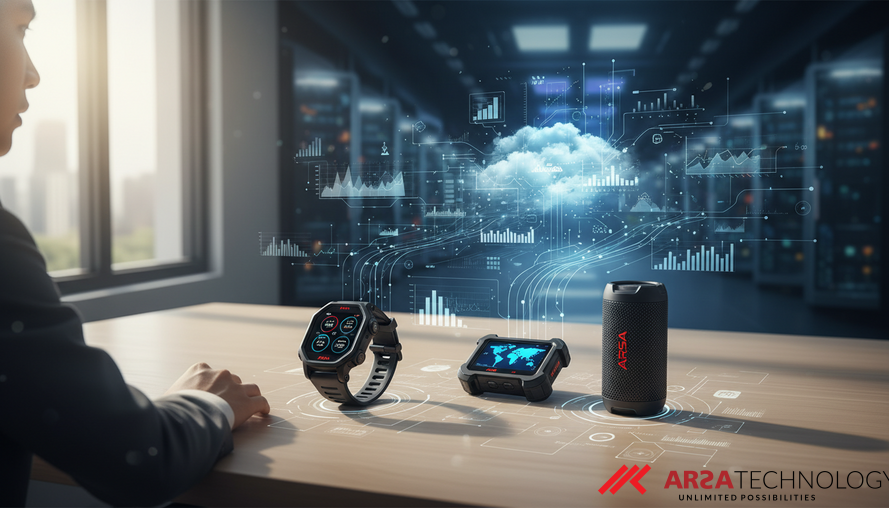
The landscape of technology is continually expanding, weaving intelligence into nearly every aspect of our lives, from highly specialized industrial applications to the gadgets we carry into the wilderness. What might appear as a simple consumer product can, upon closer examination, reveal sophisticated layers of data collection, processing, and artificial intelligence, offering profound insights and enhancing various functionalities. A recent overview by The Verge, highlighting favorite deals from a major outdoor retailer's Anniversary Sale (Source), provides a unique lens through which to explore this convergence. While the original context focuses on retail discounts on items like tents, sleeping bags, stoves, and various outdoor tech, it implicitly showcases a wide array of devices that embody modern data and AI principles. This article delves into how these diverse technologies—from personal wearables to remote communication tools—are inherently data-rich, and how their underlying principles translate into powerful enterprise AI and IoT solutions.
Smart Wearables: Personalizing Health and Performance through Data
Modern smartwatches and fitness trackers have evolved far beyond simple step counting. Devices like the Garmin Fenix 8, known for its premium multisport capabilities, or the Amazfit Active 2, which boasts built-in GPS and AI chatbots, are continuously collecting vast amounts of personal biometric and activity data. This includes everything from heart rate variability and detailed sleep patterns to GPS location for outdoor activities. The intelligence embedded in these devices processes this raw data to provide personalized insights, detect anomalies like abnormal heart rate alerts, and even offer tailored workout plans, such as those provided by Garmin Coach on the Venu 4. The Garmin Lily 2 Active further demonstrates how even budget-friendly wearables can offer essential fitness tracking and notifications, providing data that helps users manage their personal well-being.
The ability of these wearables to process and analyze data at the edge—right on the device—is a testament to advancements in embedded AI. This real-time feedback not only enhances user experience but also creates a valuable stream of health-related data. For enterprises, particularly in healthcare or corporate wellness programs, these principles can be scaled. ARSA Technology, for instance, offers a Self-Check Health Kiosk that leverages AI and IoT to provide autonomous health screening and generate instant digital health records, akin to how personal wearables empower individuals with health data, but on an institutional scale.
Precision Sensing for Enhanced Safety and Situational Awareness
Beyond personal health, the integration of advanced sensors and data analytics is revolutionizing safety across various domains. Take, for example, the Polar H10 chest strap, which provides more accurate heart rate readings than typical wrist-based trackers, crucial for serious athletes and medical monitoring. In cycling, products like the Chapter MIPS Bike Helmet, with its integrated taillight, or the Garmin Varia RTL515 Radar Taillight, which warns cyclists of approaching vehicles from up to 153 yards away, illustrate the power of real-time data for preventing accidents.
These examples underscore the critical role of accurate, real-time sensor data in improving safety and situational awareness. In industrial and public safety contexts, ARSA Technology applies similar principles through its AI Video Analytics solutions. These systems process CCTV footage in real-time to detect safety violations, monitor restricted areas, and classify vehicles, generating instant alerts and operational insights. Just as a bike radar provides critical warnings, ARSA's solutions convert passive surveillance into active intelligence to mitigate risks and ensure compliance in challenging environments.
Off-Grid Connectivity and Critical Data Transmission
For adventurers and professionals operating in remote or off-grid locations, reliable communication and data transmission are not merely conveniences but necessities. Satellite communicators such as the Garmin InReach Mini 3 Plus, the standard Mini 3, and the InReach Messenger Plus exemplify devices designed for these demanding scenarios. These palm-sized gadgets allow users to send texts, share locations, check weather forecasts, and trigger SOS alerts when beyond cellular coverage. The InReach Messenger Plus even extends capabilities to include sending photos and audio clips, underscoring the growing demand for rich data exchange even in the most isolated environments.
The data generated and transmitted by these devices—from GPS coordinates to emergency messages and weather updates—is critical for safety and operational continuity. The ability to process some of this data at the source, or "at the edge," is vital for minimizing latency and ensuring data security when cloud access is limited. For enterprises with remote operations, such as logistics, mining, or defense, robust on-premise or edge AI solutions are paramount. ARSA Technology's AI Box Series offers pre-configured edge AI systems that process data locally, providing instant insights without cloud dependency, making them ideal for rapid deployment in areas with limited infrastructure.
Smart Audio and Environmental Resilience
Portable audio devices, like the JBL Charge 6, Flip 7, and Clip 5 speakers, also demonstrate a subtle integration of AI and data principles. While primarily focused on entertainment, features such as JBL’s AI Sound Boost technology highlight how AI algorithms can analyze audio in real-time to optimize sound quality, boost volume, and reduce distortion. This intelligent processing ensures a superior listening experience across varying conditions. Furthermore, the rugged, IP68 and IP67 ratings of these speakers, denoting high levels of water and dust resistance, reflect a design philosophy centered on operational resilience in diverse environments.
This resilience and intelligent processing resonate with the needs of industrial IoT deployments, where devices must not only perform their core functions but also withstand harsh environmental conditions while delivering reliable data. The capacity for devices to adapt and optimize their performance based on environmental inputs or usage patterns, whether for audio quality or operational efficiency, is a cornerstone of intelligent system design.
Data-Driven Efficiency in Resource Management
Even seemingly basic outdoor essentials, such as stoves and water filters, hint at larger data implications for efficiency and resource management. Lightweight stoves like the MSR PocketRocket 2 or the JetBoil MiniMo Cooking System, along with more robust options like Coleman’s two-burner stoves, are designed for optimal fuel efficiency and rapid meal preparation. Similarly, water filters like the LifeStraw Peak Series Straw and the LifeStraw Go Series 1L focus on reliable purification and flow rates. While a spork might not be a high-tech device, the choice to pack a lightweight, multi-functional tool like the GoBites Bio-Uno Long spork is itself a data-driven decision for efficiency and weight reduction in backpacking.
In an enterprise context, these principles of efficiency, resource optimization, and reliability are critical. Industrial IoT solutions leverage sensors to monitor energy consumption, track inventory, and predict maintenance needs for equipment, transforming raw data into actionable insights that reduce operational costs and increase productivity. The meticulous planning required for outdoor excursions—optimizing gear weight, fuel, and water supplies—mirrors the data-driven decision-making processes crucial for complex industrial operations.
The Enterprise Horizon: Scaling Consumer Insights to Business Value
The intelligence embedded in consumer technologies, from smartwatches analyzing health data to satellite communicators enabling off-grid dialogue, showcases fundamental principles that are highly relevant to enterprise AI and IoT. These include real-time data collection, local and cloud-based processing, AI-driven insights, robust connectivity, and device resilience. For businesses, scaling these capabilities means unlocking new avenues for operational efficiency, enhancing security, reducing risks, and ultimately driving measurable ROI.
ARSA Technology is at the forefront of this transformation, designing, building, and deploying production-ready AI and IoT solutions that bridge advanced research with operational reality. With capabilities spanning AI video analytics, facial recognition systems, and custom industrial IoT platforms, ARSA helps global enterprises convert complex operational challenges into competitive advantages. Our approach prioritizes full-stack vertical integration, ensuring that solutions are not only innovative but also engineered for accuracy, scalability, privacy, and long-term operational reliability, as proven by our team experienced since 2018.
To explore how ARSA’s advanced AI and IoT solutions can transform your organization and deliver tangible business outcomes, we invite you to contact ARSA for a free consultation.