General Motors Integrates Google Gemini AI into Millions of Vehicles, Marks Billion-Mile Milestone for Super Cruise
General Motors announces the integration of Google Gemini AI into four million vehicles, enhancing in-car intelligence. This coincides with Super Cruise's one billion hands-free miles, signaling a major shift in automotive technology.

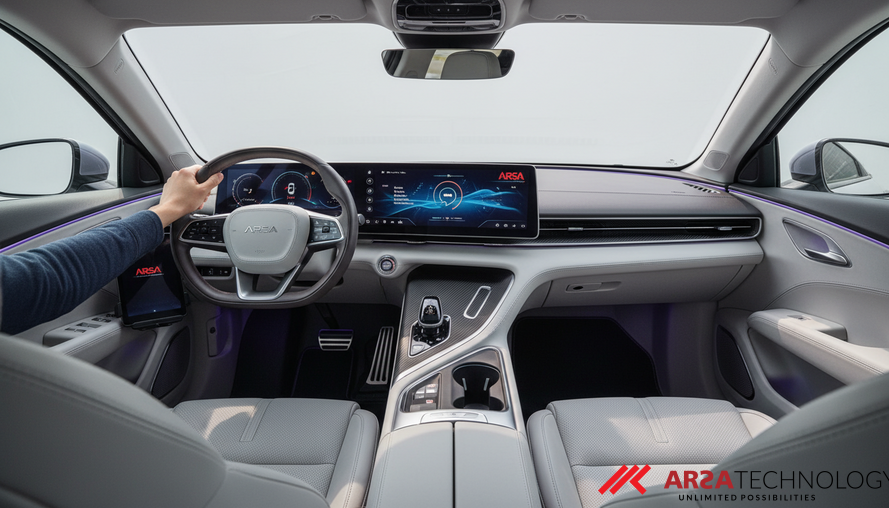
General Motors (GM) is making a significant leap in automotive intelligence, announcing the integration of Google's Gemini AI assistant into approximately four million vehicles across its fleet. This substantial rollout promises to redefine the in-car experience for drivers and passengers alike. The strategic move comes as GM also celebrates a remarkable achievement: its Super Cruise advanced driver-assist system has accumulated an impressive one billion hands-free miles, demonstrating the growing maturity of semi-autonomous driving technologies. This dual announcement highlights GM's commitment to embedding cutting-edge AI and advanced driving capabilities into its core product offerings, positioning the company as a leader in the evolving smart automotive landscape.
Revolutionizing In-Car Intelligence with Google Gemini
General Motors plans to bring Google’s sophisticated Gemini AI assistant to a vast number of its vehicles, starting with model year 2022 and newer Cadillac, Chevrolet, Buick, and GMC models that already feature Google built-in. This extensive AI upgrade will be delivered through over-the-air (OTA) software updates to GM’s infotainment system over several months. GM emphasizes that this deployment represents one of the largest integrations of Gemini in the automotive industry, signaling a new era for in-vehicle digital assistants.
The upgrade promises a substantial improvement from the current Google Assistant, offering a smarter, more intuitive, and continuously evolving AI assistant. Users can expect a more natural and conversational interaction, moving beyond the need to memorize specific commands to simply asking questions or making requests in everyday language. This enhanced AI will be capable of a wide array of tasks, from sending messages and providing navigation assistance to offering personalized music suggestions and much more. Initially, Gemini will be available in US English, with GM outlining plans to expand its availability to additional global markets and support a broader range of languages in the future, as reported by The Verge (source).
The Power of Conversational AI in the Automotive Sector
The shift towards more conversational AI like Google Gemini within vehicles represents a crucial evolution in user experience. Traditional voice commands often feel rigid and require precise phrasing, leading to frustration and underutilization. A conversational AI, however, allows for more fluid and context-aware interactions, making the in-car system feel like a genuine co-pilot rather than a simple command-and-response tool. This natural interface can significantly reduce cognitive load for drivers, enhancing safety by minimizing distractions associated with complex manual inputs.
For enterprises, particularly those developing smart city infrastructure or sophisticated logistics systems, the principles of intuitive AI interaction are equally vital. Solutions that can interpret natural language and context, such as those that might power an ARSA AI API for traffic management or smart facility operations, contribute to seamless integration and operational efficiency. The continuous improvement promised by Gemini also highlights the value of AI models that adapt and learn over time, delivering sustained performance enhancements.
Achieving Autonomy: Super Cruise's Billion-Mile Milestone
Beyond AI assistants, General Motors is also making strides in advanced driver-assist systems (ADAS). The company proudly announced that its Super Cruise system has achieved a remarkable milestone: one billion hands-free miles driven by customers in nearly 750,000 Super Cruise-enabled vehicles. This accomplishment underscores the growing trust and adoption of advanced driving technologies among consumers.
Super Cruise, while not a fully autonomous system, allows drivers to remove their hands from the steering wheel on compatible roads across the US and Canada, offering a semi-automated driving experience. This significant milestone positions GM as a formidable competitor in the ADAS market, challenging established players like Tesla. The sheer volume of hands-free miles accumulated speaks to the robustness and reliability of the system, paving the way for further advancements in automated driving and reinforcing the impact of AI in enhancing vehicle safety and convenience.
Strategic Implications for the Automotive Industry
GM's dual announcement carries significant strategic implications for the entire automotive industry. The integration of advanced AI like Gemini moves beyond basic connectivity to intelligent interaction, setting a new benchmark for in-car infotainment and user experience. This push will likely accelerate the competition among automakers to embed more sophisticated AI capabilities, driving innovation in areas like personalized services, predictive maintenance, and seamless integration with smart home ecosystems.
Furthermore, the success of Super Cruise highlights the increasing viability and acceptance of ADAS technologies. As these systems become more prevalent and refined, they will not only enhance safety and reduce driver fatigue but also lay the groundwork for fully autonomous vehicles. For companies like ARSA Technology, which has been experienced since 2018 in delivering AI and IoT solutions across various industries, these developments in the automotive sector reinforce the universal demand for robust, real-world AI applications that prioritize accuracy, reliability, and data control.
Deployment Complexities and Future Outlook
Deploying advanced AI systems across millions of vehicles presents considerable technical and logistical challenges. Over-the-air updates require robust software infrastructure, stringent testing, and careful phased rollouts to ensure compatibility and minimize disruption. The journey from initial US English availability to global, multi-language support also necessitates extensive localization efforts and adaptation to diverse regulatory environments. This intricate process of managing large-scale, enterprise-grade AI deployments resonates with the complexities ARSA Technology navigates when delivering tailored solutions.
As the automotive sector continues its digital transformation, the convergence of AI, IoT, and advanced connectivity will reshape not only how we drive but also how vehicles integrate into broader smart ecosystems. The focus on edge AI processing, for instance, which ARSA champions with its AI Box Series, becomes increasingly relevant in minimizing latency and enhancing data privacy for critical real-time functions in vehicles and beyond. These advancements underscore a future where every vehicle is a highly intelligent, connected node within a larger, smarter world.
To explore how advanced AI and IoT solutions can transform your enterprise operations, from enhancing security to optimizing efficiency, we invite you to contact ARSA for a free consultation.