Geometric AI for System Reliability: Advanced Fault Detection in Autonomous Systems
Explore a cutting-edge AI-driven method for fault detection and identification in complex autonomous systems. Learn how geometric learning and mirror descent enhance reliability and prevent failures.

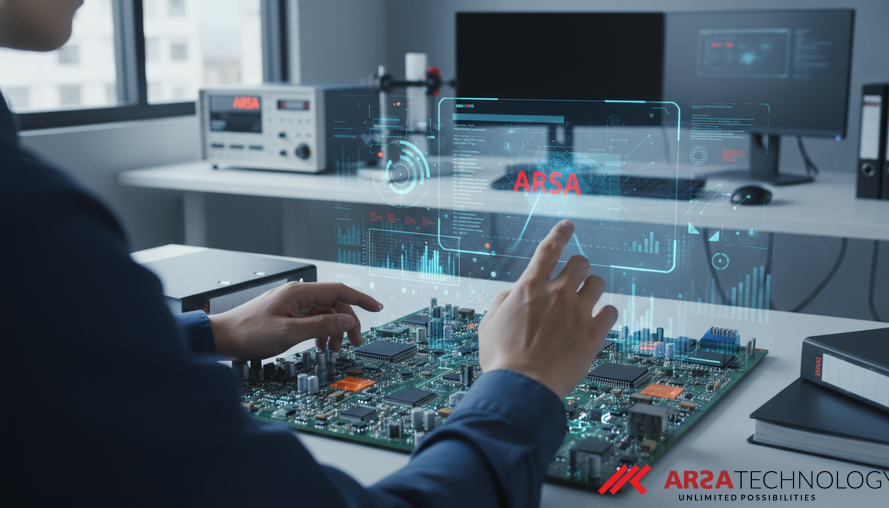
Autonomous systems, from self-driving cars to deep-space probes, are designed to operate with minimal human intervention, making their reliability paramount. Unexpected component failures, whether in actuators (the parts that cause motion) or sensors (the parts that collect data), can have catastrophic consequences if not detected and addressed swiftly. This is where Fault Detection and Identification (FDI) becomes a critical capability. An effective FDI system not only spots deviations from normal behavior but also accurately pinpoints the type of fault and estimates its severity, ensuring safe and continuous operation.
Across vital sectors such as autonomous vehicles, aerospace systems, and industrial robotics, the need for robust on-board FDI for actuators and sensors is growing. These faults can cascade rapidly, leading to major operational disruptions or even safety hazards. As technology advances, the complexity of these systems increases, posing significant challenges for traditional fault detection methods.
The Evolution of Fault Detection and Identification
Historically, FDI methods have fallen into three main categories: model-based, data-driven, and hybrid approaches. Model-based FDI relies on precise mathematical models of a system's dynamics to predict its behavior. By comparing these predictions with actual measured outputs, any discrepancy, known as a "residual," can indicate a fault. While offering a structured way to diagnose issues, these methods struggle with the inherent uncertainties of real-world systems, such as unmodeled dynamics or external disturbances. Creating accurate analytical models for complex, non-linear systems is often impractical or impossible.
Conversely, data-driven approaches learn fault signatures directly from historical data, circumventing the need for explicit system models. Recent advancements in machine learning, particularly neural networks, have shown promise in detecting, isolating, and identifying faults using input-output system data. However, a purely data-driven model faces its own challenge: it can only learn from the data it's trained on. If a novel fault scenario occurs that wasn't represented in the training dataset, the system might fail to identify it correctly.
The Power of Hybrid AI for Robust FDI
A compelling solution lies in hybrid FDI approaches, which blend the interpretability and structural reasoning of model-based methods with the adaptive learning capabilities of data-driven intelligence. These systems leverage known system dynamics while simultaneously adapting to unknown or changing parameters through data-driven inference. This combination allows for a more robust and adaptable fault detection system, capable of handling the inherent complexities and uncertainties of real-world autonomous operations.
One such advanced hybrid method, detailed in a recent paper titled "Geometric Fault Identification via Mirror Descent Learning" by Taheri et al., develops a new framework for detecting and identifying simultaneous actuator and sensor faults in complex autonomous systems. It proposes a novel approach that embeds neural networks within a specialized observer—a Luenberger-like observer—to estimate faults. This observer acts like a "digital twin" that constantly monitors the system's state and compares it against expected behavior, ensuring estimates converge reliably.
Geometric Fault Identification: A Paradigm Shift
The paper introduces a critical innovation: a geometric approach to understand and isolate faults. Instead of merely treating fault signals as numerical deviations, this method conceptualizes actuator and sensor faults as distinct "fault signature subspaces" within the system's output data. Imagine each type of fault (e.g., a specific engine malfunction or a faulty pressure sensor) creating a unique pattern or "signature" in the data, which can be visualized as occupying a specific region or "subspace."
The core idea of "isolability" then becomes a geometric problem: how distinct are these fault signature subspaces from each other and from the system's nominal operation? This distinctness is quantified using "principal angles" between these subspaces. If the angle between two fault subspaces is large, those faults are geometrically "far apart" and thus easier to distinguish. This geometric framework allows for the identification of simultaneous actuator and sensor faults, providing a much clearer picture of system health, even when multiple issues arise concurrently.
Mirror Descent Learning: Adapting to Unforeseen Faults
A key limitation of many learning-based systems is their reliance on training data. If a fault scenario wasn't present in the training set, the system might struggle. To overcome this, the research introduces "mirror descent" learning for online adaptation. Unlike conventional gradient descent methods, which typically operate in a flat, "Euclidean" parameter space, mirror descent utilizes a concept called "Bregman divergence."
To simplify, imagine measuring distance on a curved surface versus a flat one. Bregman divergence measures "distance" in a way that respects the underlying "geometry" of the parameter space, allowing the adaptation process to exploit the unique structure of fault signature subspaces. This means the neural network’s final layer can continuously learn and adapt its fault parameter estimates online, even for fault scenarios it hasn't encountered before. By considering the geometry of fault channels, this approach biases adaptation along "geometrically isolable directions," significantly enhancing the system's ability to accurately identify faults and improve robustness. This advanced adaptation, coupled with the observer's "contraction guarantees," ensures the system's state and parameter estimation errors remain uniformly ultimately bounded (UUB), meaning they stay within acceptable limits and converge exponentially.
Practical Applications and Future Implications
The implications of such an advanced FDI method are far-reaching, particularly for high-stakes, mission-critical autonomous systems. The paper demonstrates its effectiveness on a 3-axis attitude control system of a spacecraft. For space missions, precise fault identification can mean the difference between mission success and costly failure, enabling rapid, automated responses to maintain vehicle stability and integrity.
Beyond aerospace, this geometric AI approach holds immense promise across various industries:
- Autonomous Vehicles: Enhancing safety by providing real-time, precise diagnostics for sensor failures (e.g., LiDAR, radar, cameras) or actuator malfunctions (e.g., steering, braking systems). Early and accurate fault identification can prevent accidents and enable graceful degradation or safe stops.
- Industrial Robotics and Manufacturing: Boosting operational efficiency and safety in smart factories. Robots can autonomously detect issues with their motors, grippers, or vision systems, triggering predictive maintenance before catastrophic breakdowns. ARSA Technology, for instance, provides solutions like AI Video Analytics that can monitor industrial environments for anomalies, contributing to proactive maintenance.
- Smart Infrastructure: From traffic management to structural health monitoring of bridges, this technology can identify anomalies in vast sensor networks, ensuring public safety and optimizing resource allocation. For example, ARSA’s AI BOX - Traffic Monitor could be enhanced with such geometric FDI capabilities for even more robust urban management.
- Healthcare Technology: Monitoring complex medical equipment and ensuring the reliability of IoT-enabled healthcare systems. While ARSA's Self-Check Health Kiosk focuses on vital sign screening, the underlying principles of robust monitoring and fault identification are crucial for maintaining the integrity of such sophisticated devices.
This research underscores a significant step forward in making autonomous systems more reliable, resilient, and safer. By combining structured model-based reasoning with adaptable, geometrically aware learning, organizations can move beyond reactive maintenance to proactive, predictive intelligence. ARSA Technology specializes in delivering and deploying AI and IoT solutions across various industries, translating cutting-edge research into practical, production-ready systems that generate measurable impact.
The ability to geometrically distinguish between different fault types and adapt to unforeseen scenarios online represents a robust framework for the next generation of autonomous technology. This not only reduces operational risks and costs but also unlocks new levels of performance and trust in AI-driven systems.
To explore how advanced AI and IoT solutions can enhance the reliability and efficiency of your operations, we invite you to contact ARSA for a free consultation.
**Source:** Taheri, M., Han, H., Chung, S.-J., & Hadaegh, F. Y. (2026). Geometric Fault Identification via Mirror Descent Learning. arXiv preprint arXiv:2605.17103. Retrieved from https://arxiv.org/abs/2605.17103