Global Semiconductor Shifts: What Taiwan's $250B US Investment Means for Enterprise AI & IoT
Taiwan's massive $250B semiconductor investment in the US signals a major shift in global tech supply chains. Explore implications for enterprise AI, IoT hardware, and how Indonesian businesses can adapt.

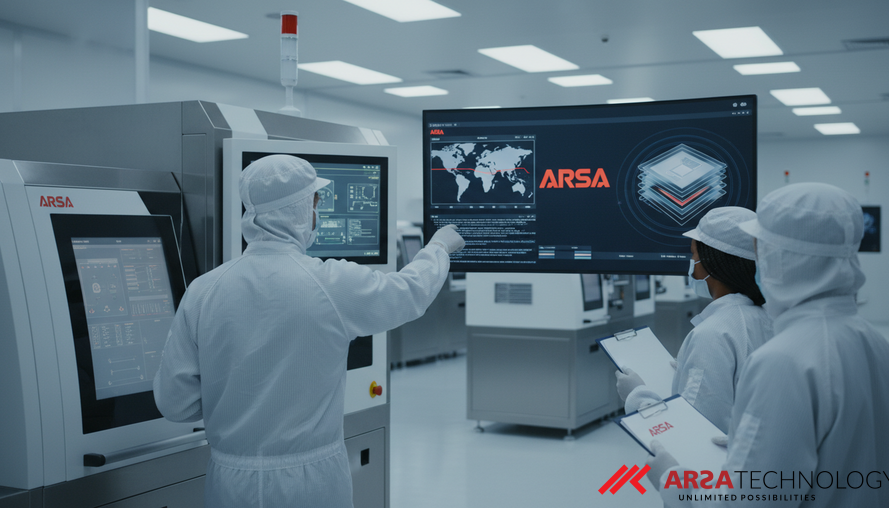
A Pivotal Shift in Global Semiconductor Manufacturing
The landscape of global technology is undergoing a significant realignment, particularly within the critical semiconductor industry. A recent landmark trade agreement between the United States and Taiwan, announced by the U.S. Department of Commerce, highlights a substantial move to bolster domestic semiconductor production in the U.S. This deal, valued at hundreds of billions of dollars, underscores a strategic imperative to enhance supply chain resilience and national security, with far-reaching implications for industries worldwide, including those in Southeast Asia.
Taiwan, a dominant force in the global chip industry, currently manufactures over half of the world's semiconductors. This new agreement will see Taiwanese semiconductor and technology firms committing an enormous $250 billion in direct investments toward the U.S. semiconductor sector. These investments are not limited to traditional chip production but will also funnel into crucial areas like energy and artificial intelligence (AI) production and innovation. Additionally, Taiwan will provide an extra $250 billion in credit guarantees to further encourage investment from these vital tech enterprises.
Strategic Investments for National Security and Innovation
This monumental investment initiative is a direct response to growing concerns over global supply chain vulnerabilities, as highlighted by the U.S. government. A proclamation accompanying the deal reiterated the U.S.'s long-term objective to bring more semiconductor manufacturing home, acknowledging that only about 10% of these essential components are currently produced domestically. The document explicitly states that "dependence on foreign supply chains is a significant economic and national security risk," emphasizing that any disruption could severely impact both industrial capabilities and national defense.
In return for Taiwan's substantial commitment, the U.S. has pledged investments in various Taiwanese industries, including semiconductors, defense, AI, telecommunications, and biotechnology. While the U.S. side of the financial commitment was not specified in dollar terms, the reciprocal nature of the deal signals a deepened strategic partnership. This collaborative approach aims to strengthen both nations' positions in advanced technology, fostering innovation and enhancing the security of critical tech infrastructure.
Tariffs and the Evolving AI Chip Market
The deal also touches upon the complex issue of semiconductor tariffs. The U.S. administration previously imposed a 25% tariff on certain advanced AI chips, a move that signals a strategic intent to regulate the flow of high-end computing components. The recent proclamation indicated that more semiconductor tariffs could be expected once ongoing trade negotiations with other countries, similar to this deal with Taiwan, are finalized. This regulatory environment adds another layer of complexity for businesses relying on advanced AI hardware, impacting everything from sourcing strategies to product development timelines.
These tariffs are part of a broader strategy to incentivize domestic production and control access to cutting-edge technology. For businesses operating in high-growth sectors like AI and IoT, understanding these trade policies becomes paramount. It directly affects the cost, availability, and lead times for the specialized processors that power next-generation solutions, from advanced data centers to edge AI devices deployed in industrial settings.
Impact on Enterprise AI and IoT Solutions
For Indonesian businesses engaged in digital transformation, particularly those leveraging AI and IoT, these global semiconductor shifts have several implications. First, a strengthened U.S. domestic supply chain could eventually lead to more stable pricing and availability for certain high-demand chips, albeit with a potential initial period of adjustment due to tariffs. Companies involved in manufacturing, logistics, or smart city initiatives need to closely monitor how these shifts affect the hardware components essential for their operations. Reliable access to chips is fundamental for deploying solutions such as intelligent video analytics or robust industrial automation systems. ARSA Technology, for instance, provides AI Box Series that transform existing CCTV cameras into intelligent monitoring systems, offering local processing capabilities for privacy and real-time insights—a crucial advantage when global supply lines face uncertainty.
Secondly, the focus on AI production and innovation means accelerated development in specialized AI hardware. This could lead to more powerful and efficient AI processors being available globally in the long term, driving advancements in areas like computer vision and predictive analytics. Businesses that require significant computational power for their AI models, whether for optimizing retail operations with customer analytics or managing complex traffic patterns, stand to benefit from these advancements. ARSA offers AI Video Analytics solutions that utilize such advanced processing to deliver real-time insights from surveillance infrastructure, enhancing security and operational efficiency across various industries.
Navigating Future Tech Landscapes for Indonesian Businesses
Indonesian enterprises must remain agile and strategic in navigating this evolving technological landscape. Diversifying supply chains, exploring partnerships with providers offering adaptable and localized solutions, and investing in internal R&D capabilities can help mitigate potential risks associated with global supply chain disruptions. The demand for AI-powered solutions, from smart retail counters to comprehensive security and compliance monitoring, continues to grow. These geopolitical shifts underscore the importance of choosing technology partners that prioritize stability, performance, and flexibility.
Companies can also explore solutions that emphasize edge computing, reducing reliance on centralized cloud infrastructure that might be affected by international data flow regulations or hardware accessibility. This focus on local processing ensures greater data privacy and operational continuity. For businesses seeking to quickly integrate advanced AI capabilities into their existing applications, leveraging ARSA AI API can offer a flexible and scalable approach, allowing rapid deployment without significant upfront hardware investment. ARSA's commitment to in-house R&D ensures solutions are not only globally competitive but also tailored to meet diverse industrial needs, fostering long-term partnerships in digital transformation.
As the world’s major economies reshape their technological dependencies, Indonesian businesses have an opportunity to strategically position themselves. By understanding these shifts and partnering with experienced AI and IoT solution providers like ARSA Technology, they can build robust, future-proof systems that drive efficiency, security, and sustained growth.
Ready to understand how these global shifts impact your business and explore tailored AI and IoT solutions? We invite you to explore our comprehensive solutions and contact ARSA for a free consultation.