Honda's Strategic Pivot: Powering the Future with Next-Gen Hybrid and AI Technology
Explore Honda's shift towards hybrid vehicles, unveiling new Accord and RDX prototypes, revised EV targets, and advanced ADAS integration, redefining automotive innovation.

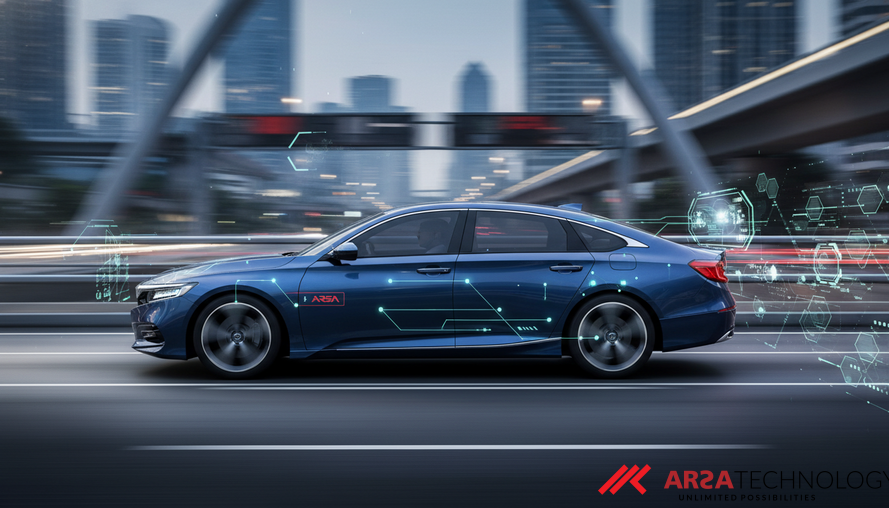
Honda's Pivotal Shift Towards a Hybrid Future
In a significant strategic realignment, Honda has unveiled prototypes of its new Accord sedan and Acura RDX SUV, signaling a profound commitment to hybrid technology as a cornerstone of its future mobility vision. These models represent the vanguard of 15 next-generation hybrid vehicles the Japanese automaker plans to introduce globally by March 31, 2030. This move reflects an industry-wide recognition of diverse energy pathways, emphasizing practical, efficient, and technologically advanced solutions for consumers.
The announcement, made during Honda’s annual business briefing, highlights a revised approach to electrification. While electric vehicles (EVs) remain part of the long-term plan, the immediate focus is on leveraging the strengths of hybrid systems to offer immediate environmental benefits and performance enhancements. This strategic pivot aims to address current market demands and accelerate the transition to sustainable transportation in a pragmatic manner.
Rethinking the Electric Vehicle Strategy
Honda is notably recalibrating its ambitious electric vehicle targets, moving away from a previous goal of having 20 percent of its sales from EVs by 2030 and a complete shift to EVs and fuel cell vehicles by 2040. The company now intends to "reallocate more development and production resources into hybrid models." This adjustment is a clear indicator that major automotive players are adapting to market realities, including evolving consumer preferences, infrastructure challenges, and the complexities of scaling EV production and battery technology globally.
The decision to revise EV timelines allows Honda to optimize its investments and focus on areas that promise more immediate returns and wider market adoption. This pragmatic shift underscores the belief that hybrid powertrains offer a compelling balance of fuel efficiency, lower emissions, and convenience without requiring a complete overhaul of charging infrastructure or significant changes in consumer driving habits. This also impacts supply chains and manufacturing, necessitating agile responses to market dynamics, a capability that often benefits from robust data analytics and flexible production systems.
The Next-Generation Hybrid System: Efficiency and Innovation
Central to Honda’s renewed hybrid strategy is the development of a cutting-edge two-motor hybrid system, set to debut next year. This advanced powertrain promises substantial improvements in both performance and economic viability. Honda plans to reduce the cost of this new hybrid system by over 30 percent compared to its 2023 iteration, making hybrid technology more accessible across its lineup.
Coupled with a new platform and an electric all-wheel-drive (eAWD) setup, the next-gen hybrid system is engineered to boost fuel economy by more than 10 percent. These enhancements are not merely mechanical; they are increasingly driven by sophisticated AI and data analytics that optimize power delivery, battery management, and overall system efficiency in real-time. Such systems rely on intricate sensor networks and powerful processing capabilities to ensure seamless transitions between electric and gasoline power, maximizing fuel efficiency and driver experience. Companies like ARSA Technology, with expertise in AI Box Series, understand the critical role of edge processing in delivering immediate insights and enabling optimal operational control in complex environments.
Advanced Driver Assistance Systems (ADAS) on the Horizon
Beyond powertrain innovations, Honda is also advancing its commitment to automotive safety and intelligence with the scheduled launch of a next-generation Advanced Driver Assistance System (ADAS) in 2028. This sophisticated ADAS will be integrated into more than 15 models over a five-year period, promising to enhance vehicle safety and driver convenience significantly. Modern ADAS features, such as adaptive cruise control, lane-keeping assistance, and automatic emergency braking, are powered by advanced computer vision and machine learning algorithms that process vast amounts of real-time sensor data.
These systems continually monitor the vehicle's surroundings, identify potential hazards, and assist the driver in navigating complex traffic scenarios. The accuracy and responsiveness of ADAS are paramount, relying on high-fidelity data streams and robust AI models. For instance, solutions in AI Video Analytics are critical for understanding vehicular movements and environmental factors, much like the underlying technology in ADAS. Such intelligent systems are pivotal in reducing accidents, improving traffic flow, and paving the way for more autonomous driving capabilities in the future. As an AI & IoT solution provider, ARSA has been experienced since 2018 in developing and deploying such sophisticated, production-ready AI systems.
Global Production Realignment and Regional Focus
Honda's strategic shift extends to its manufacturing operations, with plans to reallocate capacity in its Ohio plants to focus on building gasoline and hybrid vehicles. This adjustment reflects the changing production priorities and the need for flexibility in response to market demands. Furthermore, Honda announced it would collaborate with its partner LG to convert a portion of their joint venture's EV battery production lines to hybrid battery production, ensuring supply chain alignment with the revised strategy.
In contrast, Honda’s approach in Japan will involve expanding its EV model lineup primarily in the "mini-vehicle" (kei car) category, with an electric version of its N-BOX minicar slated for 2028. This regional differentiation in product strategy underscores the varying market conditions and regulatory landscapes across different geographical areas. These production adjustments require intelligent manufacturing processes, where IoT sensors collect real-time data on production efficiency, quality control, and resource allocation. AI-driven analytics then transform this data into actionable insights, enabling dynamic adjustments and optimizing complex global supply chains across various industries.
Financial Implications and Future Outlook
The transition to a hybrid-focused strategy comes after Honda announced a substantial write-down of up to 2.5 trillion yen ($15.7 billion) on its previous EV investments. The company now anticipates that these EV-related losses will be "resolved" by 2029, with a comprehensive reevaluation of its EV plans slated for 2030. This financial transparency demonstrates the significant costs involved in pioneering new automotive technologies and the challenges of scaling them profitability.
This strategic adjustment by Honda provides valuable insights for the entire automotive industry, highlighting the importance of adaptability and a multi-pronged approach to future mobility. It reaffirms that the path to sustainable transportation is not monolithic but involves a dynamic interplay of various technologies, including hybrids, EVs, and advanced driver assistance systems, all underpinned by continuous innovation in AI and data management.
Honda’s decision to prioritize hybrid technology for the near term while continuing to develop advanced driver assistance systems indicates a pragmatic approach to the evolving automotive landscape. By focusing on efficiency, cost reduction, and proven technologies, Honda aims to deliver reliable and environmentally conscious vehicles to a global market. For the source of this information, please refer to The Verge article.
Ready to explore how advanced AI and IoT solutions can drive efficiency and innovation in your enterprise? Discover ARSA Technology’s cutting-edge products and services. To learn more or request a personalized consultation, contact ARSA today.