How AI-Powered Drones Are Revolutionizing Military Communications
Explore the transformative role of UAV-mounted aerial relays in military communications, comparing them with terrestrial systems and highlighting the impact of AI in creating resilient, dynamic networks for challenging environments.

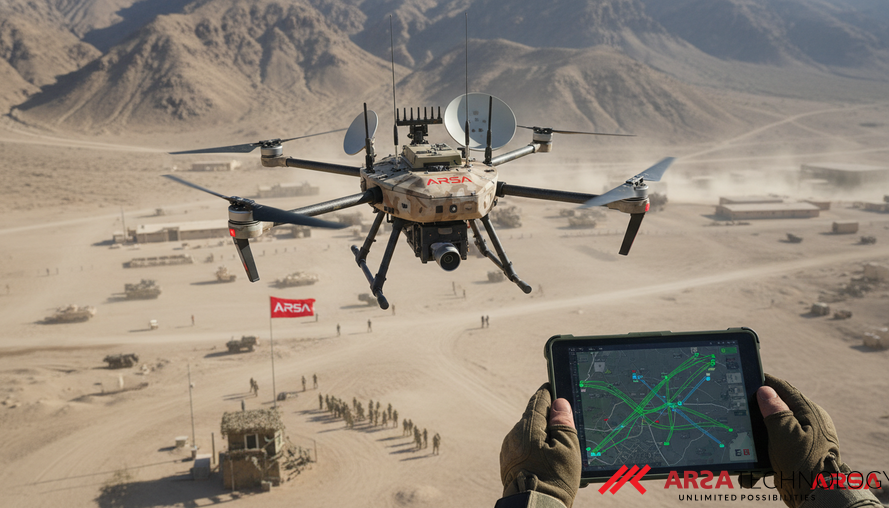
In modern military operations, maintaining seamless and secure communication is not just an advantage—it's a critical imperative. From remote outposts to rapidly evolving battlefields, reliable connectivity ensures effective command, control, and mission success. Traditional communication relays have long served this purpose, but with the advent of advanced technologies, a paradigm shift is underway. Unmanned Aerial Vehicles (UAVs), commonly known as drones, are emerging as powerful platforms for aerial relays, offering unprecedented flexibility and resilience in challenging environments.
This transformation is not just about extending range; it’s about creating dynamic, adaptable networks that can overcome physical obstructions, resist electronic warfare, and respond instantly to changing tactical needs. This article delves into how UAV-mounted aerial relays are revolutionizing military communications, drawing insights from a comprehensive survey on the topic, "UAV-Mounted Aerial Relays in Military Communications: A Comprehensive Survey" by Al-Kamali et al. (2026), available at arXiv:2602.06061.
The Evolution of Military Communication Relays
Historically, military communications have relied on terrestrial relays (TRs), which are fixed, ground-based systems designed to extend network coverage over vast areas. These relays are crucial for bridging communication gaps across diverse terrains, providing localized coverage, and enhancing signal strength where direct line-of-sight is limited. However, TRs face inherent limitations: their fixed positions make them vulnerable to physical obstructions like buildings or natural terrain, and their deployment and maintenance can be resource-intensive, especially in hostile or rapidly changing operational zones.
The demanding nature of military operations, requiring upwards of 99.999% availability, sub-100ms latency, and robust resistance to jamming, pushes the boundaries of traditional relay capabilities. As military operations become increasingly complex and distributed, the need for more agile and resilient communication infrastructure has never been greater. This is where the dynamic potential of aerial relays (ARs) truly shines.
Aerial Relays: The Drone Advantage
Aerial relays, mounted on UAVs, offer a transformative solution by operating above obstacles and adapting rapidly to shifting battlefield conditions. The global proliferation of UAVs underscores their growing importance; an estimated 5.42 million UAVs were in operation worldwide in 2024, projected to grow to 7.51 million by 2029. This growth, fueled by advancements across military, commercial, and civilian sectors, highlights the increasing interest in UAV-assisted wireless communication systems.
UAVs provide unique operational advantages, including flexible configuration, rapid deployment, and the ability to reach areas inaccessible to ground units. This flexibility is vital for extending network coverage, eliminating communication outage gaps, and ensuring continuous connectivity in environments where infrastructure is absent or compromised. By leveraging UAVs, military forces can establish and maintain communication links crucial for command and control, surveillance, reconnaissance, and tactical support, minimizing risks to personnel in hazardous zones.
Active vs. Passive Aerial Relay Technologies
Aerial relays themselves can be categorized into two primary types, each offering distinct advantages for military applications:
- Active Aerial Relays (AAR): These function similarly to traditional active relays, employing techniques like amplify-and-forward (AF) or decode-and-forward (DF). AARs actively boost or process and then retransmit signals, significantly enhancing both coverage and signal quality. They are particularly effective in scenarios requiring strong signal regeneration over long distances or through heavy interference.
- Aerial Reconfigurable Intelligent Surface (ARIS) Relays: Representing a more passive yet highly intelligent approach, ARIS relays do not amplify signals. Instead, they leverage electronically controlled passive elements to intelligently redirect signals. This innovative technology excels at improving signal propagation and spectral efficiency with minimal energy consumption. ARIS relays offer a promising pathway for future communication systems, especially where stealth and energy efficiency are paramount.
The choice between AAR and ARIS depends on specific mission requirements, balancing factors such as power consumption, signal processing needs, and the desire for a low electromagnetic signature.
Evaluating Mission-Critical Relay Effectiveness
To effectively choose the right relay system for a given military mission, a comprehensive evaluation framework is essential. The survey introduces a novel multi-dimensional metric: the Mission-Critical Relay Effectiveness Score (MCRES). This score provides a quantitative method to assess relay suitability by assigning mission-specific weights to critical attributes. These attributes include:
- Mobility: The ability to quickly relocate and adapt to dynamic environments.
- Jamming Resilience: Resistance to electronic warfare tactics aimed at disrupting communications.
- Deployment Speed: How quickly a relay system can be operationalized.
- Stealth: The capacity to operate with a low observable signature, avoiding detection.
- Coverage: The area over which reliable communication can be maintained.
- Autonomy: The degree to which the system can operate independently without constant human intervention.
By weighting these attributes according to the unique demands of a scenario – be it dynamic battlefield operations, intense electronic warfare, or covert missions – the MCRES guides the systematic selection of the optimal relay type. This decision-making framework helps determine whether an AR or TR, and subsequently AAR or ARIS, is best suited, moving beyond qualitative assessments to data-driven choices.
Challenges and Future Directions for UAV Relays
While UAV-mounted aerial relays offer significant benefits, their implementation in contested military environments presents several challenges. These include ensuring robust security against cyber threats, managing the power consumption for prolonged flight times, developing advanced autonomy for complex decision-making, and maintaining interoperability with existing military communication systems. The integration of AI plays a crucial role in addressing these challenges, especially in enabling drones to operate autonomously, adapt to jamming, and process data at the edge.
Future research directions focus on advancing the robustness and resilience of these systems. This includes developing more energy-efficient UAV platforms, enhancing AI algorithms for real-time threat detection and mitigation, and exploring novel materials for more effective reconfigurable intelligent surfaces. The goal is to create truly self-optimizing communication networks that can withstand the harshest operational conditions.
ARSA Technology, with its expertise in AI and IoT solutions, provides commercial systems that leverage advanced computer vision and edge computing for real-time analytics. For instance, our AI Box Series can transform existing CCTV infrastructure into intelligent monitoring systems, processing critical data locally to provide instant insights. This capability, whether for security monitoring, industrial automation, or vehicle analytics, underscores the potential for AI and IoT to enhance situational awareness and operational efficiency in various demanding environments, drawing parallels to the data-driven needs discussed for military applications. For example, our AI BOX - Traffic Monitor system provides real-time vehicle analytics that could inform logistics and movement in complex scenarios, while our AI Video Analytics capabilities can be tailored to custom requirements for specific detection and behavioral analysis, demonstrating the flexibility needed for diverse operational contexts.
Conclusion
UAV-mounted aerial relays represent a pivotal leap forward in military communications, moving beyond the static limitations of terrestrial systems to offer dynamic, resilient, and adaptable connectivity. The continuous evolution of AI and IoT technologies will further enhance these capabilities, enabling smarter, safer, and more effective operations. By providing quantitative metrics like MCRES and fostering ongoing innovation, the defense sector can harness the full potential of aerial relays to secure communication dominance in any theater.
To explore how advanced AI and IoT solutions can transform your operations and to discuss tailored solutions for your specific challenges, we invite you to contact ARSA for a free consultation.
**Source:** Al-Kamali, F., Chan, F., Ammar, H. A., Bayes, J. H., & D’Amours, C. (2026). UAV-Mounted Aerial Relays in Military Communications: A Comprehensive Survey. Digital Object Identifier 10.1109/OJCOMS.2026.3657212. Retrieved from https://arxiv.org/abs/2602.06061.