HRVConformer: Revolutionizing Neonatal HIE Classification with AI-Powered Heart Rate Analysis
Explore HRVConformer, a novel deep learning architecture transforming neonatal Hypoxic-Ischemic Encephalopathy (HIE) classification using raw heart rate signals for earlier, more accurate diagnosis.

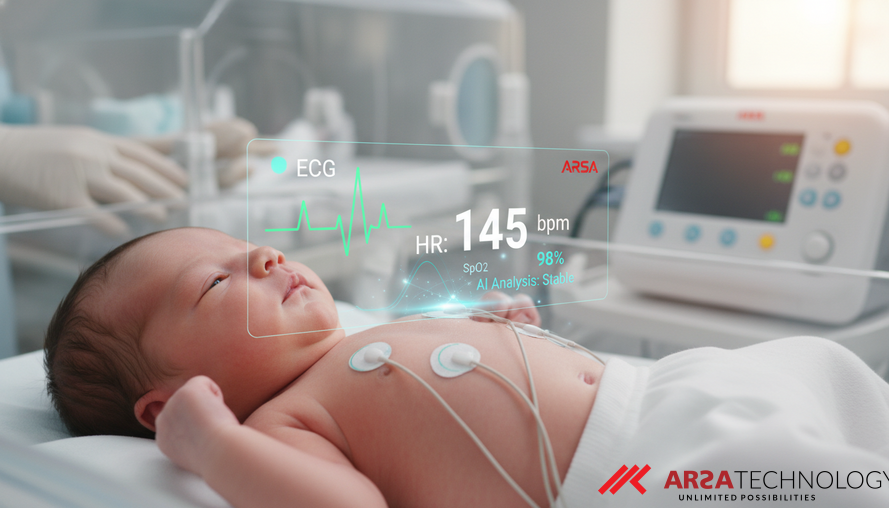
Hypoxic-Ischemic Encephalopathy (HIE) stands as a critical and devastating condition affecting newborns, characterized by brain injury resulting from inadequate oxygen and blood flow. The implications are severe, often leading to substantial long-term disabilities or even mortality. For medical professionals, the race against time is paramount, as effective treatment like therapeutic hypothermia must be initiated within a narrow six-hour window after birth to maximize positive outcomes. This urgency underscores the relentless pursuit of faster, more accurate, and readily accessible diagnostic tools.
Traditionally, the diagnosis and assessment of HIE severity have relied on electroencephalogram (EEG) readings, considered the gold standard for evaluating brain injury. However, EEG monitoring equipment and the specialized expertise required for its interpretation are not always available in every clinical setting, especially in resource-limited areas. This gap highlights a significant challenge in ensuring timely intervention for all affected infants. In response to this pressing need, innovative AI-powered solutions are emerging, offering new avenues for rapid and precise HIE classification, as demonstrated by the groundbreaking research on HRVConformer. This advanced deep learning architecture offers a promising step towards transforming neonatal care by leveraging readily available heart rate data. The research, titled "HRVConformer: Neonatal Hypoxic-Ischemic Encephalopathy Classification from the Heart Rate signals," was published by Shuwen Yu et al. and can be found at arxiv.org/abs/2605.26190.
The Critical Need for Early HIE Diagnosis
The severity of HIE and its potential for lifelong impact necessitate an extremely rapid and accurate diagnostic pathway. Brain cells, highly sensitive to oxygen deprivation, can sustain irreversible damage if blood flow is compromised for even short periods. Therapeutic hypothermia, which involves cooling the infant's body to a precise temperature for 72 hours, has proven effective in mitigating brain injury, but its efficacy is heavily time-dependent. Missing the critical six-hour window for initiating this treatment can drastically alter an infant's prognosis, leading to more severe neurological impairments.
The challenge lies in the immediate post-birth period, where subtle signs of HIE might be overlooked or where specialized diagnostic equipment is not on hand. This creates a bottleneck in delivering crucial care. Innovations that can provide accurate, early indicators of HIE, particularly those that are less invasive and easier to deploy, are therefore invaluable. They offer the potential to streamline clinical workflows, reduce diagnostic delays, and ultimately improve the long-term developmental outcomes for these vulnerable newborns.
Heart Rate Signals: A Non-Invasive Window into Neonatal Health
Heart rate variability (HRV), which measures the natural fluctuations in the time between consecutive heartbeats (R-R intervals), has emerged as a particularly promising biomarker for assessing HIE. Unlike complex brain imaging or EEG, heart rate signals are non-invasive and can be acquired easily and continuously from electrocardiogram (ECG) recordings. These signals provide a direct reflection of the autonomic nervous system (ANS) function, which is often disturbed in neonates suffering from HIE.
The extraction of precise R-R intervals from raw ECG signals is crucial for accurate HRV analysis. The research leveraged an improved Pan-Tompkins algorithm, a widely recognized and robust method for detecting the QRS complex (the main electrical event of a heartbeat) even in noisy environments. This enhancement significantly improved signal quality and data availability, laying a strong foundation for the subsequent AI analysis. By continuously monitoring and analyzing these subtle variations in heart rate, clinicians can gain valuable insights into a neonate's neurological and physiological stress, offering a powerful, accessible alternative or complement to traditional diagnostic methods.
HRVConformer: A Breakthrough in AI-Powered HIE Classification
The core innovation presented in the research is the HRVConformer, a novel deep learning architecture designed to classify HIE directly from raw heart rate signals. Unlike conventional approaches that often rely on a predefined set of "handcrafted" HRV features (like average heart rate, standard deviation, or specific frequency components), HRVConformer processes the raw HR signal in an "end-to-end" manner. This means the model learns relevant features directly from the unprocessed data, reducing human bias and potentially uncovering more subtle patterns indicative of HIE.
The HRVConformer's strength lies in its hybrid architecture, integrating the best of two powerful deep learning paradigms:
Convolutional Layers: These act like specialized filters, adept at identifying local features* and patterns within the heart rate signal, such as short-term changes in rhythm or morphology. Transformer-based Attention Mechanisms: Inspired by their success in natural language processing and computer vision, Transformers excel at capturing long-range dependencies and understanding the global context* of the signal. They can see how different parts of the heart rate signal, even those far apart in time, relate to each other.
By combining these two components, HRVConformer can simultaneously analyze both the fine-grained details and the broader temporal context of the heart rate signal, leading to a more comprehensive and accurate representation. The model was rigorously trained on a large dataset of 1,573 one-hour heart rate epochs, including both expert-annotated and weakly labelled data, and validated on independent sets. Experimental results demonstrated impressive performance, achieving an AUC (Area Under the Receiver Operating Characteristic Curve) of 83.23% and an accuracy of 74.56% on the test set. These metrics indicate a strong ability to distinguish between HIE and non-HIE cases, outperforming other baseline models like Transformer, ResNet50, and fully convolutional networks, thereby highlighting the significant advantages of this integrated approach.
Bringing Advanced AI to Clinical Practice
The development of HRVConformer represents a significant leap forward in automated HIE assessment. By providing a highly accurate, non-invasive, and accessible method for early diagnosis, this technology has profound implications for global healthcare. It offers the potential to standardize and democratize HIE screening, particularly benefiting hospitals and clinics in regions where specialized neurological equipment is scarce. For enterprises operating in the healthcare sector, this translates into tangible benefits such as improved patient outcomes, reduced diagnostic costs, and more efficient allocation of medical resources. The ability to deploy AI that directly processes raw physiological signals in an end-to-end fashion underscores the power of modern deep learning to solve complex medical challenges.
For organizations seeking to implement advanced AI and IoT solutions, such as those related to real-time monitoring and predictive analytics in healthcare, this research validates the potential for such technologies. ARSA Technology, for instance, has been experienced since 2018 in delivering practical AI solutions that transform operational complexity into competitive advantage across various industries, including healthcare. Their expertise in developing robust AI systems for demanding environments aligns with the goals of bringing such research findings into real-world applications. Imagine autonomous health stations that can perform rapid screenings, like ARSA's Self-Check Health Kiosk, further enhanced with capabilities to flag potential HIE risk using advanced algorithms like HRVConformer. Such integration could revolutionize preventive care and early intervention.
The focus on an end-to-end deep learning approach also highlights the future of AI in medical diagnostics: moving away from reliance on human-engineered features to models that can learn directly from raw data, leading to greater objectivity and precision. This methodology holds promise not just for HIE, but for a spectrum of conditions where rapid, accurate, and non-invasive screening is critical. The work demonstrates how combining the local feature extraction capabilities of convolutional networks with the global context understanding of Transformers can unlock new levels of performance in biomedical signal processing.
To learn more about how advanced AI and IoT solutions can transform your operations and lead to measurable outcomes, we invite you to explore ARSA Technology’s offerings. For a deeper discussion on tailoring these intelligent technologies to your specific needs, please contact ARSA for a free consultation.